
































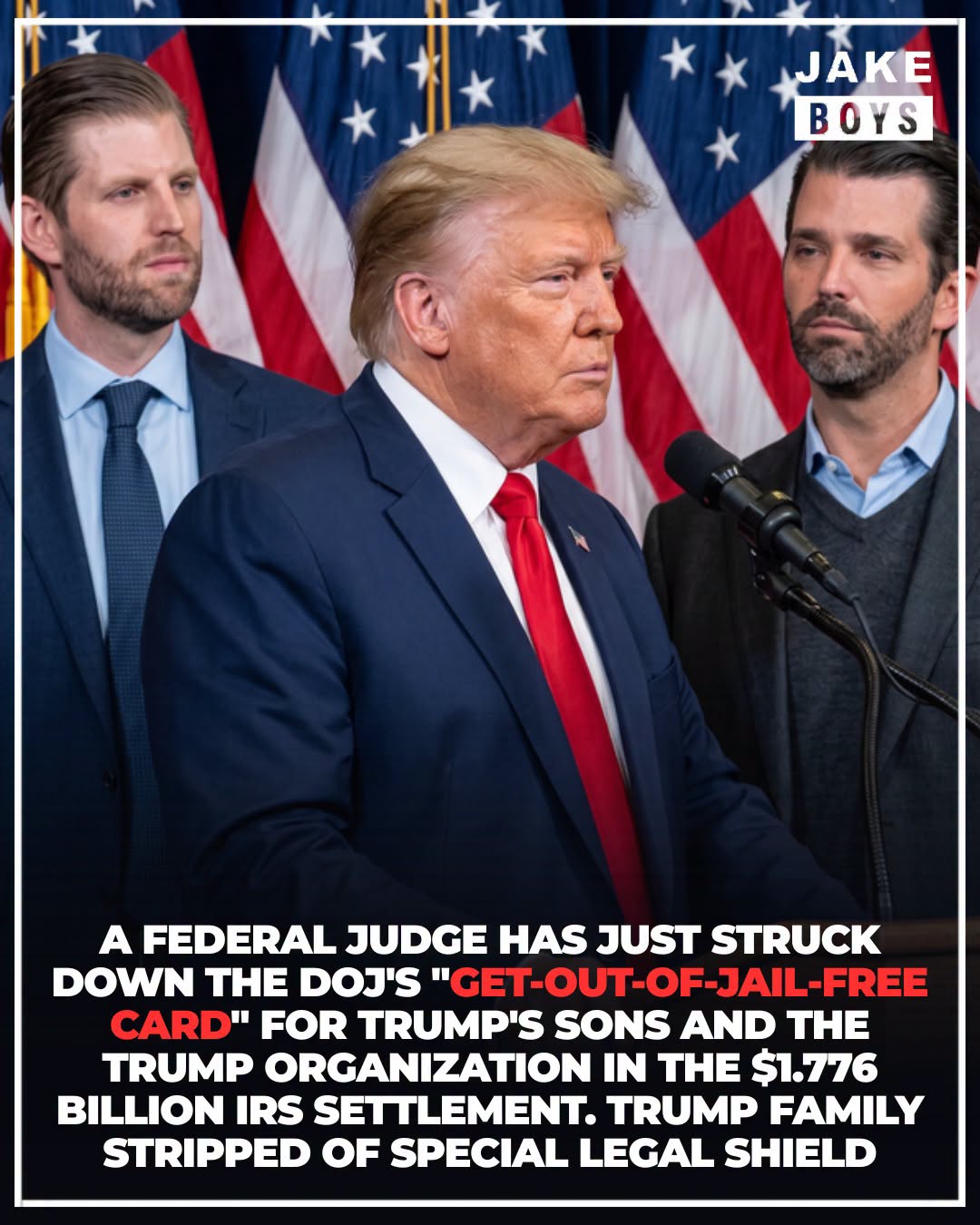
Ban đầu, Donald Trump đã kiện Sở Thuế vụ Mỹ (IRS) liên quan đến việc hồ sơ thuế của ông bị tiết lộ công khai. Đáp lại, Bộ Tư pháp (DOJ) tìm cách giải quyết vụ kiện bên ngoài tòa bằng cách lập một “Quỹ Chống Vũ khí hóa” trị giá 1,776 tỷ USD, sử dụng tiền của người nộp thuế.
Nhưng điều gây tranh cãi nhất là gì?
Một phụ lục của thỏa thuận này được cho là đã tạo ra một “lá chắn miễn trừ” lâu dài, về mặt pháp lý ngăn IRS tiến hành các cuộc kiểm toán thuế hoặc điều tra dân sự trong tương lai đối với Donald Trump, Donald Trump Jr., Eric Trump và Trump Organization.
Thẩm phán Kathleen Williams đã bác bỏ hoàn toàn cơ chế này, chỉ trích vụ kiện là một “vụ kiện giả tạo” (sham) mang tính thông đồng, được thiết kế nhằm thao túng quy trình tư pháp.
Bằng việc hủy bỏ thỏa thuận, tòa án đã loại bỏ những biện pháp bảo vệ pháp lý đặc biệt này. Điều đó có nghĩa là gia đình Trump và tổ chức của họ không còn được hưởng sự bảo vệ theo thỏa thuận nói trên và về nguyên tắc vẫn thuộc phạm vi giám sát thuế liên bang thông thường.
Justice Department Announces Anti-Weaponization Fund
Office of Public Affairs
The U.S. Department of Justice today announced that as a part of the settlement agreement in President Donald J. Trump v. Internal Revenue Service, the Attorney General established “The Anti-Weaponization Fund”to provide a systematic process to hear and redress claims of others who suffered weaponization and lawfare.
The plaintiffs in the case, President Donald J. Trump, Donald J. Trump, Jr., Eric Trump, and the Trump Organization, LLC, filed suit against the Treasury and IRS in Southern District of Florida federal court following the leak of their tax returns. Per the settlement, plaintiffs will receive a formal apology but no monetary payment or damages of any kind. They have agreed, in exchange for the creation of this fund, to drop their pending lawsuit with prejudice, and also withdraw two administrative claims including for damages resulting from the unlawful raid of Mar-a-Lago and the Russia-collusion hoax.
“The machinery of government should never be weaponized against any American, and it is this Department’s intention to make right the wrongs that were previously done while ensuring this never happens again,” said Acting Attorney General Todd Blanche. “As part of this settlement, we are setting up a lawful process for victims of lawfare and weaponization to be heard and seek redress.”
“The use of government power to target individuals or entities for improper and unlawful political, personal, or ideological reasons should not be tolerated by any Administration,” said Principal Associate Deputy Attorney General Trent McCotter.
The Fund will have the power to issue formal apologies and monetary relief owed to claimants. Submission of a claim is voluntary. There are no partisan requirements to file a claim. Any money left when the Fund ceases operations will revert to the Federal Government.
The Fund will receive $1.776 billion and will come from the judgment fund, which is a perpetual appropriation allowing DOJ to settle and pay cases. On a quarterly basis, the Fund shall send a report to the Attorney General outlining who has received relief and what form of relief was awarded.
At the Attorney General’s direction, the Fund can be audited. The Fund must take steps to protect private information and avoid fraud. The Fund shall cease processing claims no later than December 1, 2028.
There is legal precedent for such a Fund, most notably the “Keepseagle” case where the Obama Administration created a $760 million fund to redress various claims alleging racism against the federal government over a period of decades.
In Keepseagle, hundreds of millions of dollars remaining in the fund were distributed to non-profits and NGOs that never made claims, whereas any money remaining in The Anti-Weaponization Fund will revert to the federal government. The Obama DOJ settled by putting $680 million from the judgment fund into a bank account for a single claims administrator to dole out. In Keepseagle the remaining money—which ended up being over $300 million—was distributed to the entities that had not even submitted claims.
The Fund will consist of five members appointed by the Attorney General. One Member will be chosen in consultation with congressional leadership. The President can remove any member, but a replacement must be chosen the same way as the replaced member was selected.