










The snapback clause was the least offensive thing in that document. The verified list of American demands reads like articles of surrender. Now Carney is going to punch him in the mouth.
August 22, 2026
Yesterday I told you about the snapback clause Trump tried to slip into the deal at midnight. Today, the rest of the document. It’s worse. Much worse.
When Carney stood at that podium Saturday and said the Americans “asked too much and offered too little,” everyone assumed he was talking about dairy quotas and hockey stick tariffs.
He wasn’t.
Over the weekend, between Carney’s own words at that press conference and the reporting out of the Globe and Mail’s sources inside the room, the actual shape of what the United States demanded came into focus. And once you lay it all out in one place, you realize this was never a trade negotiation.
This was an annexation attempt with a cover page.
VIDEO: Mark Carney Just Became The Most Important Leader In The Free World
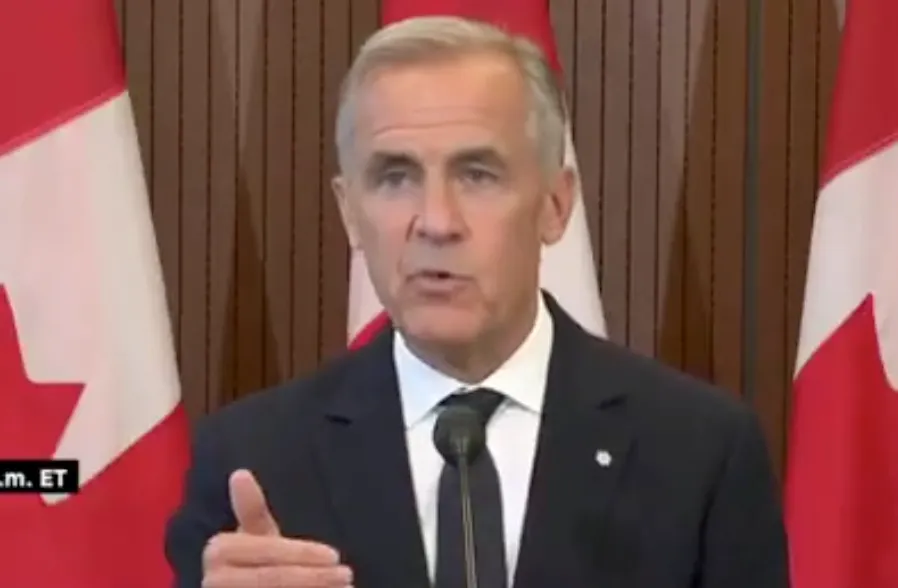
Trump couldn’t take Canada with the 51st state garbage. He couldn’t take it with tariffs, because we matched him and the Supreme Court took his favourite toy away in February. So he and his team tried to take it with a pen, in the final hours of a negotiation, after he’d already announced “DEAL!” on his failing social media site, betting that our negotiators were too exhausted to read what they were signing.
They read it.
What they actually demanded. The verified list.
I want to be precise here because there’s a document floating around on social media claiming to summarize the US demands, and about half of it is fabricated. Ignore it. You don’t need the fake version. The real version, confirmed by Carney’s own mouth and sourced reporting, is damning enough on its own.
Here’s what we know the United States put on that table.
One. They demanded control over who Canada trades with. This came straight from Carney on Saturday: “The U.S. introduced at the last hour, in the last hour, efforts to restrict our ability to have other trade deals.” Not tariff levels. Not quotas. The United States demanded a say in Canada’s trade relationships with the rest of the planet. That is not a term you put to a trading partner. That is a term you put to a territory.
Two. They came for the French language. This is the one that should make every Canadian’s blood run cold, and Carney laid it out in detail. The Americans had “issues” with Canada’s subsidies for French culture. With the prevalence of French-language media online. And, I’m not making this up, with the requirement that products sold in Canada carry bilingual labels. Carney’s words: “It was unacceptable right from the start, but the Americans kept trying and trying and we said no.” American negotiators sat across from Canadian officials and demanded we water down the legal protections for one of our two founding languages. In a trade deal. About tariffs.
Three. They tried to rig the auto sector to strip our jobs. Carney said the US wanted to treat Canadian-made parts unfairly and to exempt some cars and pickup trucks from tariffs but not others, without explaining the logic. There was a logic. The logic was to pick which assembly lines live in Michigan and which ones die in Ontario, and to write it into a treaty.
Four. They demanded we dismantle our own domestic policies, right down to the provincial level. Per the Globe’s sourcing: kill the retaliatory tariffs on American autos, rewrite how dairy licences are allocated under supply management to Washington’s interpretation, force provinces to end their bans on American booze, and scrap Buy Canadian procurement rules. The United States demanded that Canadian provinces change their liquor store policies. Doug Ford’s LCBO decisions were on a term sheet in Washington.
Five. The resource grab was queued up for “phase two.” The Globe reported that US negotiators raised critical minerals, oil exports, the F-35 purchase, and Golden Dome missile defence in the talks, with the understanding that Canada’s flexibility on those files would shape the deal. Translation: sign away autos, dairy, culture and procurement now, and then we’ll discuss how much of your lithium, uranium and crude you get to keep.
Six. The snapback. The remote-control tariff. Sign all of the above away permanently, and in exchange receive tariff relief that Trump can revoke any afternoon he wakes up feeling “aggrieved.” I covered this yesterday. It’s the mechanism that makes everything else a one-way door.
BREAKING: Trump Tried To Slip A “Snapback” Provision Into Canada Deal. Carney Caught It. Told Trump To F*** Off. Now Trump Is Threatening Military Force.
I told you 18 months ago Carney would go after the bonds. Look at the Treasury data this week and tell me I was wrong.
Read full story
Add it up. Control over our foreign trade relationships. Control over our language and culture. Control over our auto industry. Control over provincial policy. First position on our resources. And a kill switch held by one man.
There’s a word for an arrangement where a larger country controls a smaller country’s trade, culture, industry and resources while holding a unilateral punishment mechanism over its head.
Annexation. I mean, what else do you call this?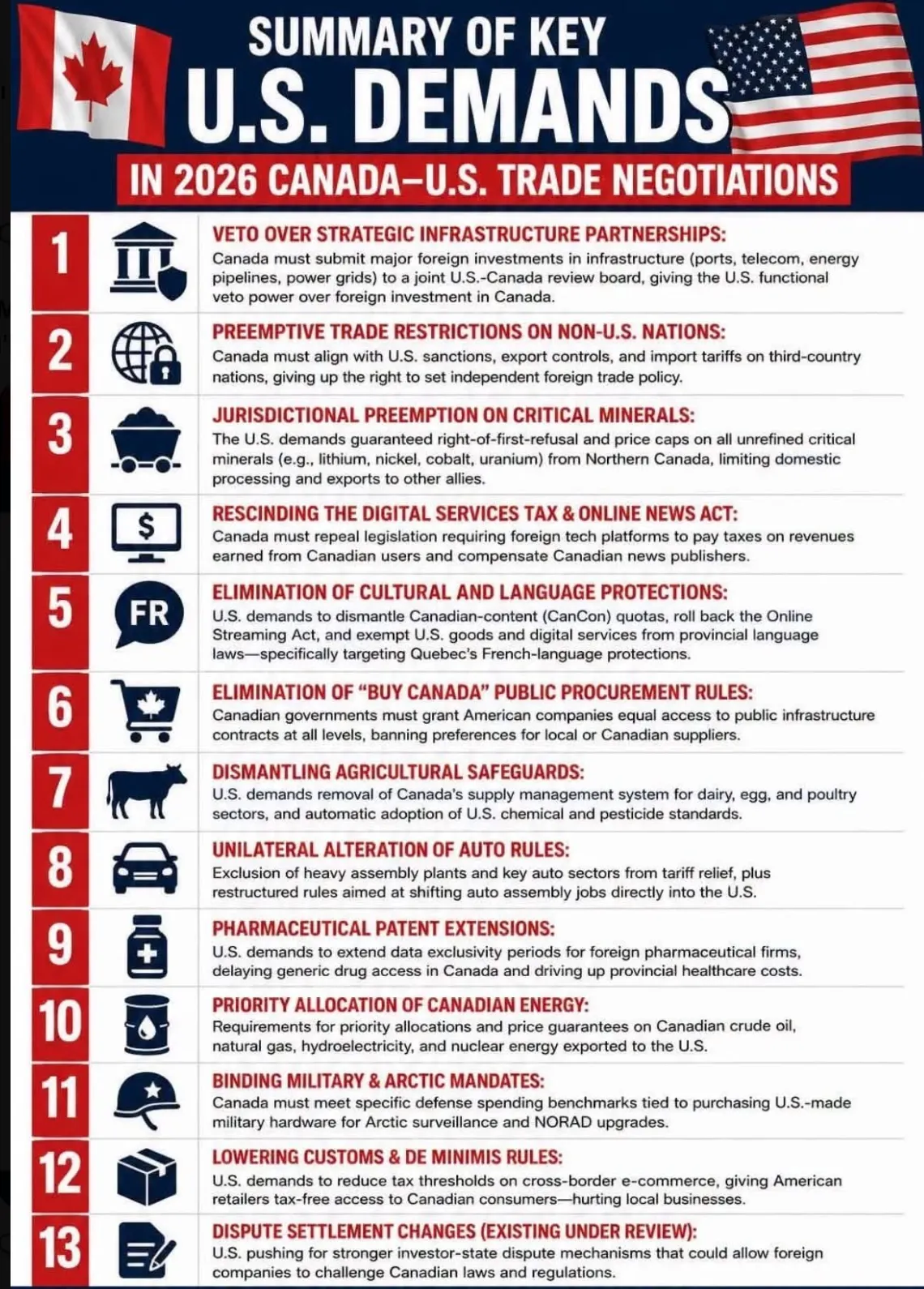
Why now? Other than sheer fucking incompetence, look at the CUSMA calendar.
Here’s the context the cable networks keep missing.
CUSMA review is right there on the horizon, and Trump refused to renew it. That was a choice. A renewed CUSMA means rules, panels, dispute resolution, three parties at the table, and Mexico watching everything. A dead CUSMA means bilateral knife fights where the biggest guy sets the terms.
So the play was obvious in hindsight. Kill the framework. Manufacture a tariff emergency under a 1930 statute nobody’s ever used this way. Drag Canada into a bilateral “deal” under deadline pressure. Load the deal with sovereignty concessions that would be impossible to claw back once CUSMA talks eventually happened, because Canada would already be locked in. Get the Prime Minister’s signature before anyone reads page 40.
This wasn’t a negotiation that went sideways at the end. The end WAS the negotiation. Everything before it was theatre designed to exhaust our side and set up the midnight switch. You don’t accidentally demand bilingual label changes and veto power over a G7 nation’s trade relationships in the final hour. You hide it there.
They bet the former Governor of the Bank of England and the Bank of Canada wouldn’t read the fine print. For the second time in two days I get to type this sentence: he read the fine print.
The find-out portion begins now
So where does this go? Let me tell you where it goes, and why I think Trump folds before the leaves change.
Expect a fury of announcements this week.
Start with what Carney has already announced, on the record. Dollar-for-dollar retaliation on Trump’s $28 billion, coming September 8, targeted at steel, dairy, appliances, agricultural equipment, pulp and paper, and electronics. Focused, surgical, aimed at red-state supply chains, with more support for Canadian workers layered on top of the $25 billion already deployed.
That’s the announced part. Now the part I believe is coming, and why the math forces it.
For eighteen months, Carney has resisted the export tax. Reporters have asked him about it since the Trudeau days, when Ottawa first war-gamed export levies on oil, uranium and potash. As recently as late July, standing in Alberta, he waved it off: “I don’t see the value of it.” Reliable supplier. People trust us. All of that.
But listen to what he said next, because Carney never wastes a sentence: “There’s other things we can do if we need it.”
And then listen to what he said Saturday, after they came for our sovereignty: “Canada fuels American growth. I don’t think they want us to stop sending any of that.” And in his address to the country: “Canada has what the world wants. And we will not allow any nation to determine our future.”
The reliable-supplier doctrine was built for a trade dispute. This stopped being a trade dispute the moment American negotiators demanded control over our language laws and our trade relationships. You don’t owe reliability to a counterparty who just tried to paper-annex you. Every constraint that kept the energy weapon in its holster died at midnight Friday. The premiers are already screaming for it. Ford listed the arsenal out loud: oil and gas, critical minerals, electricity, potash, uranium. The only person who was holding it back was Carney, and the Americans just spent two weeks teaching him why he shouldn’t.
Now flip the board and look at Trump’s side of it, because this is where it gets genuinely dark for the White House.
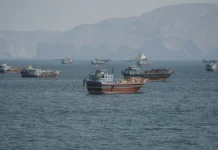
He is running a 50% tariff war against his largest energy supplier during an oil shock. Hormuz has been functionally closed to commercial traffic for five months. The Strategic Petroleum Reserve is sitting at 293 million barrels, the lowest since Reagan’s first term, drained at record pace and pumping at 61% of design capacity. There is no cavalry. The Gulf isn’t coming. OPEC isn’t coming. The only country on Earth with millions of barrels a day of spare heavy crude, pipelined directly into US refineries that were literally built to run on it, is the one he just tried to annex with a term sheet.
Midwest refineries cannot substitute Canadian heavy crude. That’s not politics, that’s chemistry. An export levy on Canadian oil doesn’t hurt Alberta; American refiners eat it and pass it straight to the pump in Ohio, Michigan, Wisconsin and Pennsylvania. Ten weeks before a midterm. Same story with uranium for their reactors, potash for their farms, and the electricity keeping the lights on across the northern border states.
And behind all of it, the thing I’ve been writing about since April 2025: the bond market. The 30-year at levels not seen since 2007. Bessent’s emergency buybacks erased by the market in 48 hours. Japan, China and the UK all selling at once. Foreign central banks dumping $230 billion since February. A president who, asked about Treasury yields, threatened to use the military on his own creditors. And Canada sitting quietly on $460 billion of that debt, fifth-largest holder on the planet, having added over $100 billion to the position since I started telling you this was the play.
Carney’s Checkmate: How Canada’s Quiet Bond Play Forced Trump to Drop Tariffs
Trump needs Canadian oil to keep the pump price down. He needs Canadian creditors to hold his bonds. He needs a deal to hold his midterm. Canada needs none of those things this week. That asymmetry is the entire story, and it’s why I think he caves, publicly, dressed up as some “beautiful new framework” he’ll claim was his idea, before September 8 makes the front page of every swing-state paper.
He walked into this thinking he was shaking down a branch plant. He was actually picking a fight with his gas station, his grocer, his power company and his banker, all of whom turned out to be the same guy, and that guy ran two central banks.
The bill, updated
Understand what almost happened Friday night. A foreign government attempted to acquire, by contract, control over Canada’s trade relationships, cultural protections, official languages policy, auto industry, and provincial procurement, with a unilateral-enforcement whip attached, and they tried to do it in the dark, at midnight, on a deadline they manufactured.
The 51st state thing was never a joke. It was a mission statement. Friday was the paperwork.
It failed because one guy read the document. Now comes the invoice, and it gets paid in September tariffs, in energy leverage, and in Ottawa, no longer having any reason to hold back, and in a bond market that just watched the United States try to defraud its fifth-largest creditor at a signing table.
I told you about the bonds eighteen months ago. I told you about the snapback yesterday. I’m telling you now: Trump just started a sovereignty fight with the one country that can raise his gas prices, his food prices, his electricity bill and his borrowing costs simultaneously, and the man deciding how hard to squeeze spent his whole life learning exactly where the arteries are.
Elbows up. Find out.