
































 |
Every Saturday, I bring you stories that deserve your attention. This week, one story is too important to wait until Tuesday’s Deep Dive. So pour yourself some covfefe (or morning tea), and buckle up. 
This week, Jim Acosta broke the story of a leaked Pentagon memo. In it, the Department of Defense (War  ) agreed to loan its Active Denial System, better known as the “heat ray,” to U.S. Customs and Border Protection (CBP), which is part of the Department of Homeland Security (DHS).
According to the memo:
-
July 22: DHS asked for the weapon.
-
September 23: The Pentagon said yes. That was less than three weeks ago.
-
How long: About seven months.
-
Who operates it: CBP personnel, not the military, under CBP’s own law enforcement authorities.
Read that last line again. The Pentagon may own the machine, but CBP would have its hands on the controls.
Working inside the government teaches you to read announcements differently. And then there are internal memos that stop you cold. This is definitely one of them.
Watch my conversation with Jim about the memo on YouTube:

Why I’m paying attention
My years at the Pentagon during the Iraq War were spent working on counterterrorism, insurgency, and detention issues. Later I worked extensively on homeland and border security. I understand why troops and law enforcement need options that can prevent violence and save lives. I also know that the rules governing those options, and who enforces them, matter as much as the tools themselves. That’s why this memo is so alarming: the weapon’s history, the way it has been discussed for use at home, and the authority now being handed to CBP all point to serious concerns.
Who can authorize its use, and against whom? What stops it from being used far beyond the southern border, including against Americans exercising their First Amendment rights? This administration needs to answer those questions before anyone turns this weapon on another human being.
This is the work I do: reading the memos, connecting the dots from inside government, and asking the questions officials would rather not answer. If you value independent accountability journalism like this, please consider becoming a paid subscriber.
What is a “heat ray,” in plain English?
Think of it as a giant invisible beam. The Active Denial System fires millimeter-wave energy, a cousin of microwaves, that heats the outer layer of your skin within seconds. There’s no bullet, no rubber round, and no tear gas. You can’t see the beam, but you will absolutely feel it. People who have been hit describe feeling like their skin is on fire. The pain stops when you get out of the beam.
That’s the whole idea. It’s a weapon designed to change human behavior through pain. When I discussed this with a friend, their immediate reaction was, this sounds like torture…well, in my opinion, it’s because it is. The military spent decades developing it as a less-lethal option for crowds, checkpoints, and protecting troops. Supporters say it gives personnel a choice before resorting to deadly force. That’s a fair argument, and worth taking seriously.
But this weapon’s history should give all of us pause.
Built for war. Then the military hesitated to use it.
The Marines wanted it to control crowds without killing anyone. Officials also considered it for controlling detainee violence at the Camp Bucca detention facility in Iraq. According to the Government Accountability Office (GAO), Pentagon policy officials concluded that using it on detainees was politically untenable. Other deployment plans ran into problems with the system’s size and complexity. By December 2008, efforts to deploy it overseas had been terminated.
In 2010, the military finally shipped one to Afghanistan. It came home without ever being used.
Here’s the part most people don’t know. Even while the military struggled to use it abroad, the Pentagon was exploring uses here at home, possibly including the southern border. A 2009 GAO report documented that, and warned that the policy for using this kind of weapon was incomplete.
Then they looked closer to home. Twice.
In 2018, days before the midterm elections, CBP officials suggested using the heat ray on migrants at the southern border. Then-DHS Secretary Kirstjen Nielsen vetoed it. DHS later denied the idea was ever seriously considered. I was serving in the Trump White House at the time, and I remember hearing about those discussions. Given what I knew about this technology from my Pentagon years, I was relieved when DHS leadership shut it down.
Notice that the agency that floated the heat ray in 2018 is the same agency that now may be getting one.
Then came June 1, 2020. Protests filled Washington after George Floyd’s killing. The Defense Department’s top military police official for the capital region emailed the D.C. National Guard to ask whether it had two crowd-control devices: a Long Range Acoustic Device, often called a “sound cannon,” and the Active Denial System. National Guard Maj. Adam DeMarco later disclosed that email to Congress. It was sent the same day law enforcement forcibly cleared protesters from Lafayette Square.
I was there that day. I had just walked the grounds outside the White House, and I remember the sequence of events like it was yesterday. I have friends who were in that crowd, and I don’t take what happened to them lightly.
To be clear, the heat ray was not used at Lafayette Square. The Guard didn’t have one, and the Pentagon later described the inquiry as planning and said no further action was taken. But the question was asked.
Now look at how this has progressed:
-
2018: CBP suggested it. The DHS Secretary said no.
-
2020: Federal officials asked whether it was available. It wasn’t.
-
2026: The Pentagon has reportedly approved lending it to CBP, operated under CBP’s own authority.
That progression sends a chill down my spine.
Imagine it at a protest
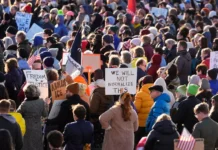
We’ve already seen protests outside federal buildings and tense confrontations between demonstrators and federal agents. Now picture CBP bringing the heat ray to one of those protests, perhaps to back up another DHS agency. A crowd gathers. Most people are peaceful, but a few aren’t. Someone throws a bottle and a barrier gets pushed. Officers order everyone to disperse, and some people don’t leave. That crowd includes peaceful protesters, journalists, medics, and maybe a handful of people breaking the law.
Who decides whether a weapon built to inflict pain gets turned on all of them?
I’m not saying CBP has been authorized to use this on protesters. I’m asking whether the rules clearly prohibit it. A tool introduced for border security should not quietly become a tool for controlling protests on American streets.
The First Amendment doesn’t disappear because the government calls a weapon “nonlethal.”
The Pentagon has already told us how it sees this weapon
In July 2025, the Pentagon’s Joint Intermediate Force Capabilities Office published an article titled “Directed Energy Weapons: A Safer, Smarter Tool for Border Security.” It named Active Denial Technology specifically. The article described using directed energy to deter unauthorized crossings, secure ports of entry, and control crowds during large migration surges. It discussed people who approach restricted areas aggressively or “non-compliantly,” and described the heat ray’s effect as a way to get compliance.
Compliance. Sit with that word.
Stopping someone who is about to hurt you is very different from using pain to make someone follow orders.
Shootings involving federal immigration agents are no longer hypothetical. Remember Alex Pretti, the ICU nurse shot and killed by CBP officers during a Minneapolis protest in January? Is the goal to prevent deadly encounters? Or is it to widen the situations where agents can use force on people who aren’t an immediate threat?
CBP’s own Use of Force Policy already lists directed-energy devices among the tools that can cause pain or discomfort to change behavior. That doesn’t mean the policy specifically authorizes the heat ray. It does mean we need clear, public rules on exactly when it can and can’t be used.
Now picture the border
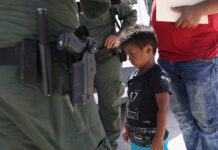
A large crowd approaches a port of entry. Agents fear the barriers will be overrun, and they want to avoid using their guns. The beam comes on, people feel intense heat, and they move. In that moment, a less-lethal weapon might genuinely reduce danger. Now change the facts. What if the crowd isn’t violent? What if the people refusing to move are asylum seekers? What if a few people are damaging a fence while hundreds of others, including children, are doing nothing wrong?
Then there are the questions nobody has answered:
-
Detention centers: Could this end up inside ICE facilities? The Pentagon already decided that using it on detainees in Iraq was politically untenable. What stops it here?
-
Mexico: Could CBP aim it at someone standing on Mexican soil, and who would approve that? That’s not just a use-of-force question. It’s an international sovereignty question, and I guarantee Mexico’s president will be asking it.
“Nonlethal” doesn’t mean harmless
The military says the heat ray’s effects are generally temporary and reversible. But testing hasn’t been entirely injury-free, and safety depends on how long someone is exposed and under what conditions. The whole system depends on one assumption: that you can get out of the way.
What about someone pinned against a fence, a person in a wheelchair, or an elderly woman? What about a child trapped in a crowd, or someone who trips and falls?
Who controls how long the beam stays on? What happens with repeated exposure? And do we really understand the long-term health effects? Most of what we know comes from controlled military testing on volunteers, not real crowds of children, elderly people, or anyone with a medical condition. What medical care is required afterward?
One violent person in a crowd doesn’t make everyone around them a legitimate target.
Why now? And why seven months?
We are just over three weeks from the November 3 midterm elections.
In 2018, CBP floated the heat ray days before the midterms. In 2020, officials asked about it during protests in Washington. Now, weeks before another election, the Pentagon has signed off on a seven-month loan.
I’m not alleging these events are connected. I am asking why this weapon is being made available now, what operational need justifies it, and why the arrangement runs seven months.
DHS and the Pentagon should be able to answer that.
The questions we should all be asking
Before this weapon is used on anyone, the public deserves answers:
-
Where is it going, and why?
-
Who authorizes each use, and against whom?
-
Can it be used on protesters, nonviolent crowds, or detainees?
-
Can it be moved away from the southern border, or aimed into Mexico?
-
What medical safeguards apply? Will every activation be documented and reviewed?
-
Why seven months, what happens afterward, and what oversight will Congress have?
If you do one thing today, send these questions to your senators and representatives. Ask them to demand CBP’s rules for this weapon, in writing.
The real question is authority
Once a weapon like this is in the hands of domestic federal law enforcement, everything depends on who decides when, where, and against whom it’s used. Policies don’t enforce themselves. Safeguards only work when leadership insists on following them.
I lived this firsthand in Trump 1.0. We shouldn’t have to count on the personal restraint of whoever holds a certain cabinet level job to decide whether a weapon built to cause pain gets turned on civilians. Maybe CBP has strict rules. Maybe every use requires senior sign-off. I hope so. But hope is not an oversight mechanism.
Those rules should exist in writing, Congress should examine them, and the public deserves to know the limits.
We already know this weapon can make someone move. The question is who gets to decide when the government is allowed to make someone move by hurting them, and what happens when that person refuses.
We need that answer before anyone turns this system on.
 One Thing for Your Soul
I know that was a lot. Covfefe isn’t just about what should worry us. It’s also about what should give us hope. So here’s a story that restored a little of my faith in humanity.
When Michael Jensen began volunteering at a Washington state food bank, he worried he’d have to turn people away. Instead, he found himself encouraging people to take enough food. Even people struggling to feed themselves were worried about leaving enough for others. His story inspired thousands of dollars in donations.
Sometimes the people who have the least are the ones thinking most about others. It’s a beautiful reminder that there’s still so much goodness in this world.
 The Kindness of Strangers (WaPo)
Hug someone you love. And breathe.
-Olivia