












Opinion –
The Great Powers Are Moving Apart. What Happens if You’re Caught in the Middle?
By Frankie Mills
Ms. Mills is a photographer and journalist based in Tbilisi, Georgia. She wrote from Chisinau, Moldova.
This essay is part of “The New World Disorder,” a series exploring the disintegration of the postwar international system and how countries are adjusting as America steps aside.
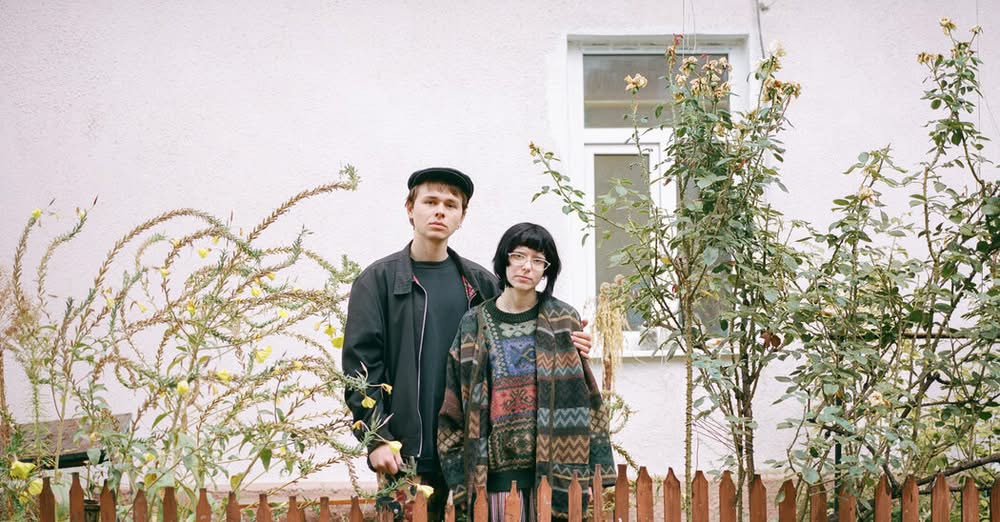
One gray morning last fall I visited Andrei Morari and Ecaterina Samonii at their home in Chisinau, Moldova’s unassuming capital. Black tea brewed on the kitchen table and their two cats purred below. Their home was scattered with keepsakes, including a small statue of Lenin that Andrei had brought back from Moscow, where he’d lived for a time as a history student.
Just two days before, Moldova had voted in a parliamentary election that President Maia Sandu had called the “most important” in the country’s history: a final opportunity to choose between Russia and Europe, with Ms. Sandu’s pro-European party and the pro-Russian parties both arguing that voting for the other side would drag the country into the war next door in Ukraine.
The mood in the apartment was flat. The pro-European Party of Action and Solidarity had defeated the Patriotic Electoral Bloc. Andrei and Ecaterina said they had voted for neither. They cared about better health care, more opportunities for young people and affordable rent and heating, they said, not so much whether Moldova united with Brussels or Moscow.

Andrei left for work, and Ecaterina and I continued to quietly drink our tea. We talked about the complications of navigating everyday life in a country with two widely spoken languages, Romanian and Russian, and the isolation felt by those who speak just one. She described a sense of disillusionment with Moldova’s efforts to figure out which direction to turn — toward Europe or Russia — among those who saw themselves in neither.
Andrei and Ecaterina weren’t alone in their reluctance to choose. They were part of the 48 percent of the electorate who abstained from voting in the September 2025 election, despite its significance. The ambiguous results of a referendum on joining the European Union the previous year also suggested a complex picture: 50.35 percent in favor, 49.65 percent against.
“There should be a middle for Moldova, just to be Moldova,” Ecaterina said. “To be a good Moldova, as it is.”
Wedged between Romania and Ukraine, with a population of around 2.4 million people and a Soviet past,Moldova has been portrayed as having to choose between Europe and Russia ever since it gained independence in the early ’90s. But it continued to exist somewhere between one and the other, maintaining a delicate balance even as that choice simmered in the background.
When Russia launched its full-scale invasion of Ukraine in February 2022, the calculus changed. Moldova became the European fault line of a new geopolitical reality. Russia is engaged in a conventional land war in the country next door, and as U.S. support for Ukraine and NATO has wavered, Europe has stepped up its direct support for Ukraine against Russia.
What does it mean to ordinary people living in a small country, caught up in this geopolitical disorder, to choose? What happens to a country when the middle ground disappears? As Europe and Russia move further apart, how does a country with deep ties to both chart a course?
I visited Moldova twice last fall, spending about a month traveling around the country, visiting villages that are shrinking as people emigrate, mostly to Russia, Romania and Italy; ethnically Ukrainian regions where locals support pro-Russian parties; and one village funded so heavily by French remittances that residents had built a replica Eiffel Tower as a homage.
Autumn swept across a landscape lined with withered sunflowers and trees laden with apples and plums. As I moved from place to place, I wondered whether consensus could ever be possible in a nation where information and worldview differ so greatly from one village to the next, down to the language that the local school teaches in.
People described the wish for a middle road to me often — a world in which Moldova, sandwiched between competing powers and historically relying on one or the other to prop up a faltering economy, could align with whomever it chooses in a way that would respect its complex, layered culture.
Moldova shares deep historical and linguistic ties with Romania. For some, including Ms. Sandu, reunification with Romania is a Plan B if independently joining the European Union fails. But the country’s decades in the Soviet Union also resulted in significant Russification, particularly of certain regions.
Even before the war in Ukraine, the middle road was narrowing to a tightrope. Russia has responded to moves from Moldova that put it closer to Europe with import bans that have been widely seen as economic blackmail. In 2013, in the run-up to Moldova’s signing of an association agreement with the European Union, Russia banned Moldovan wine, followed by fruits, vegetables and meat when the agreement was signed in 2014. More bans followed when the European Union was preparing to open formal accession negotiations.
Then there is Transnistria, a separatist region in the east of the country where Russian soldiers have been stationed since a brief but bloody war of independence in the early 1990s. Russia has said that it will interpret any efforts by the Moldovan government to change the status quo of Transnistria — as a self-proclaimed republic that is supported, but not recognized, by Moscow — as a provocation of war.
The European Union has said that Transnistria should not be a barrier to Moldova’s accession to the bloc. But pro-Europeans in the country understand that they have to tread carefully. Serbia’s accession process has stalled, for example, because of its continued engagement with and refusal to impose sanctions on Russia.
Geopolitical binds are personal, too. All over the country, people emigrate, often in search of work, and leave behind children to be raised by single parents or grandparents in villages that steadily depopulate. In economic value, people are Moldova’s largest export after agriculture. The country has one of the highest diaspora rankings in Europe. Official statistics say some 30 percent to 35 percent of the population has left since independence; people I spoke to said they thought it was more like 50 percent.
Horesti, a village near the Romanian border, is one of the places keenly feeling this shift. It lost more than half of its population between 2004 and 2024. The primary school has fewer students than the legal minimum required to keep on operating. If it closes, the village will most likely die, too. Upstairs in the school, in a lone corridor, was a map with the names of students who had left the country, offering a clue as to where everybody here has gone: Russia, mostly, followed by a smattering of E.U. countries.
I watched as teachers tried to instill a sense of Moldovan patriotism in students, in preparation for the day when these pupils, too, would leave. A day they treated as almost inevitable.
In one classroom, girls around 10 and 11 lined up and recited poems. “Even if I go far and wide and the whole world I cross,” one read. “I choose my village.”
In Cismichioi, a small village in Gagauzia, I met with Dmitri Ianul, a teacher and former journalist, and his wife, Inna, who works at a local grocery store. The week before, Dmitri said, the couple had been awakened in the night by glass shaking in their cabinets. Over the border, Russia was bombing Ukraine’s westernmost port, Reni, just a 20-minute drive from Cismichioi.
The next day, they said, their neighbors were quick to dismiss the fighting: just Ukrainians fighting with themselves again. Even the Russian drones that have gone off course and fallen outside the village have done little to change people’s minds here, Dmitri said.
This August, Moldova recorded 17 drone incursions in its territory — the highest monthly number since the war began. I wrote to Dmitri to ask if that was having any impact on people’s opinion. He wrote back saying that people still believed they were decoys launched by pro-European politicians to justify a national pivot away from Russia.
Dmitri, who is strongly in favor of closer ties with Europe, said that several of his neighbors had told him that if Moldova joined the European Union, they’d leave for Russia for good. They worried the bloc would use Moldova as a dumping ground for Europe’s waste and transform the country with L.G.B.T.Q. propaganda and that people would no longer have the right to farm their own land.
Everywhere I went in Moldova, it was apparent that Russia’s invasion of Ukraine didn’t necessarily make joining the European Union more appealing. In some places, like in Cismichioi, the war just got explained away. Other people told me it felt like having to choose the lesser of two evils, and they resented being made to decide.
In an interview on a British podcast in January, President Sandu said she would support reunification with Romania if a referendum were held. “It is getting more and more difficult for a small country like Moldova to survive as a democracy, as a sovereign country, and of course to resist Russia,” she said.
A step in either direction inevitably widens the gaps in a country with a complex mix of identities. The problem may be just that: two options, two vastly different directions, in a country where, as in most places, things are far more layered and fragmented than a simple yes or no.
“There should be some other way to find this common background, to this common history, and to build the identity on the idea of openness,” Andrei said over Turkish tea at a cafe in Chisinau one day. “Maybe we should somehow think about that, how to build our future without choosing left or right, black or white.”
But for countries and people in the borderlands between the big powers, a less orderly world means less certainty and more pressure to align with — or submit to — whichever option can best guarantee safety and sovereignty. Questions of alliances become less principled and more existential.
This week, a Russian drone hit a border crossing between Moldova and Ukraine, in Odesa, killing two. There should be another way. But in an increasingly unpredictable world, safety is becoming the priority.