

































Tòa án cao nhất của bang đã giải quyết vấn đề này vài tháng trước. Chính quyền Trump không có lý do gì để ra tòa trong nỗ lực giải quyết vấn đề vào lúc này.
Mọi thứ đều sai trong vụ kiện đáng xấu hổ đặc biệt của DOJ chống lại Alaska
Tòa án cao nhất của bang đã giải quyết vấn đề này vài tháng trước. Chính quyền Trump không có lý do gì để ra tòa trong nỗ lực giải quyết vấn đề vào lúc này.
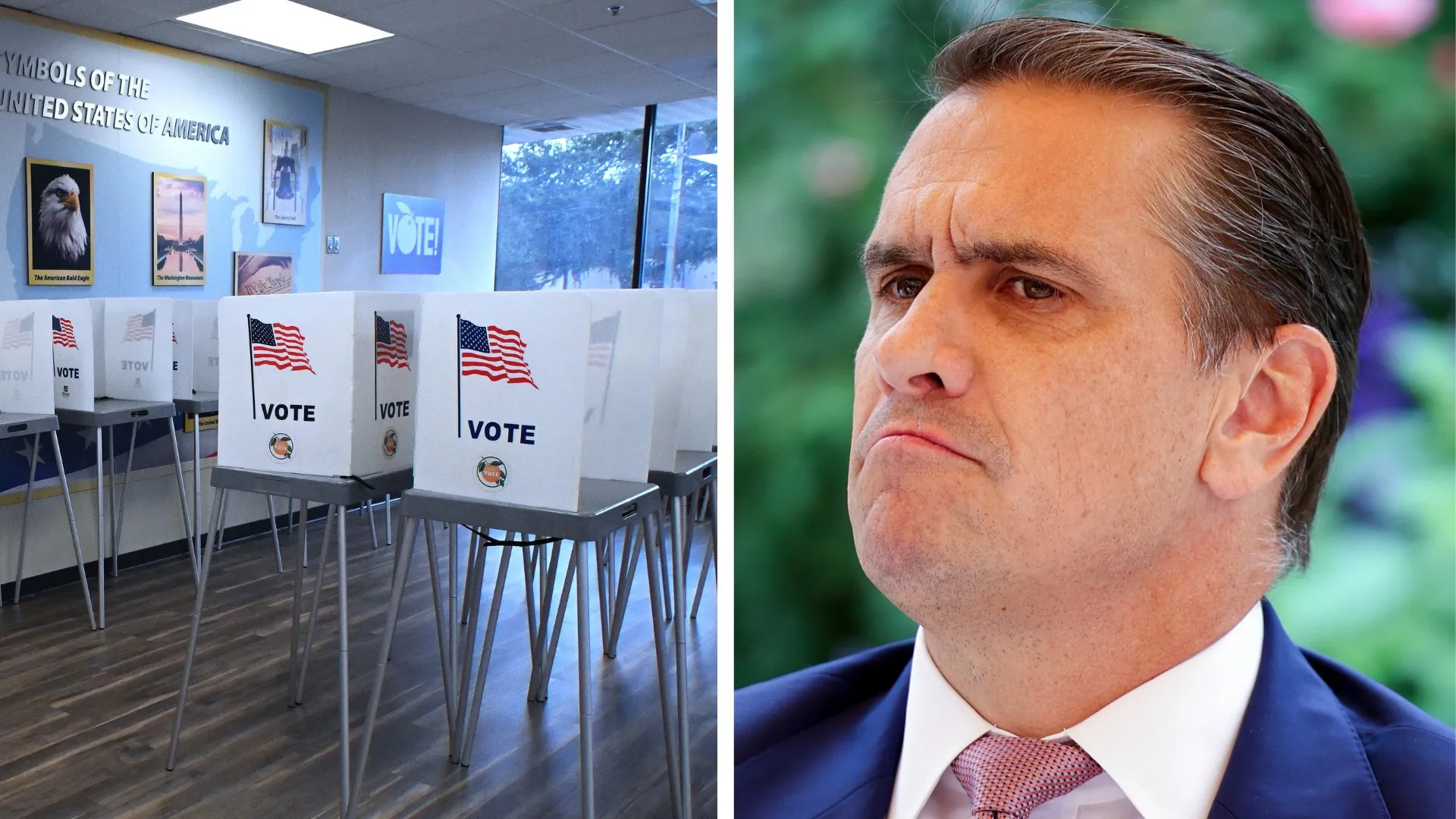
Có rất nhiều điều sai trái trong vụ kiện do Bộ Tư pháp của Tổng thống Donald Trump đệ trình nhằm ngăn chặn việc chứng nhận cuộc bầu cử Thượng viện Hoa Kỳ ở Alaska đến nỗi khó có thể liệt kê tất cả chúng.
Có một điều, vấn đề đáng lẽ phải – và thực sự đã – được đưa ra kiện tụng và quyết định từ nhiều tháng trước. Nhớ lại, vấn đề là liệu Dan Sullivan thứ hai có được quyền có tên trong lá phiếu với tư cách là ứng cử viên cạnh tranh với Thượng nghị sĩ đương nhiệm của Đảng Cộng hòa Dan Sullivan hay không.
Hai Dan Sullivans có tên viết tắt ở giữa khác nhau. Người đương nhiệm là S, và người thách đấu là J (và anh ta cũng là Jr.). Trên lá phiếu ở Alaska, từ “Đương nhiệm” xuất hiện bên cạnh “Dan S. Sullivan,” cũng như nhãn “(Đảng Cộng hòa đã đăng ký)”. Không có gì xuất hiện bên cạnh “Dan J. Sullivan, Jr.” Tuy nhiên, những người ủng hộ đương nhiệm lo ngại rằng một số cử tri có thể bỏ phiếu nhầm cho người thách thức Dan Sullivan, và có lẽ họ thậm chí còn bỏ phiếu nhầm khiến người đương nhiệm thua cuộc trong cuộc bầu cử.
QUAN TRỌNG HƠN NỮA, BẤT CỨ THỜI GIAN NÀO, KHÔNG CÓ LUẬT NÀO CUNG CẤP BỘ TƯ PHÁP CỦA TRUMP THẨM QUYỀN KHỞI HÀNH VỀ VẤN ĐỀ NÀY.
Nhưng mối lo ngại này được giảm thiểu đáng kể nhờ thực tế là Alaska sử dụng bỏ phiếu vòng hai ngay lập tức (một phiên bản của bỏ phiếu lựa chọn có xếp hạng), cho phép cử tri xếp hạng các ứng cử viên theo thứ tự ưu tiên và khi lập bảng kết quả, loại bỏ ứng cử viên có ít phiếu bầu lựa chọn đầu tiên nhất và chuyển các lá phiếu xếp hạng ứng cử viên bị loại đầu tiên cho bất kỳ ứng cử viên nào khác được xếp hạng tiếp theo trên lá phiếu. Quá trình lập bảng lặp lại quá trình loại bỏ và chuyển giao này cho đến khi có người chiến thắng với đa số phiếu bầu.
Do đó, những cử tri xếp nhầm Dan J. Sullivan Jr. thứ nhất và Thượng nghị sĩ Dan Sullivan thứ hai sẽ bị chuyển lá phiếu của họ sang người đương nhiệm sau khi người còn lại bị loại trong quá trình bỏ phiếu ngay lập tức. Chỉ khi có nhiều cử tri xếp hạng người thách thức trước người đương nhiệm hoặc nếu họ không thèm xếp hạng cả Dan Sullivans – hai tình huống cực kỳ khó xảy ra – thì mới có nguy cơ Dan Sullivan đương nhiệm thua nhầm người thách thức.
Trong mọi trường hợp, vào tháng 6, Tòa án Tối cao Alaska đã ra phán quyết rằng Dan Sullivan thứ hai phải có tên trong lá phiếu, bác bỏ lập luận rằng nguy cơ nhầm lẫn sẽ khiến anh ta không thể tham gia. Và một lần nữa, cách hai cái tên xuất hiện trên lá phiếu về cơ bản đã giải quyết được vấn đề. Vì vậy, bất kỳ ai muốn bỏ phiếu cho người đương nhiệm hoặc Dan Sullivan mà họ biết là đảng viên Đảng Cộng hòa, đều có thể dễ dàng thực hiện việc đó.
Tuy nhiên, điểm quan trọng là tòa án cao nhất của bang đã giải quyết vấn đề từ nhiều tháng trước, có nghĩa là chính quyền Trump không có lý do gì để ra tòa trong nỗ lực giải quyết vấn đề vào lúc này.
Quan trọng hơn nữa, bất kể thời điểm, không có luật nào trao quyền cho Bộ Tư pháp của Trump khởi kiện về vấn đề này. Điều duy nhất DOJ của ông trích dẫn để hỗ trợ cho vụ kiện của mình là tuyên bố trong phần mở đầu của Đạo luật đăng ký cử tri quốc gia rằng một trong những mục đích của nó là “bảo vệ tính toàn vẹn của quá trình bầu cử”, nhưng tuyên bố mục đích mang tính mở đầu trong phần mở đầu của đạo luật không phải là nguồn thẩm quyền pháp lý thực chất và đạo luật đăng ký cử tri không liên quan gì đến cách tên của các ứng cử viên xuất hiện trên lá phiếu. Vì vậy, mặc dù NVRA trao cho DOJ quyền tìm kiếm một lệnh để hỗ trợ các điều khoản nội dung của nó, nhưng quyền đó không hề mở rộng đến vụ kiện của Bộ về nội dung lá phiếu của Alaska.
Khi nêu rõ điểm mấu chốt này, điều quan trọng là không phóng đại giới hạn về khả năng khởi kiện của DOJ liên bang trong các vụ kiện bầu cử. Ví dụ: Đạo luật về Quyền Bầu cử cho phép Bộ Tư pháp khởi kiện để bảo vệ chống phân biệt chủng tộc trong bỏ phiếu, bao gồm cụ thể bằng cách xin lệnh ra lệnh cho các quan chức tiểu bang hoặc địa phương kiểm phiếu và, trong những trường hợp cần thiết, “yêu cầu[e] đưa số phiếu của họ vào tổng số phiếu bầu trước khi kết quả của cuộc bầu cử đó sẽ được coi là cuối cùng và bất kỳ hiệu lực hoặc hiệu lực nào được đưa ra sau đó.”
Ngay sau khi đạo luật mang tính bước ngoặt này được thông qua vào năm 1965, DOJ đã viện dẫn thẩm quyền này trong bối cảnh Cảnh sát trưởng khét tiếng Jim Clark tái tranh cử sau vai trò của ông ta trong việc tấn công những người tuần hành ôn hòa trên Cầu Edmund Pettus ở Selma, Alabama, vào Ngày Chủ nhật Đẫm máu. Trong cuộc bầu cử sơ bộ, theo yêu cầu của Clark, các quan chức địa phương có liên quan (là đảng viên Đảng Dân chủ vì đây là cuộc bầu cử sơ bộ) đã loại sáu thùng phiếu khỏi các khu vực bầu cử chủ yếu là cử tri Da đen. DOJ của Tổng thống Lyndon Johnson sau đó ngay lập tức khởi kiện lên tòa án quận liên bang thuộc VRA để yêu cầu sáu thùng phiếu được đưa vào chứng nhận chính thức của cuộc bầu cử. DOJ của Johnson đã thắng thế, và tòa án “ra lệnh” cho các quan chức địa phương “tuyên bố lại và nhận lại xác nhận kết quả của cuộc bầu cử sơ bộ ngày 3 tháng 5 năm 1966, dựa trên tất cả 80 ô ở Quận Dallas, Alabama,” bao gồm sáu ô đã bị loại trước đó.
Tiền lệ VRA này minh họa rằng trong một số bối cảnh, vụ kiện tụng của DOJ có thể có vai trò thích hợp để ngăn chặn việc các quan chức tiểu bang chứng nhận cuộc bầu cử. Nhưng cần phải nói rõ rằng tiền lệ VRA này hoàn toàn không thể áp dụng được trong bối cảnh của trường hợp hiện tại ở Alaska.
Trường hợp của Alaska khác biệt không chỉ vì nó không liên quan đến VRA hay việc từ chối quyền bầu cử bình đẳng mang tính phân biệt chủng tộc. Nó cũng liên quan đến cuộc bầu cử ghế Thượng viện Hoa Kỳ, thay vì văn phòng cảnh sát trưởng quận. Điều đó quan trọng vì Điều 1, Mục 5 của Hiến pháp trao cho mỗi viện của Quốc hội quyền trở thành “thẩm phán của các cuộc bầu cử… của chính các thành viên của viện đó”. Điều này có nghĩa là chính Thượng viện chứ không phải tòa án liên bang sẽ quyết định xem việc có hai Dan Sullivans trong lá phiếu có quá khó hiểu đối với cử tri hay không. Cho đến lúc đó, kết quả của cuộc bầu cử phải được chứng nhận theo luật tiểu bang để có thể trình lên Thượng viện. (Trong chừng mực DOJ có thể có một số thẩm quyền cố hữu để khởi kiện để thực thi các điều khoản hiến pháp, thẩm quyền đó không thể trái với các điều khoản hiến pháp khác, chẳng hạn như quyền của Thượng viện xét xử bất kỳ tranh chấp nào liên quan đến kết quả bầu cử của Thượng viện.)
There are so many things wrong with the lawsuit filed by President Donald Trump’s Department of Justice to block certification of the Alaska U.S. Senate election that it’s hardly worth listing them all.
For one thing, the issue should have been — and indeed was — litigated and decided months ago. To recall, the issue was whether a second Dan Sullivan was entitled to be on the ballot as a candidate competing against incumbent Republican Sen. Dan Sullivan.
The two Dan Sullivans have different middle initials. The incumbent’s is S, and the challenger’s is J (and he’s also a Jr.). On the Alaska ballot, the word “Incumbent” appears next to “Dan S. Sullivan,” as does the label “(Registered Republican).” Nothing appears next to “Dan J. Sullivan, Jr.” Still, the incumbent’s supporters are concerned that some voters might mistakenly vote for Dan Sullivan the challenger, and perhaps even enough of them to cause the incumbent to mistakenly lose the election.
Even more important, regardless of timing, there is no law that gives Trump’s Department of Justice authority to sue over this issue.
But this concern is significantly mitigated by the fact that Alaska uses instant runoff voting (a version of ranked choice voting), which permits voters to rank candidates in order of preference and, when tabulating the results, eliminates the candidate with the fewest first-choice votes and transfers the ballots that ranked the eliminated candidate first to whichever other candidate is ranked next on the ballot. The tabulation process repeats this elimination-and-transfer process until there is a winner with a majority of votes.
Consequently, voters who mistakenly rank Dan J. Sullivan Jr. first and Sen. Dan Sullivan second will have their ballots transferred to the incumbent after the other one is eliminated in the instant runoff process. Only if more voters rank the challenger ahead of the incumbent, or if they don’t bother to rank both Dan Sullivans — two extremely unlikely scenarios — will there be a risk of the incumbent Dan Sullivan mistakenly losing to the challenger.
In any event, in June the Alaska Supreme Court ruled that the second Dan Sullivan should be on the ballot, rejecting the argument that the risk of confusion should keep him off. And again, the way the two names appear on the ballot essentially solves the problem. Thus, anyone wanting to vote for the incumbent, or the Dan Sullivan they know to be a Republican, should have an easy time doing so.
The important point, however, is that the state’s highest court settled the matter months ago, meaning that the Trump administration has no justification for going to court in an effort to unsettle it now.
Even more important, regardless of timing, there is no law that gives Trump’s Department of Justice authority to sue over this issue. The only thing his DOJ cites in support of its suit is the statement in the preamble to the National Voter Registration Act that one of its purposes is “to protect the integrity of the electoral process,” but a prefatory statement of purpose in a statute’s preamble is not a substantive source of legal authority, and a voter registration statute has nothing to do with how the names of candidates appear on a ballot. So, while the NVRA does give the DOJ the power to seek an injunction in support of its substantive provisions, that power in no way extends to the department’s suit over the content of Alaska’s ballot.
In stating this key point, it is important not to overstate the limits on the ability of the federal DOJ to litigate in election cases. The Voting Rights Act, for example, authorizes the Justice Department to sue to protect against racial discrimination in voting, including specifically by seeking an injunction to order state or local officials to count votes and, in circumstances where necessary, to “require[e] the inclusion of their votes in the total vote before the results of such election shall be deemed final and any force or effect given thereto.”
Shortly after the passage of this landmark statute in 1965, the DOJ invoked this authority in the context of the notorious Sheriff Jim Clark’s re-election bid after his role in attacking the peaceful marchers on the Edmund Pettus Bridge in Selma, Alabama, on Bloody Sunday. In the primary election, at Clark’s request, the relevant local officials (who were Democrats because it was a primary) had excluded six boxes of ballots from precincts with predominantly Black voters. President Lyndon Johnson’s DOJ then immediately sued in federal district court under the VRA to have the six boxes of ballots included in the official certification of the election. Johnson’s DOJ prevailed, and the court “ordered” the local officials “to re-declare and recertify the results of the May 3, 1966 primary election, based upon all the eighty boxes in Dallas County, Alabama,” including the six that had been previously excluded.
This VRA precedent illustrates that in some contexts there may be an appropriate role for DOJ litigation to block the certification of an election by state officials. But it should be abundantly clear that this VRA precedent is by no means applicable in the context of the present case in Alaska.
The Alaska case is different not merely because it does not involve the VRA or racially discriminatory denial of equal voting rights. It also concerns an election for a U.S. Senate seat, rather than a county sheriff’s office. That matters because Article 1, Section 5 of the Constitution grants each chamber of Congress the power to be “the judge of the elections … of its own members.” This means that the Senate itself, and not a federal court, gets to decide whether having two Dan Sullivans on the ballot was too confusing for the voters. Until then, the result of the election must be certified according to state law, so that it can be presented to the Senate. (Insofar as the DOJ may have some inherent authority to sue to enforce constitutional provisions, that authority cannot contravene other constitutional provisions, such as the right of the Senate to adjudicate any disputes regarding the results of its elections.)

Timing is also a crucial component here. Both chambers of Congress meet on Jan. 3 to seat their new members after November’s election. Because each chamber of Congress has the constitutional authority to decide whether the election of a new member is valid, it’s imperative that there be no unnecessary delays that deprive each chamber of its entitlement to exercise this authority starting on Jan. 3. Court cases addressing issues concerning the certification of elections that the relevant chamber of Congress will ultimately decide shouldn’t, by means of protracted proceedings, interfere with the chamber’s prerogative.
Trump’s DOJ may be bringing its lawsuit regarding Alaska’s Senate seat not so much because it thinks it can win the case — that would be delusional given how meritless it is — but rather in the hope that it may be able at least to delay final certification of the election, so that a Democrat declared the winner cannot be seated on Jan. 3. This kind of delay tactic must not be permitted to succeed.
It may be able at least to delay final certification of the election, so that a Democrat declared the winner cannot be seated on Jan. 3. This kind of delay tactic must not be permitted to succeed.
The Justice Department’s lawsuit may be uniquely embarrassing, likely filed only because Trump himself insisted on it. Unfortunately, there’s good reason to believe that Trump will want his DOJ to similarly meddle in other congressional midterm races. As long as this meddling comes in the form of lawsuits filed in federal court, we can and should expect the federal judiciary to reject any DOJ involvement that has not been explicitly authorized in the way that the VRA provides.
But it is not enough for the courts to come to the correct conclusion. They need to do so quickly, so there’s no risk that the litigation remains unsettled when it’s time for the newly elected members of Congress to convene in January.