


























Foreign central banks held 50.2% of America’s foreign-owned debt in 2023. In June, 40.6%. The traders who replaced them reprice every morning, and the 30-year just hit its highest since 2007.
America’s debt reached $39.99 trillion on Monday, thirteen billion short of $40 trillion, and its lenders just raised the price.
Someone still lends America money every month. It just isn’t the same someone.
The old lenders were foreign central banks — Japan’s, China’s, the institutions that park a country’s savings somewhere safe and leave it there for thirty years without haggling over the price. They bought American government bonds because their governments wanted dollars on hand, not because the return was good. In January 2023 they held 50.2% of all American government debt owned abroad. A year ago, 42.8%. In June, 40.6%. Their holdings fell $114bn in twelve months.
The money didn’t leave. It changed hands.
Foreigners as a whole bought more, not less: total holdings rose $205bn over the year, to $9.3 trillion, according to the Treasury’s monthly record of who abroad owns American debt, published Monday. Hedge funds, insurers, pension funds and asset managers took the room the central banks left. They will lend Washington whatever it wants. They price it again every morning.
THE FRONT PAGE
 CENTRAL BANKS QUIT THE DOLLAR
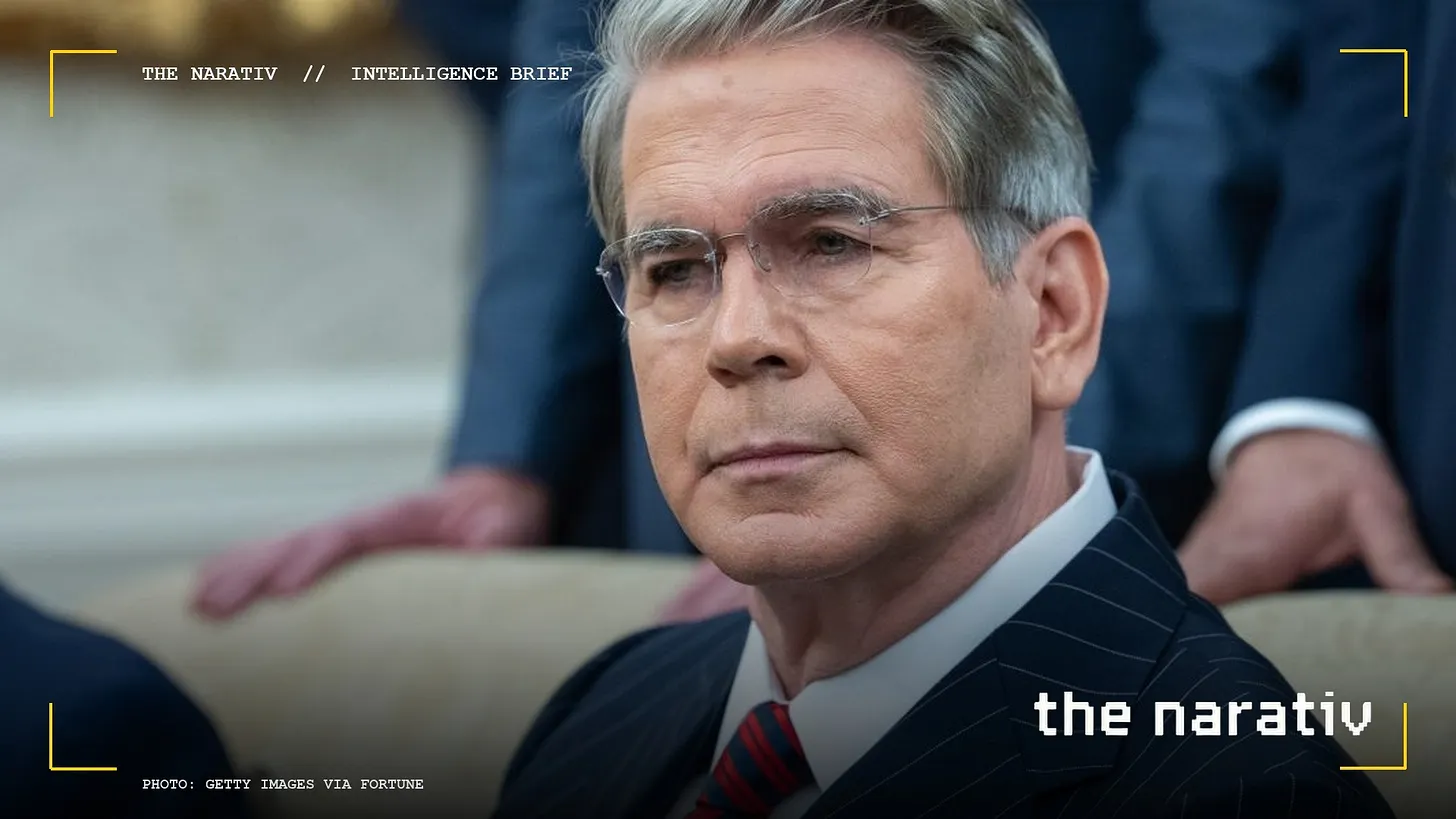
America’s debt reached $39.99 trillion on Monday, thirteen billion short of $40 trillion, by the Treasury’s own count. Foreign central banks are getting out. They held 50.2% of all foreign-owned American debt in January 2023, 42.8% a year ago, and 40.6% in June, shedding $114bn in twelve months. Only China is selling outright, down to its smallest holdings since September 2008. Nobody walked out of the market itself. Total foreign holdings rose $205bn to $9.3 trillion: hedge funds, insurers and pension funds took the room the central banks left, and they reprice every morning. The 30-year Treasury closed Monday at 5.31%, its highest since 2007. Scott Bessent, the Treasury secretary, staged the first American intervention to buy yen since 1998, with Tokyo: Japan spent more than $60bn, his Treasury $5-10bn. He also wants central banks to borrow dollars from the Federal Reserve instead of selling bonds. Bessent can lend the patient ones a way to hold on. He cannot make the traders who replaced them settle for 5.31%.
 SIXTY THOUSAND DOLLARS BEAT SIXTEEN MILLION
Angie Nixon beat Alex Vindman by 12.2 points in Florida’s Democratic Senate primary, 705,192 votes to 552,774, with 99% counted. Vindman raised more than $16.3 million to her $975,000. On advertising the gap ran wider still: $2.2 million against $60,000, the tracking firm AdImpact counts, and Nixon bought no television or cable at all. She took Miami-Dade, the state’s largest county, and Broward, where Vindman lives. The seat is Marco Rubio’s, vacated when he became secretary of state. Ashley Moody, appointed to it in January 2025, took her own primary with 79.6%, sits on more than $8 million and led Nixon 50-42 in July. November 3 decides the rest of Rubio’s term, and Moody remains the favourite.
 JUSTICE FOUND NOTHING AND TOOK $50 MILLION
Haley Van Erem, a career Justice Department civil rights lawyer, filed a whistleblower complaint Tuesday, obtained by the Associated Press. Her own investigators found no violation at Brown. Her bosses “refused to permit a notice of no violation” and pushed for a settlement. Brown paid $50 million. At Columbia they found evidence, then rushed the case on unsupported allegations. Columbia paid $200 million. At Harvard, officials discussed freezes and settlements before any finding. One called Harvard “over a barrel.” Justice and Health and Human Services said nothing.
 TRUMP’S CANADA DEAL DOESN’T EXIST
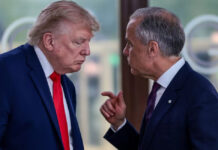
Trump announced at 11:24 Eastern on Tuesday night that the two countries had a deal, and paused his threatened 50% tariff for three days. Mark Carney would not confirm it. “Important work” remained, Canada’s prime minister said. The pause covers some Canadian products, not all. Trump dangled reviving the Keystone XL pipeline. The deadline comes back Friday, the fourth time he has threatened Canada and blinked at his own clock.
 TRUMP IS DISMANTLING THE WAR CRIMES COURT
The Treasury sanctioned the International Criminal Court’s president, Tomoko Akane, and a trial lawyer Tuesday. Nine of eighteen judges now carry American sanctions. Rubio said Washington stands ready to “systematically dismantle” it. Akane’s court ordered Netanyahu’s arrest over Gaza in 2024. He applauded. Japan and the Netherlands objected. Europe said nothing.
 TRUMP BROKE THE LAW AND NOTHING HAPPENED
Trump fired seventeen watchdogs in one night, skipping the notice the law requires. A judge called the violation obvious and reinstated nobody. His pick for Interior’s watchdog wrote Project 2025. That office asked to investigate the Reflecting Pool.
 THE BIGGER PICTURE
Full faith and credit is the promise behind every American government bond. The phrase is also the country’s word for itself. Trump is spending both.
He threatened Canada with a 50% tariff, then announced a deal Mark Carney never made. His investigators found no violation at Brown; his department took $50 million anyway. He sanctioned the judges who charged an ally. He fired seventeen watchdogs, a judge called it unlawful, and nobody went back to work. Demand, then threat, then payment. A public servant does not do business that way.
The central banks are the one party he cannot fire, sanction or settle with. They are getting out. Trump did not stumble into the tariffs — he is weakening the dollar on purpose, and his people have somewhere else for the money to go. The GENIUS Act handed Scott Bessent sweeping power over stablecoins; Bessent is the same man buying yen at midnight to hold the bond market together. The traders replacing the central banks charge more every morning. What Bessent does when they raise the price again decides the autumn.
LIVE TODAY ON NARATIV
Fivestack — 3:00 PM ET, with Dean Blundell.
 READ THIS ON NARATIV
The same Treasury secretary, twelve days earlier: Bessent switched off the database that showed who owns America’s shell companies.
|
THE NARATIV
|
||||||
Bessent Kills Shell Company Disclosure, Deletes the Database |
||||||
|
||||||
 |
||||||
|
Treasury Secretary Scott Bessent killed the law that made American shell companies name their owners. His Financial Crimes Enforcement Network issued a final rule Wednesday permanently ending beneficial-ownership reporting under the Corporate Transparency Act — and said it will delete the ownership records millions of American businesses already filed.
|
||||||
|