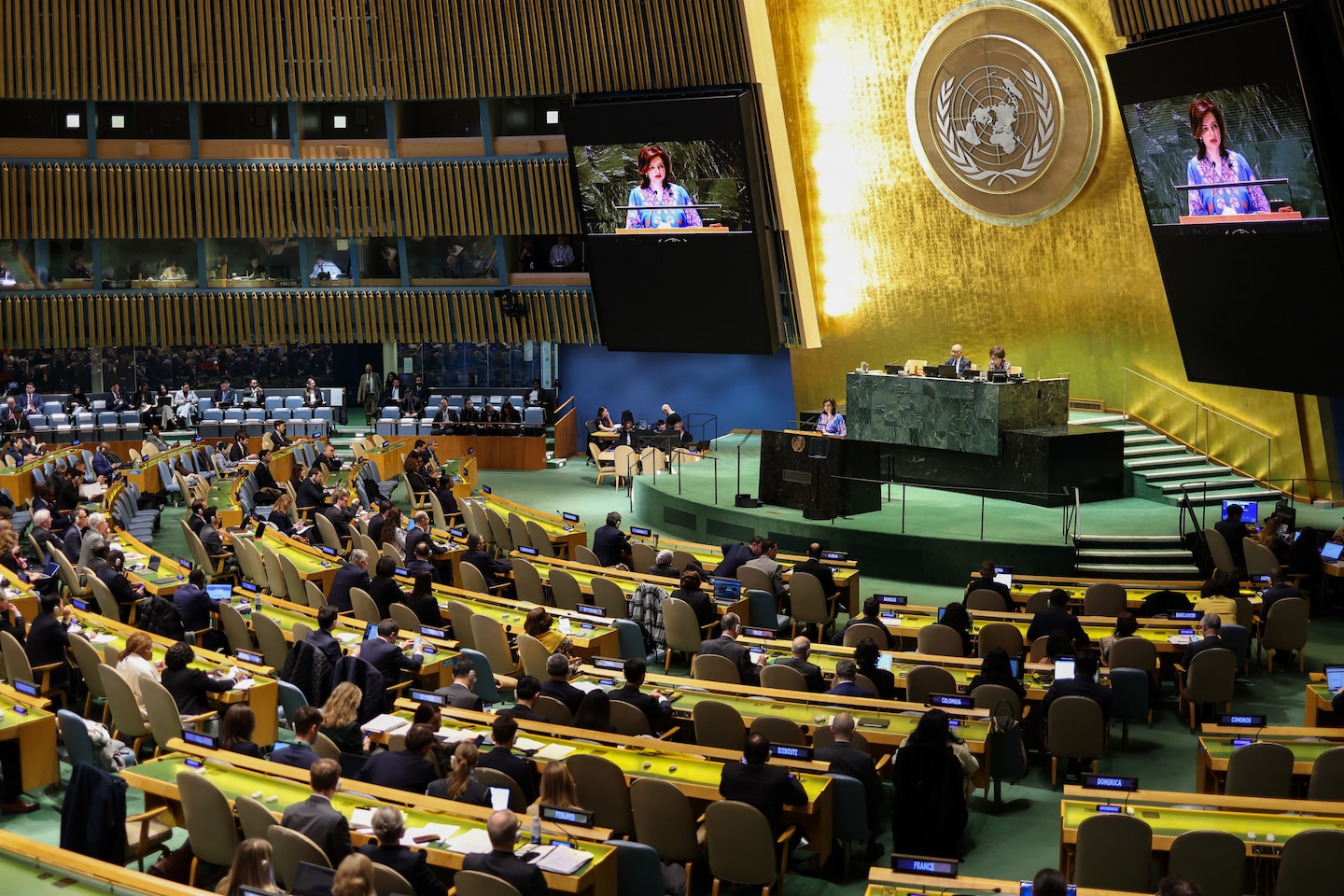
Ukrainian Deputy Foreign Minister Mariana Betsa speaks Monday during a U.N. General Assembly meeting in New York to mark the third anniversary of Russia's invasion of Ukraine. (Charly Triballeau/AFP/Getty Images)
The United States voted with Russia, North Korea and 15 other Moscow-friendly countries Monday against a U.N. resolution condemning Russian aggression in Ukraine and calling for the return of Ukrainian territory. The resolution, sponsored by representatives from Kyiv, passed overwhelmingly in the U.N. General Assembly.
The U.S. delegation also abstained from voting on its own competing resolution that simply called for an end to the war, after European-sponsored amendments inserting new anti-Russian language in the resolution were approved in the 193-member body by a wide margin. The amended U.S. resolution also passed.
The votes, taken on the third anniversary of the Russian invasion of Ukraine, were an astounding reflection of the deepening split between the Trump administration and the United States’ major allies over support for Ukraine and disapproval of President Donald Trump’s unilateral outreach to the Kremlin to settle the war on terms favorable to Russia.
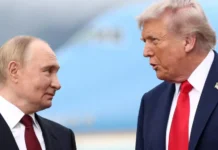
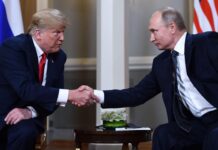
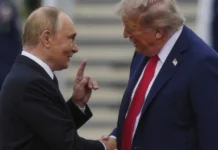
Trump has blamed Ukraine for starting the war, called Ukrainian President Volodymyr Zelensky a “dictator,” spoken directly with Russian President Vladimir Putin about normalizing Washington-Moscow relations and implied that strong U.S. sanctions against Russia over Ukraine may be lifted.
Later Monday, the United States was saved from a similar failure after reoffering its original resolution at a meeting of the 15-member U.N. Security Council. While General Assembly resolutions reflect world opinion but are nonbinding, Security Council votes, which require nine members in favor and no vetoes by the five permanent members — the United States, Russia, China, Britain and France — have the force of international law. The other 10 members are selected by region for two-year terms and have no veto. Ukraine is not a current council member.
The Security Council meeting was more subdued than the morning session — where widespread applause broke out at Ukraine’s victory — but was notable for its underlying tension between the Europeans and the United States, while other members took subordinate roles. Speeches were uncharacteristically short and to the point.
France and Britain first soughtto delay the council meeting by a day, asking for a vote to allow more time to consider the proposed U.S. resolution that was circulated Friday. That request was denied with U.S. and Russian vetoes. It was time, U.S. interim ambassador Dorothy Camille Shea said, for the council “to now step forward and do its job.”
Shea called the U.S. resolution — which consisted of only a few lines calling for the war to end and assigned no responsibility for it to Russia — “elegant in its simplicity. … This resolution is not a peace deal, and it imposes no costs.”
The Europeans — France, Britain, Denmark and Slovenia — then offered the same three amendments proposed in the General Assembly — replacing the words “the Russia-Ukraine conflict” with “the full scale invasion of Ukraine by the Russian federation,” reaffirming Ukraine’s right to all of its territory and the need for a “lasting” peace. The United States, which earlier in the day had said it would veto its own resolution if it was amended in the council, was saved from having to do so when Russia killed two of the European measures with a veto.
Russian Ambassador Vasily Nebenzya said he considered the U.S. resolution “a step in the right direction, a common-sense initiative which reflects the will of the new administration in the White House to really contribute to the peaceful settlement in the conflict.”
The final vote was a victory of sorts for Trump, passing with 10 votes while the Europeans abstained.
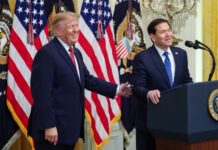
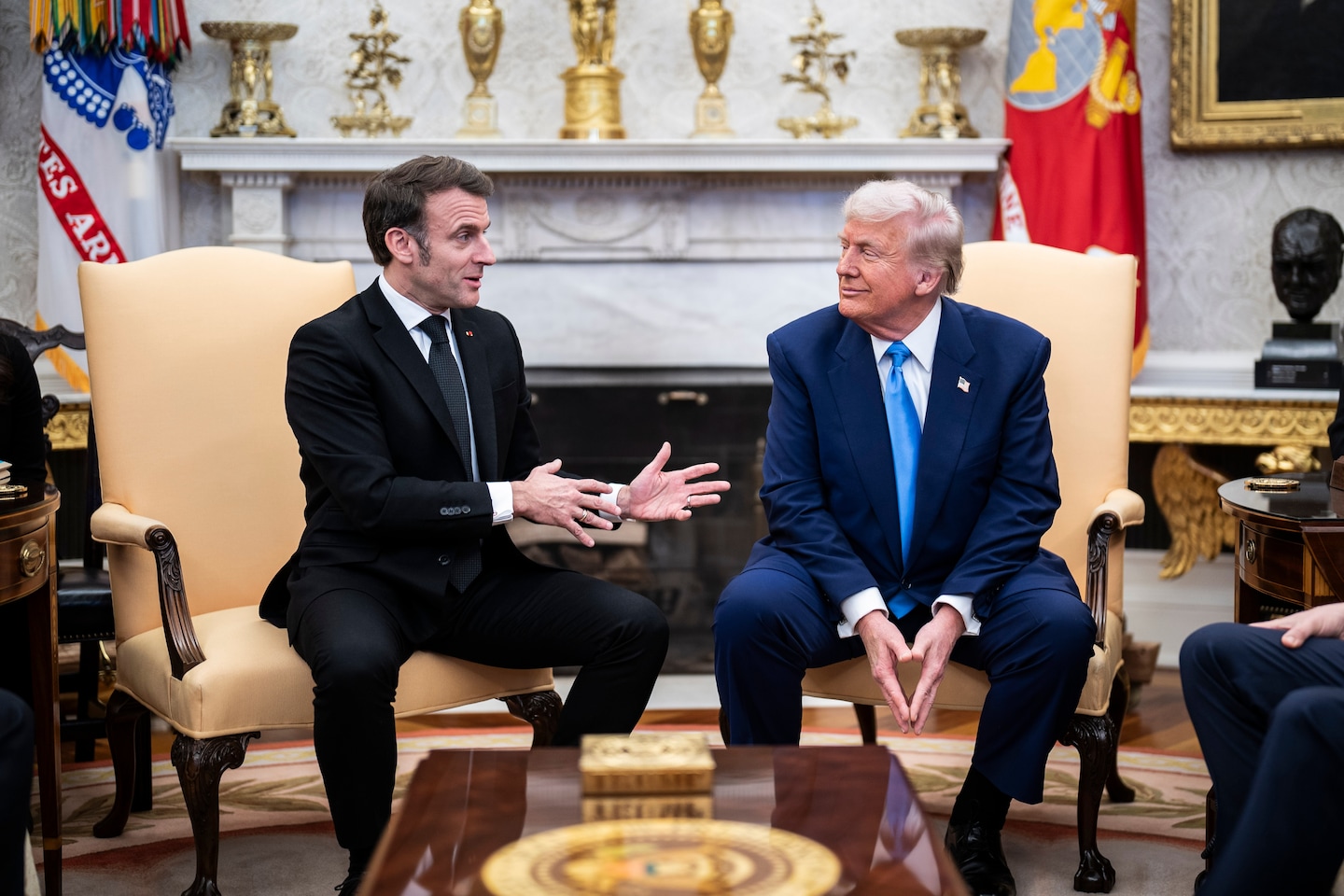
French President Emmanuel Macron meets with President Donald Trump in the Oval Office on Monday. (Jabin Botsford/The Washington Post)
The two sets ofU.N. votes came as Trump met at the White House with French President Emmanuel Macron for bilateral talks and a virtual meeting of the Group of Seven industrialized nations, and prepared for a Thursday visit from British Prime Minister Keir Starmer.
The Trump administration has opposed phrasing in a statement on Ukraine that the G-7 — which comprises the United States, Canada, France, Germany, Italy, Britain and Japan — has been preparing to issue this week. In a social media post after the virtual meeting Monday, Trump referred to Canadian Prime Minister Justin Trudeau, the G-7 chair, as “Governor” Trudeau, a reference to the president’s ongoing callfor Canada to become the 51st U.S. state, and repeated his contention that the war in Ukraine “would have never started if I was president.”
Trump also expressed hope for an agreement with Kyiv on what he called “the vital ‘Critical Minerals and Rare-Earths Deal,’” in which he has asked Ukraine to sign over the rights to 50 percent of its mineral wealth to “recoup” U.S. money spent on Ukraine’s defense. He said he was “in serious discussions” with Putin on ending the war and “also major Economic Development transactions which will take place between the United States and Russia. Talks are proceeding very well!”
Asked by reporters ahead of his Oval Office meeting with Macron why the United States opposed the Ukraine-sponsored resolution condemning Russia, Trump said: “I would rather not explain it now, but it’s sort of self-evident.”
Secret documents reveal donors behind $330 million for Trump’s ballroom
October 15, 2026
Column
Gretchen Reynolds
Scientists may have the key to treating arthritis: Regrowing the knee
October 15, 2026
Customer berates teen over 20-cent error. Strangers rally with $5K in tips.
October 15, 2026
Opinion
David Ignatius
Three weeks out, Trump’s election meddling lies mostly in ruins
October 15, 2026
Trump cancels Hegseth’s plan to live-stream Fort Hood shooter’s execution
October 15, 2026
Groups urge investigation of press secretary Katie Zacharia’s legal credent…
October 15, 2026
Opinion
Washington Post Opinions
‘Revolutionary’: GLP-1s’ most interesting side effects
When the two leaders later held a news conference, Macron appeared determined not to antagonize Trump while arguing that long-term peace could be secured only by being tough with the Kremlin. “There is good reason for President Trump to reengage with President Putin,” he said, but “being strong and having deterrence capacities is the only way to be sure” a peace deal will be “respected” by Moscow.
Ukraine’s General Assembly resolution, co-sponsored by dozens of other nations, was the seventh approved by that body — and the first not supported by the United States — since the war began.
“This is a moment of truth,” Ukrainian Deputy Foreign Minister Mariana Betsa told the assembly Monday, “a historic moment not only for Ukraine” but also for Europe and “for the entire democratic world. The way we answer to Russian aggression today … to Russian atrocities and crimes … will define … our entire future.”
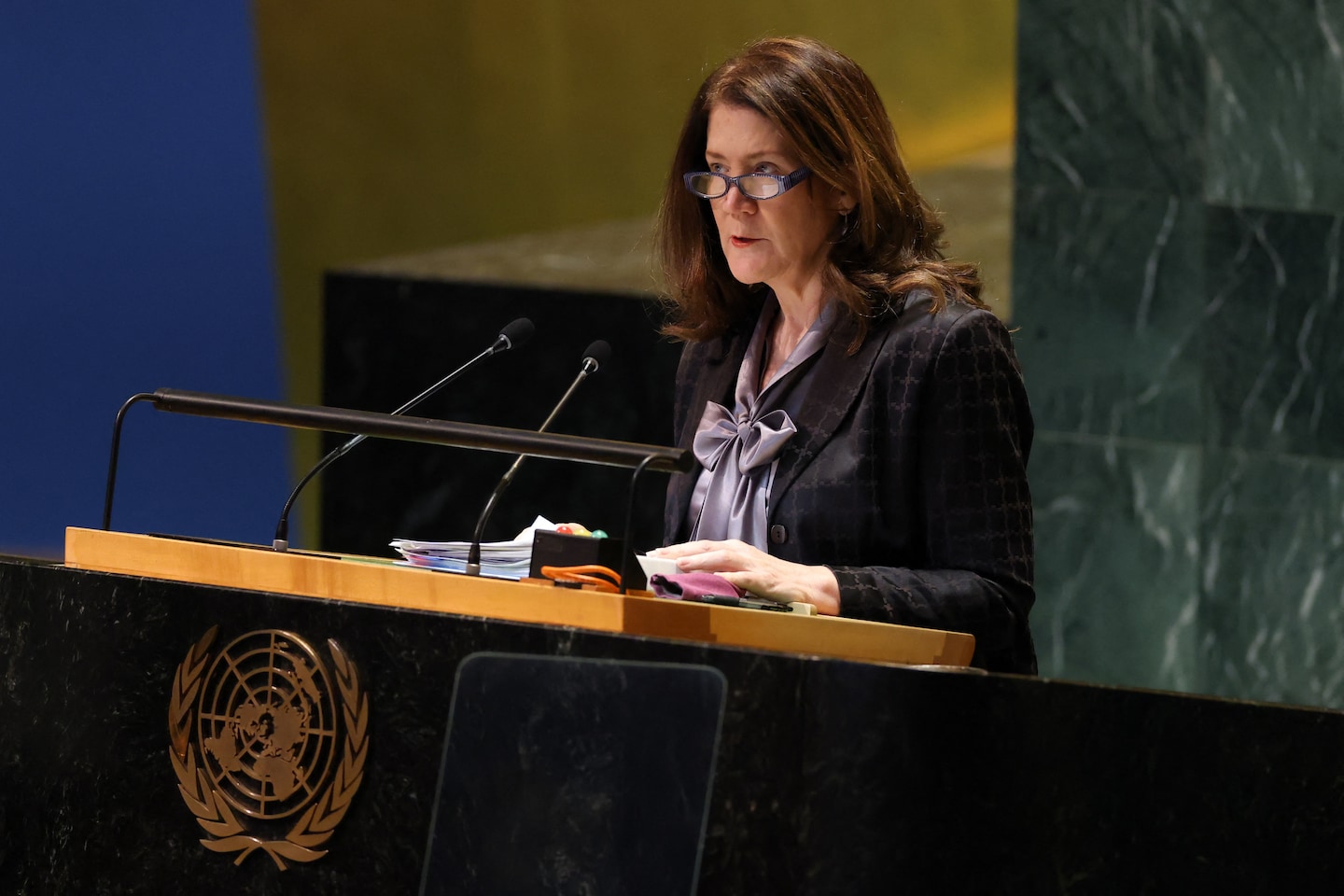
Shea, the U.S. representative, told the assembly that “multiple resolutions … have failed to stop the war.” Urging support for the unamended U.S. measure, she called it “a simple statement … that looks forward, not backward, focused on one simple idea of ending the war.”
Dorothy Camille Shea, the interim U.S. representative to the United Nations, speaks during Monday’s General Assembly in New York. (Charly Triballeau/AFP/Getty Images)
Nebenzya, the Russian ambassador, repeated Putin’s contention that the war was in response to attempts by the West to expand its own influence and territorial control at Russia’s expense, and by Ukraine to violate the human rights of its Russian-speaking minority.
Kyiv was informed in advance that the United States would vote against Ukraine’s resolution, and U.S. demands that Zelensky’s government take its proposal off the table continued as late as Monday morning. The Trump administration also pressured other nations, including through messages sent by Secretary of State Marco Rubio to all U.S. embassies, to vote against the resolution or to abstain.
“We told them we would not surrender,” a Ukrainian official said, speaking on the condition of anonymity about the sensitive diplomatic discussions. “This is a really unpleasant surprise, but it’s not for us to judge, it’s for the Americans themselves.” The official noted that Haiti was among the nations that aligned with the United States and voted against the resolution. If Washington is treating Ukraine with such pressure, the official said, “what will they do to Haiti?”
Asked by a reporter in Brussels on Monday whether the Trump administration was acting in the interest of the “free world” or of Russia, Kaja Kallas, the former prime minister of Estonia and now the chief European Union diplomat, paused and said: “If [we] look at the messages that come from the United States, then it is clear that the Russian narrative is there, very strongly represented.”
Ukrainian Foreign Minister Andrii Sybiha expressed thanks to all countries that backed Ukraine. “Ukraine and the wider international community will also undoubtedly notice the company that ended up voting against this document,” he wrote on social media. “At the end of the day, despite all the obstacles … Ukrainian diplomacy has proven its ability to defend principles and truth.”
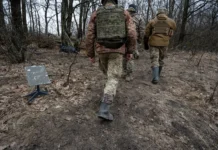
Oleksandr, 40, a Ukrainian army officer who runs intelligence operations in Russia’s Kursk region and whose brigade is now among those battling North Korean forces fighting for Russia, said he was stunned to see Washington aligned with Moscow and Pyongyang.
“Sometimes it feels like we are living in a postapocalyptic sci-fi novel,” he said, speaking on the condition he be identified by his first name in keeping with Ukrainian military rules.
In addition to Haiti, other countries voting against Ukraine’s General Assembly resolution were Belarus, Burkina Faso, Burundi, Central African Republic, Equatorial Guinea, Eritrea, Hungary, Israel, Mali, the Marshall Islands, Nicaragua, Niger, Palau and Sudan.
The required two-thirds majority of those voting was reached with all of Europe — with the exception of Hungary — and Australia voting for the resolution.
Sixty-five countries abstained, including China, the Persian Gulf nations, Paraguay, Argentina, Brazil, Yemen, Vietnam and much of Africa.
Richard Gowan, a U.N. expert at the International Crisis Group, said the divide between the United States and Europe marked “the biggest split among Western powers at the U.N. since the Iraq War — and probably even more fundamental.”
Anastacia Galouchka and Michael Birnbaum contributed to this report.