Securing a cease-fire will not be easy. It requires that the Gulf countries overcome their own lack of cohesion, that Iran prioritize economic recovery and forgo explicit guarantees about U.S. behavior, and that the United States gives Gulf countries the space necessary to reach a deal. Even if successful, the resulting agreement will not address the underlying issues driving the war. But with scant alternatives on the horizon, it is the best—and perhaps the only—way to ease the pain for everyone.
SAVING FACE
In theory, a U.S.-Iranian agreement should be straightforward. There is a historical template for deals between Iran and the United States—Tehran agrees to constrain or give up a specific behavior, and Washington agrees to give it money and recognition—that could apply neatly to the current conflict. In the Algiers Accords of 1981, for instance, Iran agreed to release American diplomats it held hostage in exchange for frozen funds and a commitment by the United States not to intervene in Iran’s internal affairs. In the 2015 nuclear deal, Tehran accepted strict limits on its nuclear program in return for sanctions relief and an implicit acceptance of its right to enrich uranium. Today, Iran could stop impeding maritime traffic through the Strait of Hormuz (and perhaps eventually make concessions on its nuclear program), and Washington could grant it some combination of sanctions relief, cash, and acknowledgment of Tehran having a formal role in the waterway.
In practice, however, reaching this understanding will be extremely difficult. One reason is technical: Iran won’t make the nuclear concessions that U.S. President Donald Trump wants, and the United States will not provide the upfront, irreversible financial incentives that Tehran demands. But the bigger problem is reputational. To justify his quixotic war and decision to withdraw from the 2015 nuclear deal, Trump wants sweeping concessions from Tehran. Iran, for its part, is loath to settle for fewer benefits than it received from the United States in their ill-fated June memorandum of understanding, in which Washington pledged significant relief. As a result, both sides feel compelled to sustain the confrontation, even though doing so is mutually detrimental.
The Gulf states cannot resolve the dispute over Iran’s nuclear program. But they can bring about relative peace by helping address other essential issues. The United States may not be willing to pay Iran for merely opening the Strait of Hormuz, but its Gulf partners have the wealth and the motivation to offer the regime immediate economic concessions. Those partners could, for instance, give Iran some form of humanitarian and reconstruction funding. Iran, in turn, would stop attacks on ships transiting the strait and on Gulf states themselves. In response to Iran ceasing its attacks on commerce, the United States would lift its own blockade, and the Gulf states and Iran would establish a temporary deconfliction mechanism for shipping that acknowledges Iran’s role in the waterway without establishing unacceptable precedents for international commerce. This mechanism could require that ships use Iran’s preferred traffic pattern but would not formalize Iranian control over the passage.
This particular arrangement would not resolve Iran’s other core objective—prohibiting the United States and Israel from launching a renewed military campaign. This concern is harder to address. The United States may lack a credible military endgame, and the war might be unpopular domestically, but that has not stopped an erratic Trump from drawing up plans for renewed military action. But the Gulf states can provide Iran with assurances that they would use their leverage with Washington to help deter future attacks. For example, in May, Kuwait and Saudi Arabia temporarily paused U.S. access, basing, and overflight—the approvals that allow the United States military to use Gulf countries’ territory and airspace—because of concerns about the United States’ plans for escorting merchant ships through the Strait of Hormuz. The tactic worked: the United States paused the operation.
The Gulf states will need to improve internal cohesion.
The United States might bristle at handing Iran negotiations over to the Gulf countries. But ultimately, U.S. officials should be able to spin this deal as a win. Trump, for instance, could exit the war while telling Americans that he saved the world from high energy prices without making the kind of economic and nuclear concessions to Iran that the Obama administration did under the 2015 agreement. He could likewise boast about the steps he took to weaken Iran, and, in the absence of a nuclear deal, point out that his self-proclaimed “maximum pressure” sanctions remain in place. In fact, in some ways, a Gulf-brokered deal is exactly the kind of “America first” foreign policy Trump promised. It would let the region take on the burden of managing a bad actor, including responsibility for providing most of the necessary concessions. Trump would have stumbled into the outcome. But he would still leave office with an empowered set of allies more capable of managing their own security.
Iran, for its part, would not only get significant economic benefits. It might also advance its goal of reducing the United States’ influence in the region. After all, if Israel or the United States undermines an arrangement down the road, it will only accelerate the decline of Washington’s credibility and influence with its Gulf partners. The United States has already placed its relationship with these countries under stress by going to war with Iran, something they did not ask for and for which all have suffered serious consequences. A Gulf state deal would thus allow Tehran to leverage any future U.S. military campaigns against Iran to further drive a wedge between the United States and its regional partners.
Iran has repeatedly made clear that its top war-related priority is to end the war on terms that reduce the likelihood of a future conflict. To some extent, Iran has already achieved this benchmark with the pain it has inflicted on the global economy. Assuming this war eventually ends, the next time an Israeli prime minister asks an American president to approve an attack on Iran, that president will have to weigh global economic instability against Israeli security interests. The threat posed by Iran, in the absence of a nuclear breakout or massive terrorist attack, may not outweigh the risk to the global economy. Israel might act independently of the United States, but doing so would risk further damaging the U.S.-Israeli relationship and invite Iranian retaliation without American protection.
But this deterrent is effective only once the current iteration of the war ends. If the war continues, Iran will forfeit the future de facto security guarantee that the Strait of Hormuz and geography provide. The longer this conflict goes on, the more it favors those in Israel or the United States advocating for regime change or endless war. Unless there is a solution to high energy prices that allows Trump to disengage from Iran, he will continue grasping, and it could eventually lead him to adopt aggressive kinetic options that have not yet been tried—and for good reason.
THE BEST BAD OPTION
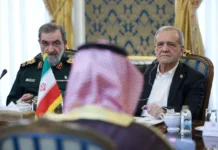
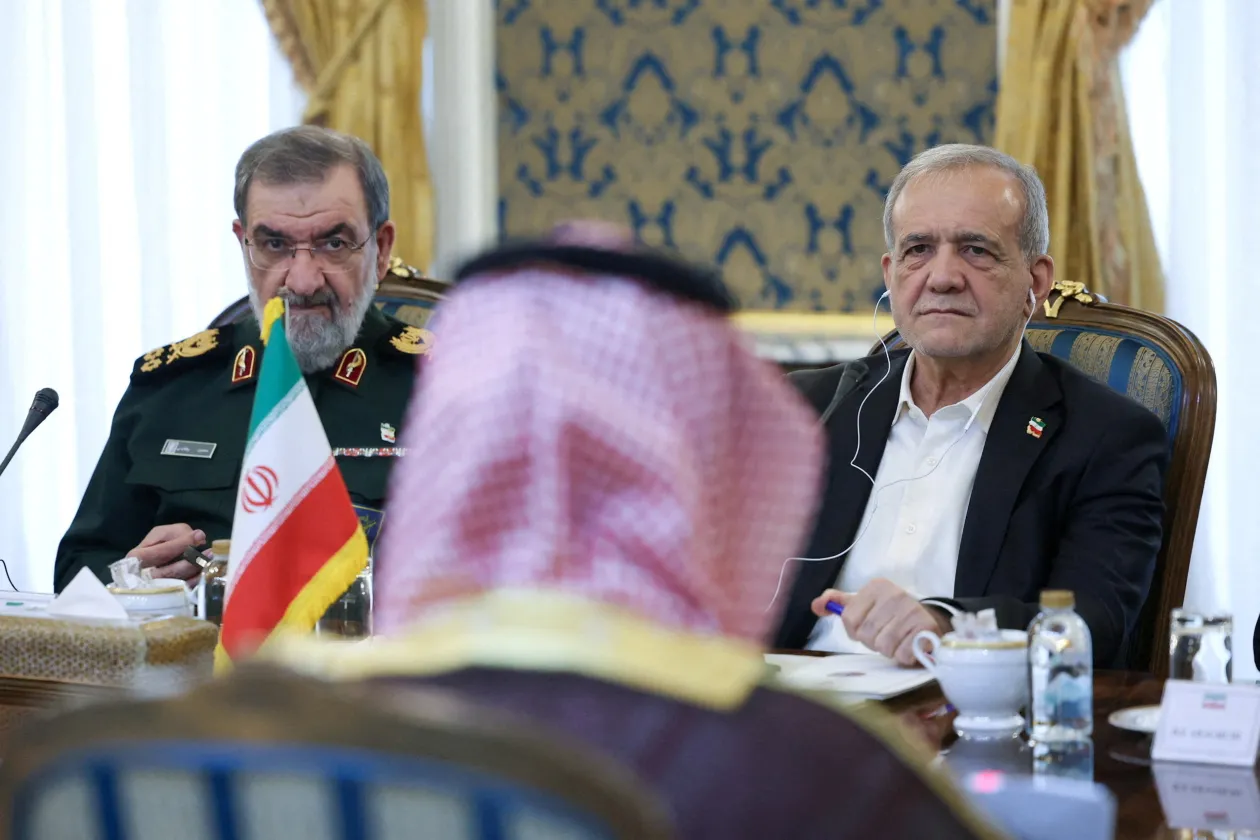
Iran and the Gulf countries are already exploring regionally led solutions to the conflict. On October 26, Saudi officials traveled to Tehran to meet with their Iranian counterparts, alongside leaders from Pakistan and Turkey. Gulf countries had also planned to meet with Iran in Salalah, Oman, on September 14 to discuss the Strait of Hormuz. But that gathering never happened, and unless there is a broader regional solution, Gulf countries will instead mostly pursue private, bilateral deals with Iran to help forestall future attacks on their ships or territory. These agreements might help lessen the pain for individual Gulf countries in the short term, but they fail to address the overall risk of Iranian escalation or resolve the global consequences stemming from disputes related to the Strait of Hormuz. Furthermore, they allow Iran to stoke division and distrust between Gulf countries while driving up its own demands.
To get a workable deal, the Gulf states will thus need to improve internal cohesion. This is easier said than done, particularly in light of continued tensions between two of the major Gulf players—Saudi Arabia and the United Arab Emirates. But fixing this issue is wholly within the power of Gulf states, and the Salalah effort demonstrates there is some interest in doing so. Improving cohesion among Gulf states also does not require resolving the larger bilateral tensions and competition among the region’s capitals; it only requires an agreement to isolate the Iran issue from those tensions and address this shared imperative. The Gulf states must therefore collectively agree on redlines for Iranian behavior and coordinate on how to enforce them. If Iran seeks to test the agreement or demand more concessions from Gulf governments, they must collectively push back by pausing economic aid or cooperation—even if it means risking Iranian retaliation.
The Gulf states and Iran will also be tested by the Houthis. Saudi Arabia understandably holds Iran accountable for Houthi attacks on its territory because Iran helped build the group’s capabilities, continues to provide it with significant technical and material support, and helped trigger the re-escalation of the Yemen conflict in July. But Iran does not control the Houthis, so the group is not going to stop attacking Saudi Arabia or call off its campaign inside Yemen simply because Iran says to. Tehran will thus need to extend an olive branch to Riyadh by showing that it is willing to limit its direct involvement in the current Houthi attacks against Saudi Arabia. For instance, Iran could credibly promise Riyadh that Tehran-backed Iraqi militias will stop attacking the kingdom. It was, after all, Iraqi militia attacks that took the kingdom’s valuable East-West oil pipeline offline on September 10, and defending against attacks from both the north (where Saudi Arabia borders Iraq) and south (where it borders Yemen) greatly complicates Riyadh’s already strained air defenses.
These efforts to craft a deal might still come up short. Even if the Gulf states overcome their internal divisions and sideline concerns about Houthi activity, Tehran and Washington could refuse to sign on. Iran could conclude that control of the strait and the ability to throttle energy markets are its best security guarantee, whereas the United States might struggle to even implicitly acknowledge that the war will not achieve the outcome its leaders promised. And even if the cease-fire agreement does work, the result will be far from ideal, for both the United States and its Gulf partners. It could encourage Iran to increase its control over the strait, and it could weaken U.S.–Gulf state partnerships. Worse yet, it fails to address the underlying issues driving the U.S.-Iranian conflict and the tensions between Iran and its neighbors: Tehran’s nuclear program and support for armed groups, respectively.
But a comprehensive Iran deal is not feasible today. A Gulf-brokered outcome on the Strait of Hormuz is. In fact, it may be the only way to stop a mutually hurting stalemate that is poised to last years and cause mounting damage to global markets. The strategies that states have employed to blunt the consequences of global oil and gas shortages will likely start wearing thin in 2027, as governments deplete their strategic reserves, Chinese demand increases, and alternative supply routes out of the Gulf come under Iranian attack. The economic consequences of the conflict could even undermine the domestic stability of the most vulnerable Gulf states or reignite old conflicts, as happened in Yemen this year. A Gulf-brokered deal, then, is the least bad outcome. Such is the irony of this conflict: the bystanders that have already lost the most will need to save the warring parties from themselves.