






























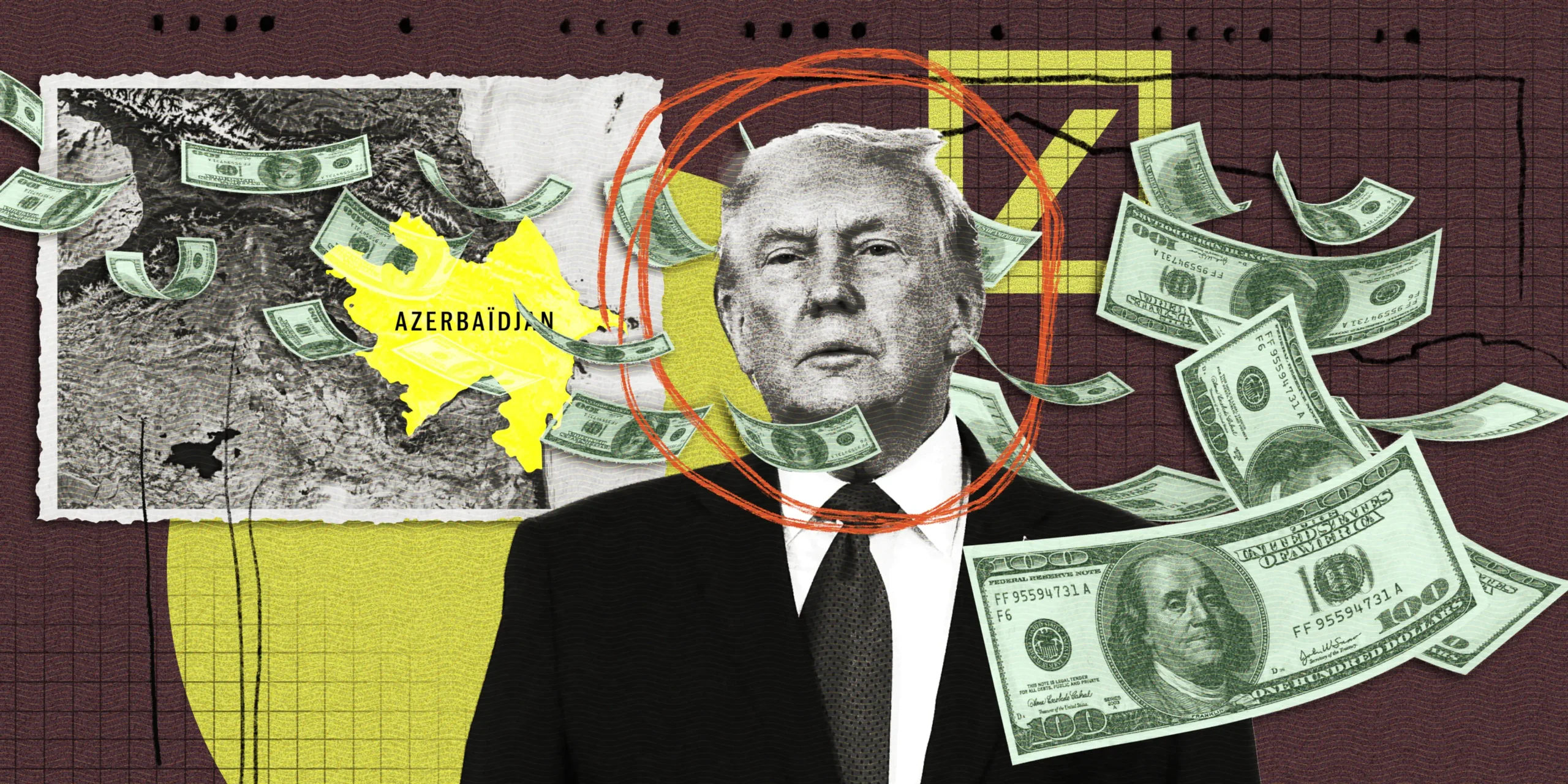
It is the largest journalistic investigation to date into the activities of a bank. ‘Inside Deutsche Bank’ is based on the leak of more than 15 million files related to the operations of the German banking giant since the early 2010s.
The international investigation “Inside Deutsche Bank,” published by Le Monde beginning Tuesday, November 17, is based on a leak of more than 15 million confidential files, including nine million emails, covering the activities of Deutsche Bank since the early 2010s. The data leak was obtained by Indian journalist and author Josy Joseph and South African investigative journalist Khadija Sharife, and shared with more than 230 journalists from some 50 news organizations around the world.
This investigation was coordinated by Barracuda Media NPC, a South African non-profit organization, with technical support from the team of journalists and researchers at the Data and Research Center (DARC), a German company specializing in data analysis for investigative purposes.
The leaked documents came from two whistleblowers whose identities and connections to Deutsche Bank will not be disclosed in order to protect them. For the same reason, the exact date of the leak is not being made public.
According to their own account, the whistleblowers believed Deutsche Bank was engaging in criminal activity and that it was in the public interest to share the documents with journalists. Many of the files stemmed from the bank’s internal investigations, including emails, due diligence reports and financial crime reports.
The whistleblowers also shared the data with the US Department of Justice and FinCEN, the Financial Crimes Enforcement Network of the US Treasury Department. If the US government chooses to prosecute Deutsche Bank based on these documents, the whistleblowers and their attorneys could be eligible for a financial reward.
Neither journalist paid the whistleblowers nor offered any other compensation for the data. The whistleblowers and their legal representatives did not set any conditions for sharing the data with journalists and exerted no influence over the investigations.
Editorial decisions were made independently by the participating journalists and press organizations.
In addition to Le Monde, more than 50 media outlets participated in this international collaborative investigation:
Barracuda Media is supported by grants from the International Fund for Public Interest Media (IFPIM) and the Millennium Trust. IFPIM is currently backed by governments (including those of Australia, Estonia, France, Spain, Sweden and Switzerland), philanthropic foundations (including the Adessium Foundation, Amalgamated Foundation, Ford Foundation, Luminate, MacArthur Foundation and Open Society Foundations), and international organizations (including the International Organization of Francophonie).
The IFPIM fund has previously received funding from other governments, including Denmark and New Zealand, the United States Agency for International Development (USAID), and Taiwan, as well as support from the Annenberg Foundation, Craig Newmark Philanthropies, Google, Microsoft and the National Endowment for Democracy.
Funders had no access to the data, played no role in the investigation and had no influence over editorial decisions.
Journalists: Jérémie Baruch, Raphaëlle Aubert, Abdelhak El Idrissi, Anne Michel
Editorial coordination: Guillaume Daudin
Editing: Ludovic Barth, Charlotte Bouvier, Magali Cartigny, Marc Dérian, Pauline Jallon.
English versions: Pierre-Paul Bermingham, Sinéad McCausland, Sophie Sassi-Gorman, Hannah Steinkopf-Frank
Design and development: Solène Reveney, Léa Tanda
Le Monde
Translation of an original article published in French on lemonde.fr; the publisher may only be liable for the French version.