






























06:05 sáng JST hôm nay
Tổng thống Volodymyr Zelenskyy cho biết Ukraine đã đánh chìm một tàu hộ tống hải quân của Nga tại một cảng của Libya bằng máy bay không người lái hàng hải vào Chủ nhật, một ngày sau cuộc tấn công bằng máy bay không người lái vào một tàu chở hàng của quân đội Nga ở Vịnh Phần Lan.
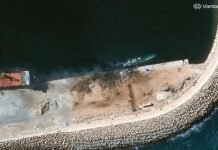
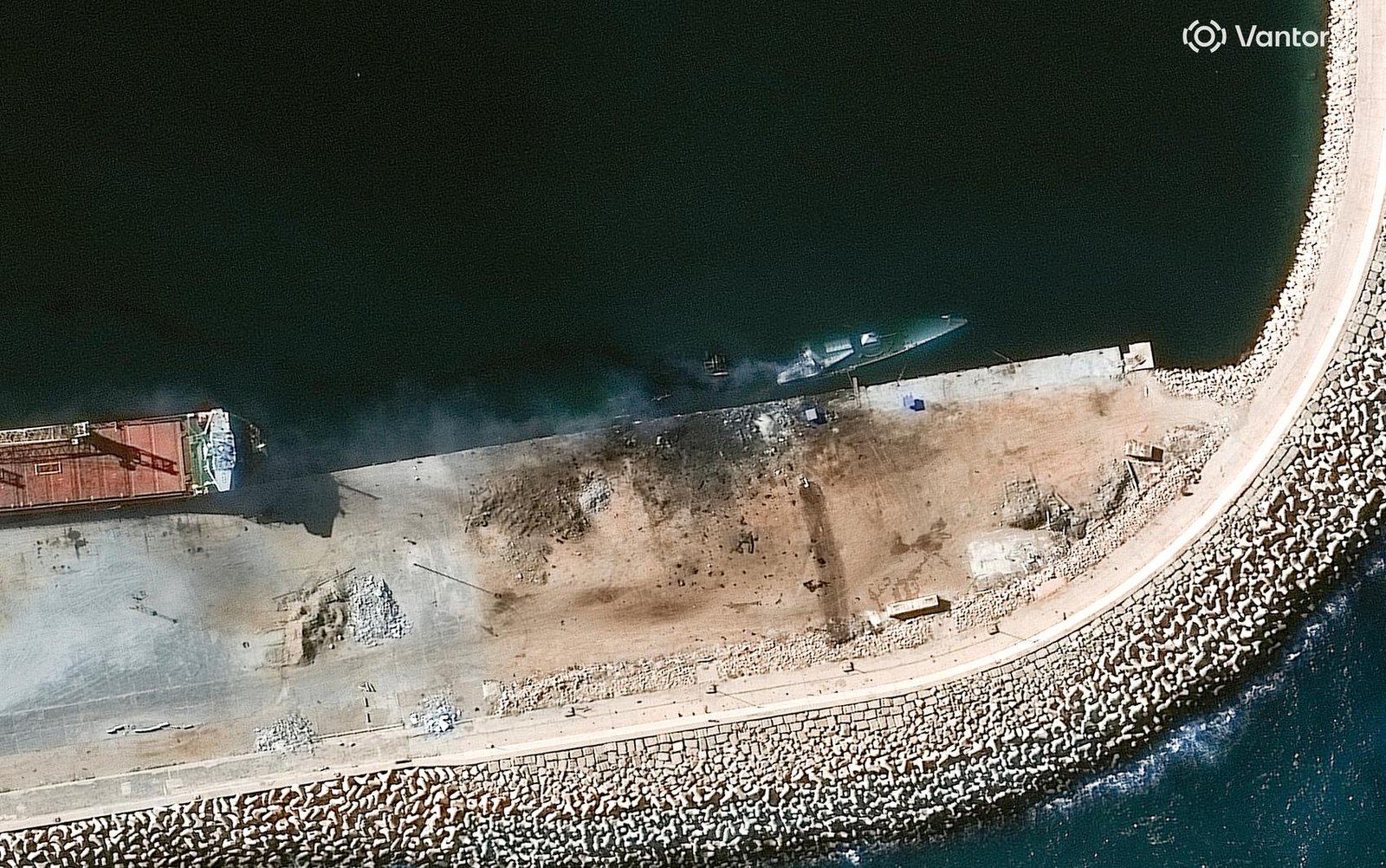
Chính phủ ở miền đông Libya cho biết tàu hộ tống Merkury đã cập cảng căn cứ hải quân Benghazi.
Zelenskyy đã công bố các video hôm thứ Hai từ cơ quan an ninh SBU của Ukraine mà ông nói cho thấy cuộc tấn công và một máy bay không người lái khác ngoài khơi Libya đã đâm vào tàu chở hàng khô MV Angara của Nga mà ông cho rằng Moscow đã sử dụng để vận chuyển vũ khí. Đoạn phim được Reuters xác minh cho thấy lửa bùng lên và khói cuồn cuộn từ các con tàu.
Cơ quan an ninh SBU của Ukraine cho biết các máy bay không người lái được sử dụng vào Chủ nhật đã được phóng từ một “tàu mẹ” trong khu vực.
Trong khi Nga và Ukraine liên tục tấn công các tàu quân sự và thương mại của nhau ở Biển Đen thì các cuộc tấn công ở nơi khác lại hiếm hơn.
SBU cho biết hải quân Nga “không có tuyến đường nào an toàn, thậm chí vượt xa Biển Đen”.
Bài đăng của Zelenskyy trên Telegram là sự thừa nhận chính thức đầu tiên rằng Ukraine đã thực hiện một cuộc tấn công ở Libya. Ông cho biết những nỗ lực của Nga nhằm chống lại nó đã thất bại.
Ông cho biết một trực thăng chiến đấu Ka-27 của Nga cũng đã bị phá hủy và nói thêm: “Chúng tôi tiếp tục hoạt động ở vùng biển được chỉ định”. Bộ Quốc phòng Nga chưa bình luận ngay lập tức.
ĐÔNG LIBYA CÓ QUAN HỆ QUÂN SỰ VỚI NGA
Sau một cuộc nội chiến, miền đông Libya được kiểm soát bởi chỉ huy quân sự Khalifa Haftar, người có Quân đội Quốc gia Libya có quan hệ với Nga. Miền Tây được kiểm soát bởi Chính phủ Thống nhất Quốc gia được quốc tế công nhận có trụ sở tại Tripoli.
Viện Nghiên cứu Chiến tranh cho biết tàu Merkury đã dừng lại vài ngày theo thỏa thuận hợp tác để tiếp nhiên liệu và tiếp tế khi hộ tống các tàu chở hàng của Nga có thể chở vật tư quân sự trên đường tới Nga.
Osama Hamad, thủ tướng của chính phủ ở miền đông Libya, cho biết ông đã yêu cầu Liên Hợp Quốc điều tra “những nghi ngờ rằng những chiếc thuyền đã được hạ thủy từ phía tây Libya” và điều tra sự hiện diện của các chuyên gia quân sự Ukraine ở đó.
Chính phủ Tripoli cũng lên án hoạt động này và cho biết Libya sẽ không bị lôi kéo vào cuộc chiến.
Bộ Ngoại giao Libya cho biết: “Việc tiếp tục chiến tranh giữa Nga và Ukraine mang lại cho không bên nào quyền tiến hành các hoạt động quân sự trên lãnh thổ Libya hoặc trong lãnh hải của nước này”.
Nó cho biết các lực lượng nước ngoài sẽ không được phép sử dụng các cảng hoặc cơ sở hạ tầng của Libya cho mục đích quân sự.
Hồi tháng 3, Nga cho biết các máy bay không người lái của hải quân Ukraine phóng từ Libya đã tấn công tàu Arctic Metagaz, nơi đang vận chuyển khí đốt tự nhiên hóa lỏng từ Murmansk. Cơ quan hàng hải Libya cho biết con tàu đã bị chìm giữa Libya và Malta sau khi bốc cháy. Kiev chưa nhận trách nhiệm về vụ tấn công đó.
VỊNH PHẦN LAN DRONE TẤN CÔNG TRÊN TÀU NGA
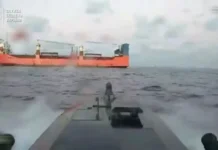
Hôm thứ Bảy, một máy bay không người lái đã đốt cháy một tàu chở hàng khác của Nga, Sparta II, do công ty hậu cần quốc phòng Oboronologistika của Nga điều hành, trong vùng biển quốc tế ở Vịnh Phần Lan.
Quân đội Phần Lan cho biết vụ việc có thể do Ukraine thực hiện, mặc dù Kyiv chưa bình luận ngay lập tức. Tất cả 16 thủy thủ đoàn đã được sơ tán lên một tàu Nga, một người bị thương nhẹ.
Người phát ngôn Điện Kremlin, ông Dmitry Peskov đã trả lời câu hỏi về vụ tấn công bằng cách nói rằng có “xu hướng nguy hiểm là gia tăng hoạt động khủng bố” ở Biển Baltic. Ông cho biết Moscow hy vọng các quốc gia lân cận sẽ cảnh báo Kyiv về những hoạt động như vậy.
Các tàu của Nga, Estonia và Phần Lan đã chữa cháy sau khi tàu Sparta II trôi vào vùng biển Phần Lan và một tàu Nga bắt đầu kéo nó đi vào Chủ nhật.
Các cuộc đàm phán do Mỹ hậu thuẫn giữa Nga và Ukraine đã được nối lại trong tháng này sau 9 tháng gián đoạn trong nỗ lực chấm dứt chiến tranh, cuộc đàm phán lớn nhất ở châu Âu kể từ Thế chiến II, mặc dù cho đến nay vẫn chưa có nhiều kết quả.
© (Thomson Reuters 2026.
Ukraine confirms it used naval drones to strike two Russian ships off Libya
Ukraine’s security service says seven drones were launched from mothership in operation that sank Merkury warship

Ukraine has confirmed it deployed naval drones in strikes on two Russian vessels off Libya on Sunday, including one that sank the corvette Merkury, one of Russia’s newest vessels.
Ukraine’s security service, the SBU, said seven domestically made naval drones were launched from a mothership in the operation, which Volodymyr Zelenskyy described as “exemplary”.
“We continue our operations in designated waters. We are responding to Russia’s aggression. We are developing Ukrainian weapons,” the Ukrainian president added.
Zelenskyy released video footage, filmed by an approaching drone, showing the drones as they smashed into the side of the warship at its berth in the Benghazi naval base, triggering huge explosions that lit up the night sky.
In its own statement, the SBU said: “The defence forces of Ukraine have once again demonstrated that the Russian military fleet and its logistics networks have no safe routes, even far beyond the Black Sea.”
Zelenskyy said the other vessel hit on Sunday, the dry cargo ship MV Angara, was being used by Russia to transport weapons.
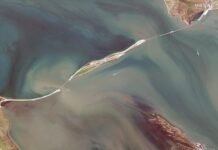
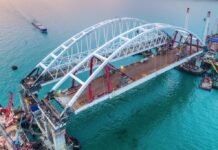
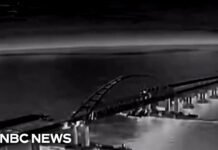
The operation, conducted 1,500 miles (2,400km) from the frontline in Ukraine, was the latest daring long-range assault by Kyiv’s forces. Last week Ukraine hit the Kerch bridge – a key supply line to Russian-occupied Crimea – and the Russian Baltic seaport of Kaliningrad.
Residents in Benghazi heard loud explosions and saw flames at the naval base early on Sunday. Civil defence units rushed to the site and extinguished the fire, authorities in eastern Libya said.
The Institute for the Study of War said the Merkury had stopped over for several days, under a cooperation agreement, to refuel and resupply as it escorted Russian cargo ships that could carry military supplies en route to Russia.

The Merkury had docked to refuel and take on supplies as part of a cooperation agreement between Russia and the eastern-based government in Libya, the statement said without providing details about the vessel or its cargo.
Vladimir Putin had taken a personal interest in the ship. In 2019 he toured the St Petersburg yard where it was being built and backed naming it after a tsarist-era brig celebrated for fighting off two Turkish warships in the Black Sea in 1829.
At the 2023 Navy Day parade, the Russian president singled it out among 30 new vessels as evidence that Russia was “consistently building up the power of its fleet”. He hailed its St George flag as “a sign of the inviolability of our naval traditions” and said it was “gratifying” that the brig’s name had been revived.
Russian state media also talked up the ship. The news agency Tass called it the “newest missile corvette”, while the channel TV Tsentr claimed its stealth technology made it “invisible to radar”.
Divided Libya has emerged in recent years as a proxy battlefield. Moscow has long supported the breakaway government in Benghazi of Khalifa Haftar in its efforts to use eastern Libya as a staging post for its military presence in north Africa and the Sahel.
More recently there have been reports of increasing Ukrainian operations. In April, Associated Press reported that Ukrainian drone specialists had been operating at military sites in Misrata, Tripoli and Zawiya in Libya’s west. In September Libyan authorities denied reports by CNN that it allowed Ukraine to use a military base to launch drones against vessels from Russia’s “shadow fleet” in the Mediterranean.
The confirmation that Ukraine was behind the attacks was condemned by the UN-recognised government in Tripoli. It said Libya rejected any foreign military operations on its territory or in its waters.
There was no immediate comment from Russia about the strikes. The UN mission in Libya (UNSMIL), however, expressed “serious concern” over the attacks, calling for “an immediate, independent and transparent investigation”. It said on X: “Libya cannot afford, and must not become a battleground for foreign conflicts.”
Ukraine prides itself on its military industry, particularly its progress in drone technology, which it has extensively developed since Russia invaded more than four and a half years ago. It has repeatedly touted the effectiveness of its domestically produced drones, including naval dronesdeployed throughout the war to hit Russian ships and infrastructure in the Black Sea.
In 2024, the Ukrainian general staff announced it had destroyed the Russian landing ship Cesar Kunikov with naval drones off the coast of Ukraine’s peninsula of Crimea, which was annexed by Russia in 2014.
Ukraine has also claimed to have attacked Moscow’s so-called shadow fleet – believed to carry Russian oil to circumvent sanctions – including in the Mediterranean last December. In March, a Russian liquefied natural gas carrier sank off the Libyan coast following an attack that Putin blamed on Ukraine.
Jalel Harchaoui, a Libya analyst at the Royal United Services Institute, said Ukraine’s strikes in the Mediterranean “were exceptionally brazen and provocative”.
He added: “The question now is how Russia will retaliate,. Perhaps even more pressing is how the [Hafter] family will respond, given how traumatic the scale of the destruction has been for eastern Libyan authorities.”
Additional reporting by Pjotr Sauer