














Q1: What happened in the shooting of Renee Nicole Good?
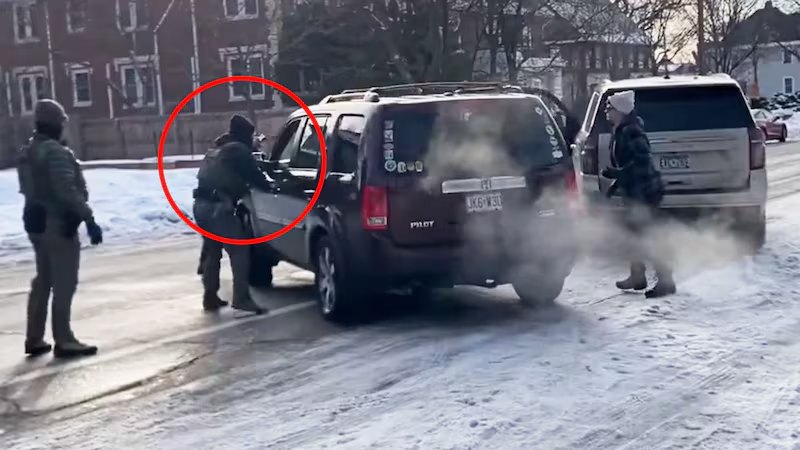
On January 7, 2026, ICE agent Jonathan Ross fatally shot Renee Nicole Good, a 37-year-old U.S. citizen, during an encounter in a residential neighborhood of Minneapolis shortly after she dropped off her child at school. The incident was captured on a 47-second cellphone video recorded by Ross himself, as well as by bystander footage. The case is under FBI investigation.
Q2: Why has this case drawn national and international attention?
The shooting has sparked nationwide protests and global scrutiny because:
-
The victim was not an immigrant, but a U.S. citizen.
-
Video evidence appears to contradict official statements claiming the agent was in immediate danger.
-
The case raises broader concerns about federal use of force, accountability, and militarization of immigration enforcement.
Q3: What does the video evidence show?
Frame-by-frame analysis of Ross’s own video shows:
-
Ross initially filming with his right hand (his firearm hand) while approaching and communicating with Good.
-
At second 31, Ross deliberately switches the phone from his right hand to his left, freeing his dominant hand.
-
From a safe position more than two meters to the right of the vehicle, Ross then moves across the front of the car, placing himself in its potential path.
-
Between seconds 39–40, Good turns the steering wheel twice to the right, visibly redirecting the vehicle to avoid Ross.
-
A scream is heard before the first gunshot, consistent with Good reacting to Ross drawing and aiming his weapon.
-
Ross fires one shot through the windshield, followed by two additional shots through the driver’s side window after the vehicle has already passed him.
Q4: Did Renee Good attempt to run over the ICE agent?
Based on available video evidence, there is no visual indication that Good intentionally drove toward Ross. The vehicle moves slowly and changes direction away from him, traveling parallel to the roadway rather than toward his position.
Q5: Was the agent in immediate danger when he fired?
Video evidence raises serious doubts.
Notably:
-
Ross had clear space to retreat.
-
Another ICE agent standing closer to the open driver’s door—arguably in greater potential danger—did not draw a weapon, suggesting no perceived imminent lethal threat.
-
The two final shots were fired after the vehicle had already passed Ross, when no direct threat remained.
Q6: What is meant by “officer-created jeopardy”?
“Officer-created jeopardy” refers to situations where law enforcement voluntarily places themselves in danger and then uses that danger to justify deadly force. U.S. courts have repeatedly ruled that officers cannot manufacture risk and then rely on it as legal justification.
In this case, Ross:
-
Was initially in a safe position,
-
Chose to move into the vehicle’s path,
-
And escalated the encounter rather than disengaging.
Q7: Which U.S. Supreme Court precedents are relevant?
Two landmark cases apply:
-
Graham v. Connor (1989) – Requires that force be “objectively reasonable” based on the facts at the moment force is used.
-
Tennessee v. Garner (1985) – Prohibits deadly force unless there is a significant and immediate threat of death or serious injury.
Legal experts argue that the video undermines claims that such a threat existed.
Q8: Does federal policy allow shooting into moving vehicles?
DOJ and DHS use-of-force policies strongly restrict firing at moving vehicles, allowing it only in rare circumstances where no reasonable alternative exists and there is an immediate deadly threat. Critics argue those conditions are not supported by the video evidence in this case.
Q9: Why is the phone-hand switch considered significant?
In law enforcement training, deliberately freeing the dominant hand immediately before drawing a weapon is widely understood as preparatory behavior, not an involuntary reflex. Analysts say this undermines claims that the shooting was a split-second reaction.
Q10: What is the current status of the investigation?
The FBI is leading the investigation. Minnesota officials have publicly stated they are being denied full access to evidence, creating tension between state and federal authorities. No charges have been announced as of mid-January 2026.
Q11: What broader implications does this case raise?
The case has become a flashpoint for debates over:
-
Federal law enforcement accountability,
-
Use of force standards,
-
Transparency in investigations involving federal agents,
-
And the expanding role of ICE beyond civil immigration enforcement.
Q12: Why does this case matter beyond this single incident?
Legal observers say the outcome could set an important precedent for how federal agents are held accountable when deadly force is used against civilians, and whether video evidence recorded by officers themselves can override official narratives.