






































VietnamWeek
Based on Video Evidence and Real-Time Timeline (Updated January 11, 2026)
The fatal shooting of Renee Nicole Good (37, a U.S. citizen) by ICE agent Jonathan Ross on January 7, 2026, in Minneapolis, Minnesota, has triggered nationwide protests and intense legal debate over the limits of federal law enforcement’s use of deadly force.
The following analysis is based primarily on the 47-second cellphone video recorded by Ross himself (released by Alpha News), corroborated by bystander videos, frame-by-frame visual analysis, synchronized audio, and established U.S. Supreme Court precedent.
The purpose is to reconstruct the real-time sequence of events and assess whether the use of deadly force was constitutionally justified.
As of January 11, 2026, the incident remains under exclusive FBI investigation. The State of Minnesota has formally requested full access to evidence but has not been granted it, raising serious federal–state legal and political concerns.
I. Event Timeline Based on Ross’s 47-Second Video
Time references below correspond to seconds elapsed in Ross’s own recording, beginning when he approaches Good’s vehicle.
Seconds 0–10 (approximately 9:33 AM)
Agent Ross exits his vehicle with his cellphone already recording, holding it in his right hand (his firearm-dominant hand).
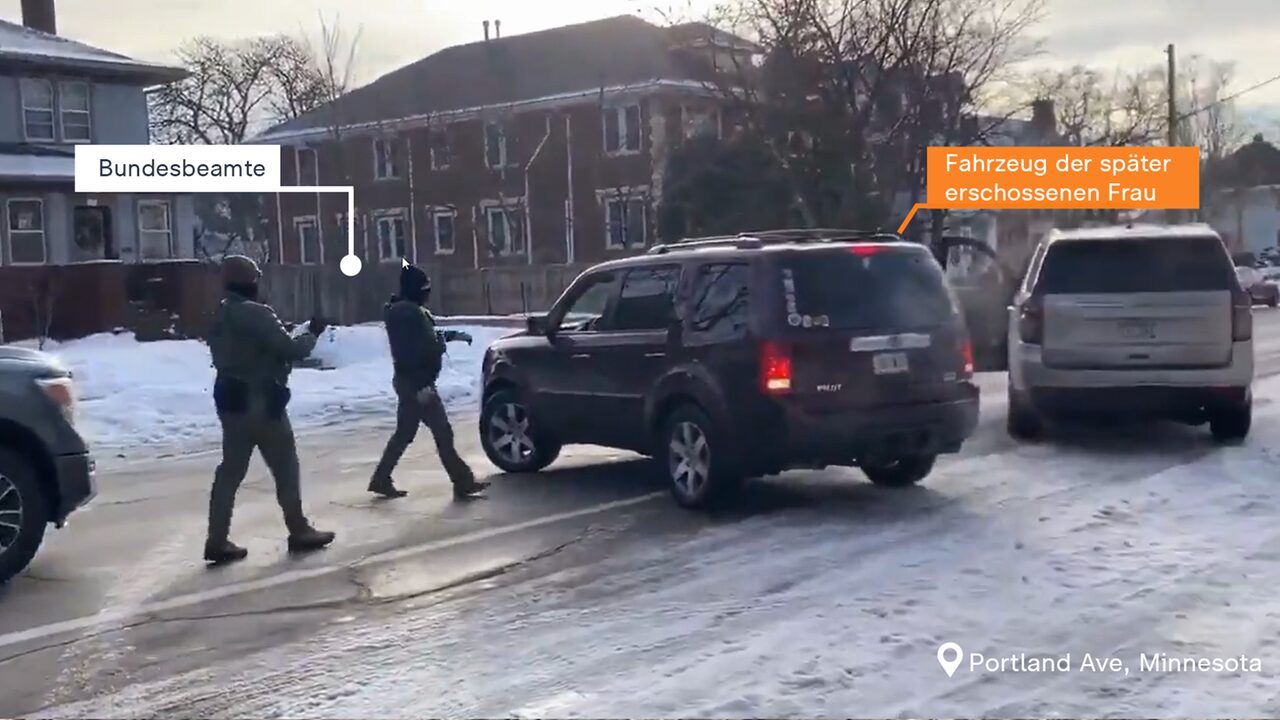
He actively approaches a brown Honda Pilot driven by Renee Good from the rear-right side and walks around the vehicle.
Good had just dropped her young son off at school roughly three miles away and was seated in her car. There is no indication of a weapon, aggression, or threatening conduct.
Ross verbally engages Good through the open window, instructing her to stop and cooperate. Good responds calmly, stating words to the effect of “I’m leaving.”
A companion of Good stands nearby, recording and verbally engaging Ross.
Seconds 20–30
Ross continues arguing with Good’s companion and orders him to step back.
The companion turns toward the passenger-side door, appearing to attempt to open it, possibly to enter the vehicle.
At this point:
-
The vehicle remains stationary
-
Ross is positioned safely to the right side of the vehicle
-
There is no obstruction, entrapment, or imminent threat
Second 31 (approximately 9:35 AM) —
Critical Moment
While standing in a clearly safe position, Ross deliberately switches his cellphone from his right hand to his left hand.
In DHS/ICE use-of-force training, such a movement is widely recognized as preparatory motor action, freeing the dominant hand to draw a firearm.
This action is not a reflexive response to immediate danger, but a deliberate preparatory step.
Immediately afterward:
-
Good’s vehicle exhibits slight movement (consistent with releasing the brake)
-
Ross does not retreat, despite having ample space to do so
-
Instead, he moves directly toward the front of the vehicle, placing himself in potential danger
Seconds 39–40
Good turns the steering wheel sharply to the right twice:
-
First turn: approximately 45 degrees
-
Second turn: an additional 30–45 degrees
The front wheels visibly change direction, causing the vehicle to travel parallel to the roadway, not toward Ross.
The vehicle’s speed remains low (estimated under 5 mph), with no engine revving, wheel spin, or sudden acceleration.
At the end of seconds 39–40:
-
Good’s companion turns back toward the vehicle
-
A scream of fear is audible (more clearly captured in bystander footage), coinciding with Ross drawing and aiming his firearm
-
The companion shouts: “Drive, baby, drive”
Seconds 41–42 (approximately 9:37 AM)
The first gunshot is fired through the windshield, striking Renee Good.
A brief pause (~399 milliseconds) occurs between shots, as established by frame-by-frame analysis.
Ross then:
-
Steps back
-
Partially opens the driver-side door
-
Fires two additional rounds through the open door, at a moment when the front of the vehicle has already passed his position, eliminating any direct collision risk
The vehicle continues briefly along the roadway before stopping due to Good’s critical injuries.
Ross’s audio is recorded saying: “Fucking bitch.”
II. Legal Analysis: Excessive Force Under the Fourth Amendment?
The facts strongly suggest potential excessive use of force, implicating the Fourth Amendment, which protects against unreasonable seizures.
1. Graham v. Connor (1989) — Objective Reasonableness
The Supreme Court requires that force be objectively reasonable from the perspective of a reasonable officer, considering:
-
The immediacy of the threat
-
The severity of the suspected offense
-
Whether the subject is actively resisting or fleeing violently
Here:
-
Ross freed his dominant hand at second 31 while still in a safe position
-
He voluntarily moved into the vehicle’s path
-
Good was steering away from him, not toward him
Courts have repeatedly held that officers may not create their own danger and then rely on that danger to justify deadly force. Such self-created jeopardy substantially undermines any self-defense claim.
2. Tennessee v. Garner (1985) — Limits on Deadly Force
Deadly force is prohibited unless there is a significant and immediate threat of death or serious bodily harm.
In this case:
-
Good’s vehicle was turning away
-
The speed was minimal
-
The second and third shots were fired after the vehicle had passed Ross
Even assuming arguendo that the first shot could be disputed, the subsequent shots occurred after any plausible threat had ended, in violation of DHS policy and constitutional standards requiring force to cease once danger ceases.
Legal experts and former federal agents have publicly stated that this sequence alone could support criminal liability, including manslaughter, if evaluated by an independent prosecutor.
III. Evidentiary Significance of Ross’s Own Video
Ross’s recording constitutes primary, self-generated evidence and cannot credibly be dismissed as manipulated or misleading.
Crucially, it contradicts official ICE and administration claims that Good “intentionally drove at the agent.”
Rather than supporting a self-defense narrative, the video:
-
Demonstrates preparatory intent
-
Shows avoidable escalation
-
Raises serious Fourth Amendment concerns
Preliminary Conclusion
Based on the real-time sequence captured in the 47-second video, Jonathan Ross’s conduct displays multiple indicators of constitutionally excessive force, particularly regarding the second and third gunshots fired after the threat had dissipated.
The combination of:
-
deliberate hand-switching,
-
self-positioning in front of the vehicle,
-
and continued use of deadly force after danger ended
constitutes evidence that any independent grand jury or court would be compelled to scrutinize closely.
Phân tích pháp lý vụ ICE Agent Jonathan Ross bắn chết Renee Nicole Good Dựa trên video và timeline thời gian thực (cập nhật 11/1/2026)
Vụ việc đặc vụ ICE Jonathan Ross bắn chết Renee Nicole Good (37 tuổi, công dân Mỹ) ngày 7/1/2026 tại Minneapolis đã gây chấn động dư luận Hoa Kỳ, kéo theo các cuộc biểu tình trên toàn quốc và tranh cãi gay gắt về giới hạn sử dụng vũ lực của lực lượng thực thi pháp luật liên bang.
Phân tích dưới đây dựa trên video cellphone dài 47 giây do chính Ross ghi lại (được Alpha News công bố), kết hợp với video của người dân tại hiện trường, phân tích frame-by-frame, âm thanh, và đối chiếu với các án lệ cốt lõi của Tòa án Tối cao Hoa Kỳ.
Mục tiêu là tái dựng trình tự sự kiện theo thời gian thực, từ đó đánh giá tính hợp pháp của việc sử dụng vũ lực chết người.
Tính đến 11/1/2026, vụ việc đang do FBI điều tra độc quyền. Bang Minnesota yêu cầu tiếp cận đầy đủ chứng cứ nhưng chưa được chấp thuận, làm dấy lên tranh cãi pháp lý và chính trị nghiêm trọng.
I. Timeline sự kiện theo video của Ross (47 giây)
Thời gian tính theo giây trong video của Ross, bắt đầu từ lúc anh ta tiếp cận xe của Good
Giây 0–10 (khoảng 9:33 AM)
Ross xuống xe, đã bật chế độ quay video, cầm điện thoại bằng tay phải (tay thuận bắn súng).
Anh ta chủ động tiếp cận chiếc Honda Pilot màu nâu đỏ của Renee Good từ phía sau và bên phải, đi vòng quanh xe.
Good vừa thả con trai tại trường học cách đó khoảng 3 dặm, đang ngồi trong xe, không có dấu hiệu vũ trang hay tấn công.
Ross giao tiếp bằng lời qua cửa sổ mở, yêu cầu Good dừng lại và hợp tác. Good đáp lại bình tĩnh, đại ý: “I’m leaving.”
Một người bạn của Good (được các nguồn xác nhận là người đi cùng) đứng gần xe, vừa ghi hình vừa trao đổi với Ross.
Giây 20–30
Ross tiếp tục tranh luận với người bạn của Good, yêu cầu anh ta lùi ra xa.
Ở thời điểm này:
-
Xe vẫn đứng yên
-
Ross đứng ở vị trí an toàn bên phải xe
-
Không có tình huống bị chặn lối hay đe dọa trực tiếp
Giây 31 (khoảng 9:35 AM) – Khoảnh khắc then chốt
- Tại vị trí an toàn, Ross chủ động chuyển điện thoại từ tay phải sang tay trái.
Trong huấn luyện sử dụng vũ lực của DHS/ICE, hành vi này được xem là chuẩn bị vận động nhằm giải phóng tay thuận để sử dụng vũ khí.
Đây không phải phản xạ tức thời trước nguy hiểm, mà là một hành động có chủ đích.
Giây 36–37
- Người bạn quay về phía cửa bên phải xe, định mở cửa để vào trong.
- Ross chủ động di chuyển qua đầu xe, tự đặt mình vào vị trí nguy hiểm
Giây 38–39
- Người bạn của Good vẫn giữ tay nắm cửa phía bên phải xe
-
Xe của Good lùi nhẹ ra khỏi Ross
-
Ross không rút lui, dù có không gian an toàn
Giây 39–40
Good bẻ lái sang phải hai lần rõ rệt:
-
Lần thứ nhất khoảng 45 độ
-
Lần thứ hai thêm khoảng 30–45 độ
Bánh trước xe đổi hướng rõ ràng, khiến xe di chuyển song song với mặt đường, không lao thẳng về phía Ross.
Tốc độ xe thấp (ước tính <5 mph), không có tiếng ga mạnh, không trượt bánh.
Ở cuối giây 40:
-
Tiếng la hoảng sợ vang lên (ghi nhận rõ hơn trong video bystander), trùng thời điểm Ross rút súng và chĩa vào xe
-
Người bạn hô: “Drive, baby, drive”
Giây 41–42 (khoảng 9:37 AM)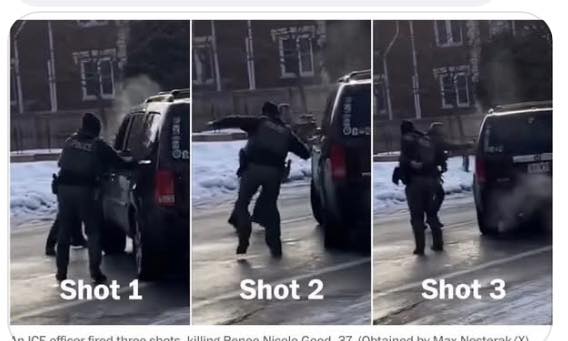
Phát súng đầu tiên nổ xuyên qua kính chắn gió, trúng Renee Good.
Có một khoảng lặng ngắn (~399 ms) giữa các phát súng theo phân tích frame-by-frame.
Sau đó:
-
Ross lùi lại
-
Mở cửa xe một phần
-
Bắn thêm hai phát ngang qua cửa mở, khi đầu xe đã vượt qua vị trí của Ross, không còn nguy cơ va chạm trực diện
Xe tiếp tục chạy song song với mặt đường một đoạn ngắn rồi dừng hẳn do Good bị thương nặng.
Âm thanh trong video ghi lại câu nói của Ross: “Fucking bitch.”
II. Phân tích pháp lý: có vi phạm nguyên tắc “vũ lực hợp lý” không?
1. Graham v. Connor (1989) – “Objective Reasonableness”
Tòa án Tối cao yêu cầu việc sử dụng vũ lực phải hợp lý khách quan, dựa trên:
-
Mức độ đe dọa thực tế
-
Hành vi của đối tượng tại thời điểm đó
-
Khả năng rút lui hoặc giảm leo thang
Trong vụ này:
-
Ross đổi tay cầm điện thoại ở giây 31 khi đang an toàn
-
Chủ động tiến ra đầu xe, tự tạo nguy hiểm
-
Không có bằng chứng Good tấn công hay tăng tốc về phía Ross
Các tòa án Mỹ nhiều lần kết luận: sĩ quan không được tự tạo nguy hiểm rồi dùng chính nguy hiểm đó để biện minh cho nổ súng.
2. Tennessee v. Garner (1985) – Giới hạn vũ lực chết người
Án lệ này cấm sử dụng vũ lực chết người trừ khi có mối đe dọa nghiêm trọng và tức thì đến tính mạng.
Ở đây:
-
Xe của Good bẻ lái né tránh rõ ràng
-
Tốc độ thấp
-
Hai phát bắn sau xảy ra khi mối đe dọa đã chấm dứt
Ngay cả trong giả định tranh cãi rằng phát bắn đầu tiên là phản xạ, thì hai phát bắn tiếp theo không còn cơ sở pháp lý, và theo chính sách DHS, vũ lực phải chấm dứt ngay khi nguy hiểm chấm dứt.
III. Ý nghĩa của video do chính Ross ghi
Video của Ross là bằng chứng gốc, không thể quy là cắt ghép.
Tuy nhiên, chính video này mâu thuẫn trực tiếp với tuyên bố của ICE và chính quyền Trump rằng Good “cố tình lao xe”.
Thay vì củng cố lập luận tự vệ, video lại đặt ra câu hỏi nghiêm trọng về:
-
Ý định sử dụng vũ lực từ trước
-
Việc leo thang tình huống không cần thiết
-
Và khả năng vi phạm Tu chính án Thứ Tư
Kết luận tạm thời
Dựa trên trình tự thời gian thực trong video 47 giây, hành vi của Jonathan Ross cho thấy những dấu hiệu rõ ràng của việc sử dụng vũ lực quá mức, đặc biệt ở hai phát bắn sau khi nguy cơ đã chấm dứt.
Chính chi tiết đổi tay cầm điện thoại – chủ động tiến ra đầu xe – tiếp tục nổ súng là những điểm mà bất kỳ bồi thẩm đoàn độc lập nào cũng buộc phải xem xét nghiêm túc.