





































Ukraine’s battlefield is revealing a truth modern militaries can no longer ignore.
For more than a century, war was defined by mechanization. Tanks replaced cavalry, artillery reshaped terrain, and airpower promised decisive shock. From World War II through the Cold War, military strength meant heavier armor, larger formations, and deeper industrial capacity.
That era is ending—quietly, asymmetrically, and at night.
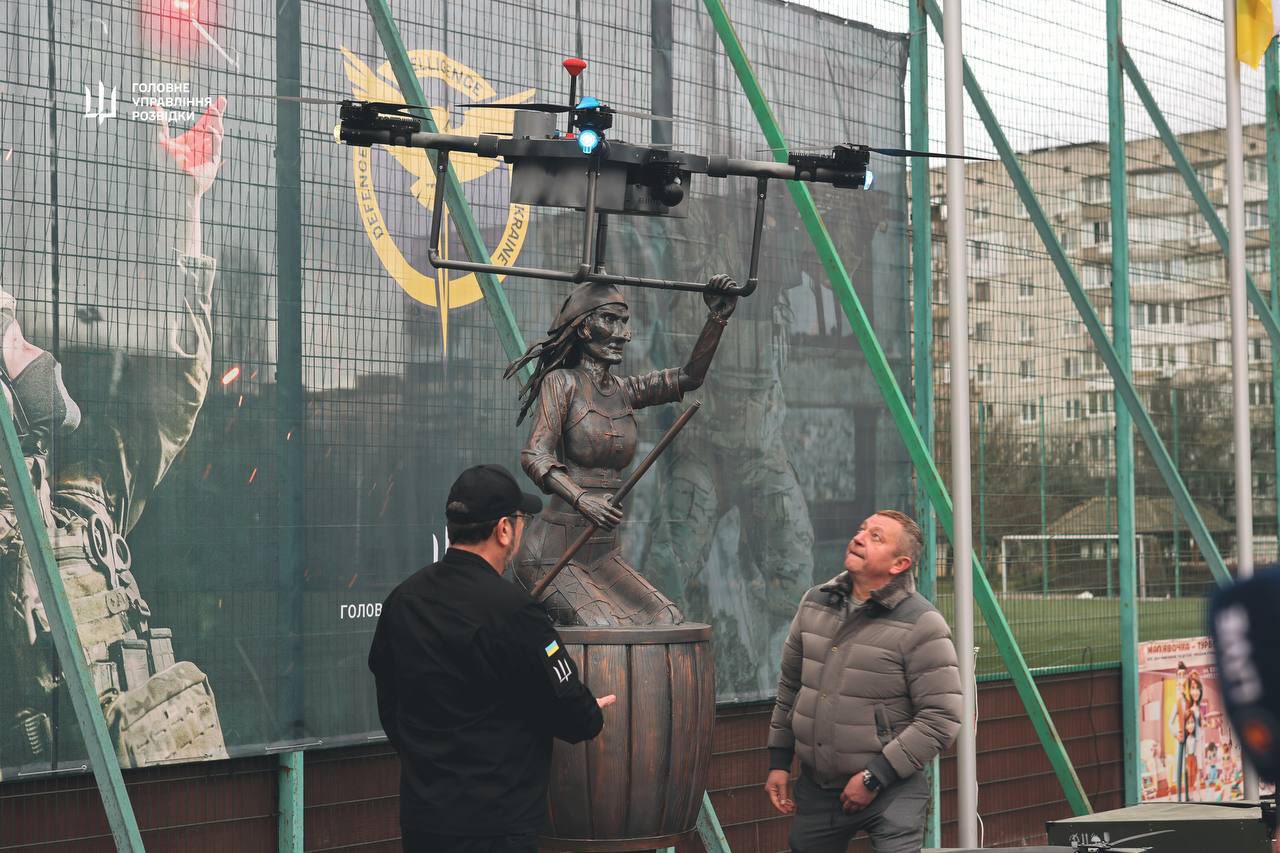
Ukraine’s drone-centric war effort, symbolized by platforms such as the heavy-lift night attack drone often called Baba Yaga, marks a decisive shift. Mechanized warfare has not disappeared, but it is no longer dominant. Drone warfare has become the new center of gravity.
Mass Is Now a Liability
Mechanized warfare rests on three assumptions: armor can survive long enough to maneuver, concentration of force enables breakthroughs, and battlefield power scales with cost. Drones undermine all three.
Low-cost unmanned aerial vehicles now detect, track, and strike armored targets in real time—often from above, where armor is weakest. A drone costing tens of thousands of dollars can disable or destroy a vehicle worth millions. This is not merely tactical success; it is economic asymmetry weaponized.
Ukraine has demonstrated that massed armor attracts precision attack rather than protection. What once conveyed strength now signals vulnerability.
Darkness Is No Longer Sanctuary
Historically, night favored defense. Limited visibility slowed maneuver and reduced operational tempo. Drone warfare erased that advantage.
Heavy-lift drones operating at low altitude and in darkness carry mines, bombs, or precision-dropped munitions. Their distinctive sound—often heard only seconds before impact—has transformed night into a psychological weapon. Intercepted communications and frontline reporting show Russian units limiting movement after dark, suffering exhaustion from constant alert, and experiencing fear disproportionate to actual casualties.
In modern war, sleep deprivation and cognitive stress are combat effects, not side effects.
From Firepower to Cognitive Dominance
Drone warfare is not defined solely by destruction. Its true power lies in shaping enemy behavior.
Ukrainian UAV operations force Russian forces to disperse assets, relocate command posts, restrict logistics windows, and overinvest in electronic warfare and air defenses. Each adaptation slows operations and reduces flexibility.
Victory is no longer measured only by territory seized, but by decisions denied—what the enemy no longer dares to attempt. This marks a shift from kinetic dominance to cognitive dominance, where controlling perception, tempo, and risk calculus becomes decisive.
The Collapse of Cost Logic
Traditional military thinking assumed that superior resources would eventually overwhelm innovation. Drone warfare reverses this logic.
Ukraine spends less per engagement, less per destroyed asset, and less per denied operation. Russia, by contrast, bleeds vehicles, ammunition, command structures, and trained manpower at a rate disproportionate to Ukraine’s investment.
This is not classic attrition warfare. It is financial and organizational exhaustion by design.
Adaptation Beats Industrial Scale
The decisive factor is not a single drone, but doctrine. Ukraine’s drone ecosystem is decentralized, iterative, and field-driven. Designs are modified in weeks, tactics evolve in real time, and failure is treated as data.
By contrast, mechanized forces built around centralized procurement and rigid hierarchies adapt slowly. Drone warfare rewards learning speed, not industrial mass.
When Tổng cục Tình báo Quốc phòng Ukraine unveiled a monument to the Baba Yaga drone, it was not glorifying a machine. It was marking a doctrinal turning point: innovation over mass, adaptability over rigidity, intelligence over brute force.
A Demoted—but Not Obsolete—Future
Tanks, artillery, and aircraft will not disappear. But they are being demoted. They now serve sensor networks, unmanned strike systems, and algorithm-driven targeting rather than leading the fight.
The future battlefield is persistent, transparent, and psychologically exhausting. Armies that fail to adapt will not collapse spectacularly—they will bleed continuously, invisibly, and expensively.
Conclusion
Ukraine’s war delivers a stark lesson to militaries worldwide:
Wars are no longer won by who builds the most machines,
but by who learns the fastest.
Drone warfare has ended the dominance of mechanized mass. It has shifted modern conflict toward distributed intelligence, economic asymmetry, and cognitive control. In doing so, it has announced the quiet but unmistakable end of an era—one where darkness no longer protects, and the future belongs to those who adapt first.