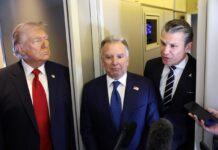



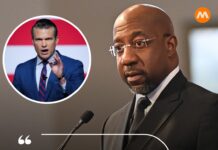


Ngoại trưởng Marco Rubio cho biết lệnh phong tỏa quân sự đối với Venezuela và ngành công nghiệp dầu mỏ của nước này sẽ vẫn được duy trì. Số người thiệt mạng trong cuộc đột kích nhằm bắt giữ Nicolás Maduro đã tăng lên 80 người.
Video
Dưới đây là những điều khác cần biết:
Trữ lượng dầu mỏ: Ông Rubio, giống như ông Trump một ngày trước đó, đã tập trung vào các cơ hội dành cho các công ty Mỹ trong lĩnh vực dầu mỏ của Venezuela. Ông Trump đã bày tỏ rõ mong muốn mở cửa trữ lượng dầu mỏ khổng lồ do nhà nước kiểm soát của Venezuela cho các công ty dầu mỏ Mỹ, nói rằng, “Chúng ta sẽ điều hành đất nước một cách đúng đắn.” Nhưng sự can thiệp của Mỹ có thể phức tạp và tốn kém. Đọc thêm ›
Các cáo buộc liên bang: Một bản cáo trạng được công bố bởi một thẩm phán liên bang ở thành phố New York đã buộc tội ông Maduro; vợ ông, Cilia Flores; và bốn người khác với bốn tội danh, bao gồm khủng bố ma túy, âm mưu nhập khẩu cocaine và sở hữu súng máy. Mặc dù Mỹ tập trung vào buôn bán cocaine, các chuyên gia cho rằng vai trò của Venezuela trong hoạt động buôn bán đó là không đáng kể. Ông Maduro hiện đang bị giam giữ tại Trung tâm giam giữ Metropolitan ở Brooklyn.
Chỉ trích từ Quốc hội: Các nghị sĩ đảng Dân chủ trong Quốc hội, bao gồm cả các lãnh đạo thường được thông báo về các vấn đề mật, cho biết họ đang bị chính quyền Trump giữ bí mật về cả cuộc đột kích quân sự bắt giữ ông Maduro và thông tin về các bước tiếp theo. Đọc thêm ›
Cuộc tấn công của Mỹ: Vào tháng 8, một nhóm bí mật gồm các sĩ quan CIA đã xâm nhập vào Venezuela. Thông tin họ thu thập được rất quan trọng đối với cuộc đột kích trước bình minh hôm thứ Bảy, chiến dịch quân sự nguy hiểm nhất của Mỹ thuộc loại này kể từ khi các thành viên của Đội SEAL Team 6 của Hải quân tiêu diệt Osama bin Laden trong một ngôi nhà an toàn ở Pakistan năm 2011. Đọc thêm ›
Ăn mừng và biểu tình: Đối với hàng triệu người Venezuela sống lưu vong ở Colombia, cuộc tấn công của Mỹ lật đổ nhà lãnh đạo độc tài của đất nước họ đã mang lại hy vọng rằng một ngày nào đó họ có thể trở về nhà. Tại New York, những người biểu tình phản chiến đã tập trung để phản đối sự can thiệp của Mỹ vào Venezuela.

Reporting from Cúcuta, Colombia’s busiest border crossing with Venezuela
Image

The dream of returning had grown distant for millions of Venezuelans who had fled their government’s crushing of dissent and an economy in free fall.
“If I speak from my heart, I had utterly lost hope,” said Jorge Colmenares, 50, who left seven years ago. For him, selling caramel candy at red lights on the streets of a Colombian border city was a step up from living out of cardboard boxes on the streets of his own homeland with his wife and young children.
But even if he knew the road to returning remained uncertain after an American attack deposed Venezuela’s autocratic leader, Nicolás Maduro — whom he called “the head of the gang of our torturers” — Mr. Colmenares wept Saturday night. So did many other Venezuelans in exile. Their tears were brought on both by hope that going home might be close at hand and by the pain from the years of privation and tragedy that had befallen them.
“When I think of my land, the beaches,” Mr. Colmenares said, before he broke down in sobs as he spoke in Cúcuta, along Colombia’s border with Venezuela. “My parents who died and I couldn’t see them, my brothers and my son who crossed the Darién.”
Image

In recent years, hundreds of thousands of Venezuelans have crossed the Darién Gap, a treacherous, roadless zone between Colombia and Panama, on their way north to Central America and the United States. One of Mr. Colmenares’s sons is in detention in the United States, he said.
Three million Venezuelans have settled in Colombia over the past decade. Nearly five million more have scattered across South America.
Since the U.S. attack on Saturday, few have returned. The border crossing in Cúcuta, which accounts for 70 percent of traffic between the two countries, was quiet over the weekend, except for the presence of three armored vehicles belonging to the Colombian military.
The United Nations and the Colombian government said the flow of people in both directions remained normal, and reflected mostly the daily back-and-forth of commerce between cities on either side of the border.
On Sunday morning, it was mostly Venezuelans crossing into Colombia. Some were on Venezuelan-made Bera motorcycles emblazoned with decals saying “socialista.” Others were in ancient Chevrolet Caprices, sipping coffee out of plastic cups in between gear shifts.
The night before, hundreds of jubilant Venezuelans had gathered on a central promenade in Cúcuta to light fireworks, give speeches and sing their national anthem.
Image

Eduardo Espinel, a Venezuelan who opened a restaurant in Cúcuta and organized the gathering, told the crowd that he could not believe the day would come when Mr. Maduro was behind bars. He then thanked President Trump and led a chant: “It’s happening, it’s happening.”
When asked what exactly was happening, however, he acknowledged that he and everyone around him remained in a wait-and-see mode, and that Mr. Maduro’s closest associates seemed to have been left in control by Mr. Trump. But it is the nature of Venezuelans, he said, to be optimistic, to be boisterous, and to be emotional. He clasped the crucifix necklace he was wearing under his tightfitting white shirt.
“Look, we thought this day was impossible, that no one would ever get rid of these guys, that this was our eternity,” Mr. Espinel said. “How could we not celebrate?”
Mr. Espinel, like many of those gathered at the promenade, said they had fled persecution by the Maduro government. Mr. Espinel said he was never affiliated with any opposition party and had not tried to run for office, but was simply a community organizer.
One man said that while he wasn’t sure what would come next for his home country, he was satisfied that Mr. Maduro, now that he is in custody, would likely experience some of the fear he had imposed on many Venezuelans.
Video

Like other Venezuelans interviewed for this article, the man refused to give his name, citing fear for the safety of relatives still back home.
The man said he had lived in San Cristobál, the Venezuelan city right across the border from Cúcuta, and was a small-business owner who had been threatened with extortion by the government.
Many in the euphoric crowd were willing to put aside what they regarded as nakedly colonial rhetoric coming from Washington about their country’s resources.
Image

Mr. Colmenares was elated, too. As men played tamboras, he danced under the fireworks with his 8-year-old daughter, Karen, who waved a Venezuelan flag that was larger than she was. His wife, Raiza Yudith Echeverría, sold hot dogs dressed with mayonnaise and crispy potato sticks from a cart to the revelers.
For him, the lesson was about resilience, not revenge.
“We made it this far,” Mr. Colmenares said. “Many didn’t. They died in the streets. In the forests. Before they could return home.”

Maps, Videos and Photos: How Maduro’s Capture Unfolded
What we know about the sequence of events from initial airstrikes around Caracas to a raid on Maduro’s compound to his arrival in custody in New York.

Read the Indictment Against Nicolás Maduro
The Venezuelan president was accused of narco-terrorism and conspiracy to import cocaine, among other charges. His wife, Cilia Flores, was also charged.

Mexico City bureau chief
Comments from Secretary of State Marco Rubio on ABC News on Sunday seem to help explain the Trump administration’s backing of Maduro’s former vice president, Delcy Rodríguez, as someone who will fall in line as the new president — just as she says the exact opposite publicly. Rodríguez and other Venezuelan officials have projected fierce resistance to Washington in speeches all weekend.
On ABC, Rubio said: “We’re not going to judge moving forward based simply on what’s said in press conferences. We want to see action here at the end of the day.” He added: “There’s a lot of different reasons why people go on TV and say certain things in these countries, especially 15 hours or 12 hours after the person who used to be in charge of the regime is now in handcuffs.”
“What we are going to react to is very simple, what do you do? Not what you’re saying publicly,” he continued. “Do the drugs stop coming? Are the changes made? Is Iran expelled? Is Hezbollah no longer able — and Iran no longer able — to operate against our interests from Venezuela? Does the migration pattern stop? Do the drug trafficking boats end?”

Visual investigations reporter
New satellite imagery shows the damage to Fuerte Tiuna, or Fort Tiuna, the military complex where U.S. forces captured the Venezuelan president, Nicolás Maduro, on Saturday.
Fuerte Tiuna, Venezuela’s largest military base, is built into a mountainside in the south of the capital, Caracas. The base consists primarily of military installations with fortifications and roads winding around the compound.
Before-and-after imagery released on Sunday by Vantor, a Colorado-based space technology company formerly known as Maxar Intelligence, shows that at least five buildings at the complex were destroyed by U.S. forces. Cargo containers, military trucks and trailers were near these structures, although it is not clear what they contained.
Image

Image

Image

Image

A gate and security building in a wooded area near the compound were also destroyed.
Image

Image


Federal courts reporter
The Federal District Court in Manhattan says in a statement that Nicolás Maduro is scheduled to make his first appearance in court on Monday at noon before Judge Alvin K. Hellerstein. Maduro’s wife, Cilia Flores, is scheduled to appear with her husband.
Mexico City bureau chief
The Community of Latin American and Caribbean States — the main multilateral organization for the region — is holding an emergency meeting on Sunday to address the U.S. capture of Nicolás Maduro. Venezuela’s foreign minister, Yván Gil, warned that the rest of Latin America should be worried. “This attack is not only against Venezuela; it is an attack against Latin America and the Caribbean,” he said to the group of 33 nations. “Today it may be Venezuela; tomorrow it could be any other country that decides to exercise its sovereignty.”
Right-wing leaders in the region have praised Maduro’s capture as a bold move to rescue a broken Venezuela. Left-wing leaders have strongly denounced it as a violation of sovereignty. Brazil, Mexico, Colombia, Chile, Spain and Uruguay issued a joint statementSunday that called the U.S. military operation “an extremely dangerous precedent” and warned against “any attempt at governmental control, administration, or external appropriation of natural or strategic resources” in Venezuela.
Whether the nations will do more than issue angry statements remains to be seen. The United States is a critical economic partner for most of the region, and President Trump has proved willing to intervene in their countries, economically, politically and now militarily.

Congressional reporter
Image

Congressional Democrats said they were still being kept in the dark on Sunday, with no information provided to them by the Trump administration about the dramatic military action to capture President Nicolás Maduro of Venezuela a day earlier, despite their demands for classified briefings.
“I’m a member of the Gang of Eight, and I have yet to get a phone call from anybody in the administration,” Representative Jim Himes, the Connecticut Democrat who serves as the ranking member on the House Intelligence Committee, said on Sunday on CNN. The Gang of Eight refers to the Republican and Democratic leaders in the House and Senate, as well as the chairs and ranking minority members of each chamber’s intelligence committees. Together, the group is typically briefed on classified matters.
Mr. Himes said he had spoken with Representative Hakeem Jeffries, Democrat of New York and the House minority leader, who had also received no phone call from the administration.
In the wake of President Trump’s announcement on Saturday of the attack on Venezuela and the extraction of Mr. Maduro and his wife, Cilia Flores, Mr. Jeffries and Chuck Schumer, the New York Democrat who is the Senate minority leader, called for the administration to immediately brief Congress. They asked for the administration’s plan “to prevent a humanitarian and geopolitical disaster that plunges us into another endless war or one that trades one corrupt dictator for another.”
But on Sunday, the leaders said they were still in the dark. Senator Schumer appeared on ABC’s “This Week” to outline the questions he still had about the operation.
“How long do they intend to be there?” he said. “How many troops do we need? How much is it going to cost, what are the boundaries?”
Mr. Jeffries, speaking on NBC’s “Meet The Press,” said he did not trust Mr. Trump to run one country, much less two. “Donald Trump claims that he’s going to run Venezuela,” he said. “He’s done a terrible job running the United States of America.” And he added that Democrats would prioritize taking legislative action to rein in Mr. Trump when Congress returned to Washington this week, “to ensure that no further military steps occur absent explicit congressional approval.”
During a news conference in Palm Beach, Fla., on Saturday to announce the attack on Venezuela, Mr. Trump said he had circumvented Congress because he did not trust its members to keep his plans confidential.
“Congress has a tendency to leak,” Mr. Trump said.
On Sunday, Mr. Himes said the president was required to brief lawmakers whether or not he wanted to.
“Whether you think Congress leaks or not, the law says you must brief Congress,” he said. “This is just another example of absolute lawlessness on the part of this administration.”

Travel reporter
Air travel in the Caribbean was recovering on Sunday afternoon as U.S. airlines resumed flights that had been canceled because of the U.S. military operation in Venezuela a day earlier. Carriers, including Southwest and United, said they would add extra flights to the region to assist customers whose plans had been disrupted.

Reporting from Caracas, Venezuela
The death count from Saturday’s attack has risen to 80, between civilians and members of security forces, according to a senior Venezuelan official. He added that the number could rise further.

Reporting from Washington
President Trump threatened that Venezuela’s interim president, Delcy Rodríguez could “pay a very big price, probably bigger than” that of her captured predecessor Nicolás Maduro, if she continued to refuse cooperation with the United States, according to a phone interview with The Atlantic. That was a sharp contrast to Trump’s remarks on Saturday morning, when he said Rodríguez would act as a partner in letting the United States run Venezuela. But hours after Trump said that, Rodríguez directly contradicted his assertion and berated the United States for its military actions against her country, calling the U.S. campaign “a barbarity.”
Image


In the pre-dawn darkness of Saturday, the thrum of rotors signaled the start of coordinated U.S. strikes on the Venezuelan capital, Caracas. Residents caught the low-flying helicopters on video, some spotting as many as nine soaring overhead — all part of an operation that involved more than 150 military drones, fighter planes and bombers, according to the U.S. military.
As the aircraft passed overhead, the orange glow of explosions lit up parts of the city. Thick black smoke billowed into the darkened sky.
The images, filmed on cellphones by people in different cities, captured the exact moments in which an air and ground incursion — orchestrated by the Trump administration to remove Venezuela’s authoritarian leader, Nicolás Maduro, and establish a U.S.-led interim administration — played out in real time.
The New York Times was able to verify several videos shared either on social media or directly with reporters. The Times also interviewed residents who documented the attack and provided a firsthand account of a morning that has fundamentally reordered the region’s political landscape.
Video
Helicopters flying over Caracas as explosions rock the Venezuelan capital early Saturday. Parts of this audio were muted by The New York Times because of the number of expletives heard.
The strikes took many people by surprise in Caracas, a city that was already exhausted by crises even as the United States had spent months amassing a massive naval and air presence in the Caribbean. The incursion also startled residents in La Guaira, a strategic port city an hour’s drive from the capital that served as a primary target during the operation.
It had started as a normal Friday night in Venezuela. Residents were hanging out at homes, bars and nightclubs when the operation began in the hours after midnight. But the night’s casual atmosphere soon turned to panic.
“Something is blowing up over there!” a woman cried with expletives while filming the scene outside a restaurant in Catia la Mar, a city in La Guaira state. “They’re invading us!” Venezuelan officials would later say that U.S. strikes targeted naval infrastructure and medical warehouses in the nearby port.
Video
“They’re invading us!” a woman shouts as flare-like lights repeatedly cross the sky in La Guaira, a port city where U.S. strikes targeted naval infrastructure and medical warehouses.
The muffled explosions filling the air first confused Roison Figuera, 29, who said he thought they were part of the final episode of the Netflix show “Stranger Things” he was watching at home.
“And another one goes off,” he said, “and I say, ‘Well, no, this is not the television.’”
He went up to the roof of his house, which has a direct view of the Port of La Guaira. He saw another explosion erupt, so he took out his cellphone.
“At first, I thought a fuel truck or a ship had exploded,” Mr. Figuera, a local journalist and dancer, said. “But then I actually thought — half-joking — I asked myself, ‘Have the Marines arrived?’”
When he heard from colleagues that similar explosions were taking place in Caracas, he realized some kind of attack was taking place.
Video
A local journalist, Roison Figuera, filmed the Port of La Guaira right after it had been struck. “Have the Marines arrived?” he asked himself.
Closer to the port, people driving a car captured the moment in which a strike hit the ground. “Another one is coming, there it comes!” a man said right before driving past a loud bang and a massive fireball. Another explosion is heard as the car rushes down the street.
Video
A car drives past plumes of smoke at the Port of La Guaira as explosions go off.
Some of the destruction was filmed by residents as they made their way through a city under siege. The precision of the strikes was visible in the ruins of the port. Cellphone footage captured fires burning behind blue-fenced facilities with shipping containers.
On the streets outside, people were starting to clear the rubble in an attempt to restore traffic to the main coastal artery of La Guaira, which connects the port with the highway that climbs up to Caracas.
Video
A man trying to clear debris from a coastal roadway in La Guaira as fires blazed behind the blue security fences of the nearby naval facilities.
Chaos also ensued in Caracas after U.S. strikes hit Fort Tiuna, a fortified military base that houses, among other things, Venezuela’s Ministry of Defense. Mr. Maduro and his wife, Cilia Flores, were captured at the defense compound.
Armando Polachini, who lives in a residential complex next to the fort, had been kept awake by neighbors throwing a loud party. But the music was abruptly eclipsed by the thunderous roar of an explosion. When moments later the power went out — part of a cyberoperation that cut power to large swaths of the capital to allow U.S. military aircraft to approach undetected — a thought grabbed him.
“The first thing that came to mind was these are the Americans,” said Mr. Polachini, 44, the manager of a clothing brand. “I grabbed my phone and the first thing I did was try to record what was happening.”
Video
Chaos ensued on the roads in Caracas as crowds of people tried to flee the scene after a nearby military base was hit repeatedly during the raid.
Below his balcony, crowds rushed from their apartments and into the streets, fleeing either on foot, by car or on motorcycles. Mr. Polachini decided to stay put and calm his family, who began to panic.
“It was a pretty horrible situation,” he said. “I still have it playing over and over in my mind. Over and over. The sound of the missiles — the sound of them falling.”
Hours later, after dawn broke over the coast, Mr. Figuera went to film the aftermath in La Guaira. A massive plume of smoke loomed over the port. Other Venezuelans in the greater Caracas area and nearby northern coast emerged from their homes to find their communities transformed, lining up at the few open supermarkets to try to stock up on supplies: toilet paper, precooked corn flour and canned goods.
“There is an eerie silence here,” Mr. Figuera said. “I’m kind of in shock. I don’t feel anything. I’m just waiting to see what might happen.”
Video
The view from Mr. Figuera’s house in La Guaira hours after the attack on Saturday.
Video
People lined up outside supermarkets on Saturday morning, trying to buy essential supplies for the next few days.
Reporting was contributed by Ainara Tiefenthäler, Jiawei Wang, Jody García, Jack Nicas, Lucía Cholakian Herrera and Daniel Politi.
The Simón Bolívar International Bridge, the border bridge connecting Cúcuta, Colombia, with San Antonio, Venezuela, was quiet this morning.
Three Colombian army armored vehicles and a few soldiers were posted, but it was not much of a deployment. Very few people were crossing the border here, about 530 miles southwest of the Venezuelan capital, via the bridge, over the Táchira River.
There were no Venezuelans trying to flee or going to the Colombia side for supplies. Along a highway on the Venezuelan side, checkpoints controlling the flow of migrants were operating, but showed nothing out of the ordinary.
In contrast, in 2018, during Venezuela’s economic crisis, the border crossing, was flooded with desperate Venezuelans.
Image


Immigration reporter
Nearly eight million Venezuelans have fled their troubled country over the last decade, the largest exodus in Latin America’s modern history. As of June 2025, about 1.1 million had come to live in United States, including about 600,000 through a humanitarian program known as Temporary Protected Status. Soon after taking office, Trump administration officials moved to end Venezuelans’ access to that program, a decision the Supreme Court has allowed to stand as litigation continues. Now, with Maduro’s downfall, many of these immigrants are worried about what comes next.
In a statement to The New York Times on Sunday, Tricia McLaughlin, an assistant secretary in the Department of Homeland Security, made clear that the Trump administration had no intention of restoring the program for Venezuelans. Speaking to Fox News Sunday later, Noem said every Venezuelan holder of the protected status would be able to apply for refugee status and that evaluations would go forward. But the Trump administration last year set the refugee admission cap for fiscal year 2026 to a historic low of no more than 7,500 refugees. The previous period’s ceiling, set by the Biden administration, was 125,000.

Reporting from Brooklyn, N.Y.
More than 100 protesters, some holding signs that say “No U.S. War on Venezuela,” have gathered outside the Metropolitan Detention Center, the Brooklyn jail where Nicolás Maduro is being held. The demonstrators, organized by an antiwar coalition, are chanting: “We want justice; you say how? Free Maduro right now.”
Image

Image

Federal courts reporter
Nicolás Maduro and his wife, Cilia Flores, are expected to make their first appearance in a Manhattan federal courtroom on Monday. Typically, in such cases, the judge would apprise them of their rights and ask how they plead, and it is almost certain they will be ordered detained without bond pending trial.
Mexico City bureau chief
Venezuela’s Supreme Court ruled that Delcy Rodríguez is the acting president of Venezuela, according to Vladímir Padrino López, Venezuela’s defense minister. In a speech on Sunday, Padrino López said the court designated her president because she was Maduro’s vice president. She now assumes “all the attributes, duties, and powers as president of the Bolivarian Republic of Venezuela,” he said, though he also referred to Maduro as the “constitutional president” and the “legitimate president.”
On Saturday, Rodríguez called Maduro Venezuela’s “only president.”
Reporting from Washington
Secretary of State Marco Rubio suggested on NBC’s “Meet the Press” that Cuba could be the next target of U.S military operations. When asked whether Cuba was the Trump administration’s “next target,” Rubio said, “The Cuban government is a huge problem.” Pressed again, Rubio said, “They are in a lot of trouble, yes.” He then accused the Cuban leadership of “propping up” Nicolás Maduro’s Venezuelan regime and sponsoring his internal security apparatus, including his personal bodyguards.
Congressional reporter
Representative Hakeem Jeffries, Democrat of New York and the House minority leader, speaking on NBC’s “Meet The Press,” questioned how President Trump planned to run two countries, given his difficulties running one. “Donald Trump claims that he’s going to run Venezuela,” he said. “He’s done a terrible job running the United States of America.”
Jeffries also made it clear that the president’s decision to take military action without congressional approval would consume lawmakers when they reconvene this week. “We have to make sure when we return to Washington D.C. that legislative action is taken to ensure that no further military steps occur absent explicit congressional approval,” he said.
Image

Mexico City bureau chief
In Venezuela, the official line of the government remains fierce resistance to the United States. Vladimir Padrino López, Venezuela’s defense minister, just gave a speech demanding the return of Nicolás Maduro and his wife, Cilia Flores. “Our sovereignty has been violated and breached,” he said, backed by uniformed soldiers.
The White House has said it believes that Venezuela’s interim leader, Delcy Rodríguez, Maduro’s vice president, will largely comply with its demands. So far, Rodríguez and her government have said the opposite, but that rhetoric fits with decades of Venezuelan nationalism, and the nature of their private conversations with U.S. officials is unclear.
Padrino López also rejected any notion that the United States would run Venezuela, as President Trump claimed on Saturday. The defense minister said that the Venezuelan government was still in charge; that its military would “guarantee the governability of the country”; and that it would “continue to employ all its available capabilities for military defense, the maintenance of internal order, and the preservation of peace.”
Mexico City bureau chief
Padrino López also rejected any notion that the United States would run Venezuela, as President Trump has claimed. He said the government that was already in place under Maduro, now led by Rodríguez, is still in charge, and that the Venezuelan military “will guarantee the governability of the country, and our institution will continue to employ all its available capabilities for military defense, the maintenance of internal order, and the preservation of peace.”

Reporting from Venezuela
U.S. forces killed a “large part” of Nicolás Maduro’s security detail during the raid to capture him, Venezuela’s defense minister, Vladimir Padrino López, said on state television. A senior official said on Saturday that more than 40 Venezuelans, both soldiers and civilians, were killed in the attack. The final number is likely to be higher.
Image

Reporting from Washington
Senator Tom Cotton of Arkansas, the No. 3 Republican in the chamber and the chairman of its intelligence committee, rejected concerns that the U.S. would repeat its failures in Iraq by attempting a regime change and nation building in Venezuela. Cotton, who served in the Army in Iraq and Afghanistan, said on CNN that the analogy to Iraq was “flawed” and that a more apt comparison would be to Panama, which the U.S. invaded in 1989 to capture its dictator, Gen. Manuel Noriega. The United States did not deploy more troops to Panama after Noriega’s capture, and Panama transitioned to democracy in the years to come.
Reporting from Washington
Secretary of State Marco Rubio repeatedly deflected requests to comment on criticism that the Trump administration had been hypocritical in its capture of Nicolás Maduro for prosecution, given that President Trump last month pardoned a former Honduran president, Juan Orlando Hernández, who had been convicted on nearly identical charges. “I’m not criticizing it,” Rubio said on ABC’s “This Week,” referring the question to the White House. “I can’t just comment on it, because I just wasn’t involved in those deliberations.” When pressed again on whether he supported Trump’s pardon of Hernández, he again refused to comment, pleading a lack of deep knowledge on the case.

Reporting from Washington
Image

Secretary of State Marco Rubio on Sunday appeared to pivot away from President Trump’s assertion a day earlier that the United States would “run” Venezuela, emphasizing instead that the administration would keep a military “quarantine” in place on the country’s oil exports to exert leverage on the new leadership there.
When asked how the United States planned to govern Venezuela, Mr. Rubio did not lay out a plan for a U.S. occupation authority, like the one that the George W. Bush administration put in place in Baghdad during the Iraq War, but instead spoke of coercing a Venezuelan government run by allies of the jailed leader Nicolás Maduro to make policy changes.
U.S. forces will continue to prevent oil tankers on a U.S. sanctions list from entering and leaving the country until the government opens up the state-controlled oil industry to foreign investment — presumably giving priority to American companies — and makes other changes, he said on “Face the Nation” on CBS News.
“That remains in place, and that’s a tremendous amount of leverage that will continue to be in place until we see changes, not just to further the national interest of the United States, which is No. 1, but also that lead to a better future for the people of Venezuela,” he said.
And in a testy exchange later on “Meet the Press” on NBC News, Mr. Rubio complained that people were “fixating” on Mr. Trump’s declaration at a news conference in Florida on Saturday that the U.S. government would run Venezuela. He added that “it’s not running — it’s running policy, the policy with regards to this.”
Mr. Rubio said on CBS that the U.S. naval force that Mr. Trump massed in the Caribbean Sea near Venezuela over recent months — “one of the largest naval deployments in modern history, certainly in the Western Hemisphere” — would remain in place to enforce the quasi blockade, with the aim of “paralyzing that portion of how the regime, you know, generates revenue.”
And he added that Mr. Trump could put U.S. troops on the ground in Venezuela beyond the recent operation in which Army Delta Force soldiers seized Mr. Maduro, if it served American interests. The president “does not feel like he is going to publicly rule out options that are available for the United States,” Mr. Rubio said.
A White House official said Mr. Rubio had detailed in his interviews on Sunday what Mr. Trump had meant when he used the word “run,” and that there was no contradiction in their remarks. The official said top Trump aides “will continue to diplomatically engage” with the current leadership in Venezuela.
In Venezuela, the official line of the government remains fierce resistance to the United States. Vladimir Padrino López, the defense minister, gave a speech demanding the return of Mr. Maduro and his wife, Cilia Flores, who were flown to a Brooklyn detention center on Saturday. “Our sovereignty has been violated and breached,” he said, backed by uniformed soldiers.
Mr. Trump told The Atlantic on Sunday that if the current acting leader of Venezuela, Delcy Rodríguez, a vice president under Mr. Maduro, “doesn’t do what’s right, she is going to pay a very big price, probably bigger than Maduro.”
Mr. Rubio led an effort in the Trump administration to oust Mr. Maduro that was supported throughout the fall by Stephen Miller, the president’s homeland security adviser, and John Ratcliffe, the C.I.A. director, The New York Times reported in September.
As Mr. Trump did in his news conference on Saturday, Mr. Rubio focused in his Sunday interviews on oil as the main prize for the United States in its operation against Mr. Maduro. Mr. Trump said earlier that “we’re going to be taking out a tremendous amount of wealth out of the ground.”
Mr. Rubio told CBS News that the oil industry in Venezuela, which is controlled by the government and under U.S. sanctions, needed to be “reinvested in.”
“It’s obvious they do not have the capability to bring up that industry again,” he said. “They need investment from private companies who are only going to invest under certain guarantees and conditions.”
Mr. Rubio’s and Mr. Trump’s remarks over the weekend suggested that the administration intended to force Ms. Rodríguez to allow American oil companies to invest and operate in the country under favorable conditions.
The statements by the two men amount to an explicit declaration of gunboat diplomacy and an embrace of the kind of 19th-century U.S. imperialist policy in the Western Hemisphere that has been widely criticized across Latin America.
For years, Chevron has been the only U.S. oil company operating in Venezuela, in several joint ventures with the state-owned oil company, Petróleos de Venezuela, S.A., or PDVSA. The Biden and second Trump administrations gave Chevron a license to operate there as an exception to sanctions imposed on Venezuela’s oil industry by Mr. Trump in his first term. Other American companies had a large presence over decades in the Venezuelan industry, but left the country during two periods when the government exerted state control over the ventures.
U.S. forces boarded two oil tankers last month that were transporting oil from Venezuela to Asia. The first one, the Skipper, was on a Treasury Department sanctions list for transporting Iranian oil, and a federal court had granted the Justice Department a warrant to seize the tanker based on that history. The second one, the Centuries, was not on the department’s sanctions list.
For days, the U.S. Coast Guard has been pursuing another tanker on the sanctions list, the Bella 1, which had been going to Venezuela to pick up oil. That tanker changed its flag to that of Russia and renamed itself the Marinera during the trans-Atlantic pursuit, and the Russian Foreign Ministry told the U.S. government formally on Dec. 31 to stop chasing the tanker.
The Trump administration has said all weekend that it hopes to work with Ms. Rodríguez, and Mr. Rubio deflected questions on Sunday about why it was not supporting any leadership bid by Venezuela’s main opposition figures.
He was in contact throughout last year with figures in the opposition movement. And as a senator from Florida, he signed a formal letter of support for María Corina Machado, the Venezuelan opposition leader, to receive the Nobel Peace Prize. She was awarded that prize last year, which frustrated Mr. Trump, who had been openly campaigning to win it himself.
On Saturday, Mr. Trump said in his news conference that Ms. Machado lacked the “respect” within Venezuela to govern, even though international election experts say a candidate she supported, Edmundo González, beat Mr. Maduro in a 2024 election by a wide margin. The Biden administration and the second Trump administration have recognized Mr. González’s victory.
In January 2025, right after starting his new job, Mr. Rubio spoke with both Ms. Machado and Mr. González, whom he called the “rightful president,” and “reaffirmed the United States’ support for the restoration of democracy in Venezuela,” according to a State Department summary of the call.
On Saturday, Ms. Rodríguez sounded a defiant tone, denouncing the U.S. raid against Mr. Maduro and saying he was the country’s rightful president. When asked on Sunday whether the United States could work with her, Mr. Rubio said: “We’re going to make an assessment on the basis of what they do, not what they say publicly in the interim, not what we know of what they’ve done in the past in many cases, but what they do moving forward. So we’re going to find out.”
Mr. Rubio also said there were no immediate plans to send U.S. troops into Venezuela to seize other officials who have also been indicted by the U.S. Justice Department on drug trafficking charges, as Mr. Maduro was in 2020, during the first Trump administration. He said that had not been a consideration in planning for the operation to take Mr. Maduro.
Mr. Rubio said that the United States planned to ensure that Venezuela stopped trafficking drugs. The Trump administration stated last year that curbing “narco-terrorism” from Venezuela was a main reason for its campaign against the country, which has included carrying out legally questionable military strikes on boats that have killed at least 115 people.
However, Venezuela’s role in the drug trade is limited. Mr. Maduro allowed some Colombian cocaine producers to send their product through Venezuela, mainly to Europe, but the country does not produce fentanyl, which has long been Mr. Trump’s stated focus.
When asked in the NBC interview whether Communist-run Cuba, an ally of Venezuela, was the next target of the Trump administration, Mr. Rubio did not deny the possibility. He said that “the Cuban government is a huge problem” and that “they are in a lot of trouble, yes.” Mr. Rubio, the son of Cuban immigrants, has said for decades that the leadership of Cuba must be removed, and that toppling the Maduro “regime” in Venezuela would help lead to a transformation in Cuba.
In another interview on Sunday, on “This Week” on ABC News, Mr. Rubio said that congressional authorization of the military operation to seize Mr. Maduro was not necessary because it was “a law enforcement operation” rather than an “invasion.” He also said that notifying members of Congress ahead of the operation would have led to leaks of the military plans and endangered American soldiers.
Tyler Pager and Minho Kim contributed reporting from Washington, and Jack Nicascontributed from Mexico City.
Reporting from Washington
Speaking on “This Week” on ABC News, Secretary of State Marco Rubio said that congressional authorization of the raid to seize Maduro wasn’t necessary because it was “a law enforcement operation” rather than an “invasion.” He also said notifying members of Congress ahead of the operation would have led to leaks of the military plans and endangered American soldiers.

Reporting from Washington
Image

A day after President Trump declared that the United States planned to “run” Venezuela for an unspecified period, Defense Department officials said there were no U.S. military personnel in the country.
But a force of 15,000 troops on land in nearby countries and on a dozen warships in the Caribbean “remain in the region at a high state of readiness, prepared to project power, defend themselves, and our interests in the region,” Gen. Dan Caine, chairman of the Joint Chiefs of Staff, said at a news conference at Mar-a-Lago on Saturday.
Hours after the commando raid that captured Nicolás Maduro, Venezuela’s president, Mr. Trump suggested on Saturday there would be a “second wave” of military action if the United States ran into resistance on the ground or from Venezuelan government officials.
“We’re not afraid of boots on the ground,” Mr. Trump said after praising Army Delta Force commandos for successfully spiriting Mr. Maduro and his wife out of the country.
Asked who exactly would be running Venezuela, Mr. Trump said “people that are standing right behind me, we’re going to be running it,” pointing to General Caine, Secretary of State Marco Rubio and Defense Secretary Pete Hegseth.
Pentagon officials on Sunday had no ready response to questions about how long the military would keep its sizable force in the Caribbean — the largest naval buildup in the region since the Cuban Missile Crisis in 1962.
The military buildup had been designed initially to help detect and destroy speedboats that the Trump administration claims, without evidence, are trafficking drugs. The military has attacked 35 boatsand killed at least 115 people in the Caribbean and Eastern Pacific since early September. A broad range of legal specialists on the use of lethal force have criticized those strikes as illegal.
In recent months, military forces in the region also helped U.S. boardings of tankers under American sanctions that were trying to deliver or pick up oil from Venezuela.
In the days leading to Saturday’s raid, the U.S. repositioned to the area increasing numbers of Special Operations aircraft, specialized electronic warfare planes, armed Reaper drones, search-and-rescue helicopters and fighter jets. Military analysts said at the time that those last-minute reinforcements indicated that the only question about a U.S. military action in Venezuela was when it would happen, not if.

The oil cartel known as OPEC Plus indicated on Sunday that it will not make any sudden changes to oil production in the wake of the U.S. raid on Venezuela. In a statement, the eight members — Saudi Arabia, Russia, Iraq, the United Arab Emirates, Kuwait, Kazakhstan, Algeria and Oman — reaffirmed the “cautious approach” they set at their last meeting in November, including a pause on increasing production in early 2026.
Much remains uncertain about the Trump administration’s plans for Venezuela’s oil industry, with President Trump saying that American companies would tap more of the country’s vast reserves but offering few details.

Image

Nicolás Maduro, the Venezuelan president captured by the United States on Saturday, is being held in a notorious Brooklyn jail complex that has been plagued by scandal and accusations of mismanagement.
The Metropolitan Detention Center is a hulking facility in Brooklyn that, for decades, has held some of the United States’ most infamous accused criminals as they await trial.
Known as the M.D.C., the jail is one of the largest federal lockups in the country, housing around 1,600 inmates at any given time. While some face serious charges like international drug trafficking or terrorism, the vast majority face lesser crimes. The jail center is a sort of way station for the detainees as they await trial or sentencing.
It is also deeply troubled. In recent years, it has been the scene of stabbings and killings. It became New York City’s only federal jail center in 2021, when the Justice Department shut down the Metropolitan Correction Center in Manhattan, at least temporarily, because of deteriorating conditions.
In 2019, the complex was plunged into a weeklong blackout when the jail’s heating and electricity shut down during a polar vortex, when temperatures in the city dipped into single digits. A Justice Department report found officials had gravely mishandled the crisis.
Mr. Maduro, who was taken to the jail on Saturday, will join the ranks of high-profile detainees who have passed through the M.D.C. Others include Ghislaine Maxwell, the partner of the convicted sex offender and financier Jeffrey Epstein; Sean “Diddy” Combs; and the singer R. Kelly, convicted of sex trafficking.
Mr. Maduro faces federal charges of narco-terrorism and conspiracy to import cocaine into the United States. He and his wife, Cilia Flores, are expected to make their first court appearancesoon in Manhattan.
On the latest episode of “The Daily” podcast, Eric Schmitt, a national security correspondent for The New York Times, tells the story of how U.S. commandos captured President Nicolás Maduro of Venezuela and discusses what comes next.
Listen to ‘The Daily’: Inside the U.S. Operation to Oust Venezuela’s President
The raid that extracted President Nicolás Maduro was the culmination of a monthslong campaign by President Trump and his aides.

Reporting from London
European leaders have largely refrained from criticizing the U.S. operation, and Prime Minister Keir Starmer of Britain is facing a backlash from members of his Labour Party and other left-wing U.K. parties for failing to do so. The leader of the opposition Green Party, Zack Polanski, accused him of “subservience” to President Trump.
In a BBC interview broadcast this morning, Starmer didn’t directly answer a question on whether the raid violated international law but said he wanted to speak to Trump and “establish all the facts.” He added that “it would not be in our national interest to weaken” Britain’s relationship with the United States.

Global technology reporter
Starlink, the satellite internet service offered by Elon Musk’s SpaceX, said it would offer “free broadband service” in Venezuela. It’s unclear how many Venezuelans would be able to access Starlink, which requires users to be near ground-based terminals that are not officially sold in the country. Musk has cheered the capture of Maduro, who has sparred with him and blocked some internet providers and social platforms during periods of unrest.

Image

In past visits to New York, President Nicolás Maduro of Venezuela made Harlem — and its renowned Black churches — a key stop. In at least two visits over the past decade, he brought his political message to Harlemites that stressed cooperation with Black Americans, one of many efforts to forge a relationship between his government and some Black leaders, to the chagrin of Washington.
In 2015, Mr. Maduro addressed a room of Black organizers and community leaders at the National Black Theater in Harlem while in New York for the United Nations General Assembly. In a nearly hourlong speech, he exalted the importance of solidarity between Latin Americans and Black Americans, arguing they were bound by their struggles for civil and human rights.
He then made a bold pronouncement, echoing past leftist rallying cries: The fight against systemic racism in the United States, he said, was tied to the global fight against imperialism.
“From South America, believe me, brothers and sisters of the United States, we suffer with you,” he said, noting the widespread protests against police violence that had erupted in Ferguson, Mo., the prior summer. “It hurt us to see that the old scaffolding of racism is still intact and is like a ghost that is haunting our peoples,” he said.
Mr. Maduro returned to Harlem three years later, again sounding lofty themes of shared destiny between Black Americans and members of the Latin diaspora. At the Riverside Church in Harlem in 2018, Mr. Maduro and President Miguel Díaz-Canel of Cuba spoke at an event organized to show support for Latin countries amid increased pressure from President Trump’s administration.
Black churches have often been the backdrop for prominent political and cultural figures: Sitting presidents, candidates and visiting dignitaries have made Harlem and its houses of worship must-stops while in New York. For Mr. Maduro, the neighborhood’s large Black population and rich history of activism offered a chance to curry favor with a small but influential group of Americans, whose backing he could benefit from.
Mr. Maduro found some support among Black activists. In 2015, he was hosted by a group that included then-state senator Bill Perkins, the actor Danny Glover and a Black Lives Matter co-founder, Opal Tometi.
But the Venezuelan leader has returned to New York under much more dire circumstances. Mr. Maduro and his wife landed in Newburgh, N.Y. on Saturday, after a U.S. military raid on Venezuela’s capital. They, their son and three other associates will face charges of cocaine trafficking and narco-terrorism. Independent ballot box watchdog groups have also accused the self-described socialist leader of remaining in power by stealing elections.
Mr. Maduro was not the first controversial Latin American leader to mount a charm offensive in Harlem. During the 1960 U.N. General Assembly, the Cuban revolutionary Fidel Castro and his entire delegation relocated from their midtown hotel to Harlem’s Hotel Theresa, in a move he hoped would attract more Black support for his government. While there, he met with prominent Black leaders, including Malcolm X, and was widely celebrated for his efforts to desegregate Cuba. Mr. Castro returned to Harlem multiple times before his death.
Mr. Maduro’s predecessor and mentor, Hugo Chávez, also made trips to Harlem. In 2006, Mr. Chávez addressed a group at Mt. Olivet Baptist Church after giving a speech heavily critical of President George W. Bush at that year’s U.N. General Assembly. He was there promoting a program that would provide discounted heating oil to seniors and low-income Americans. In New York, residents of Harlem and the South Bronx received the bulk of the aid.
Mr. Chávez’s administration broadcast their efforts in the pages of The New York Times and other newspapers that year, in an ad that read: “How Venezuela Is Keeping the Home Fires Burning in Massachusetts.”
Anatoly KurmanaevTyler PagerSimon Romero and Julie Turkewitz
Anatoly Kurmanaev reported from Venezuela, and Tyler Pager from Palm Beach, Fla.
Image

It was one dance move too many for Venezuela’s President Nicolás Maduro.
Mr. Maduro in late December rejected an ultimatum from President Trump to leave office and go into a gilded exile in Turkey, according to several Americans and Venezuelans involved in transition talks.
This week he was back onstage, brushing off the latest U.S. escalation — a strike on a dock that the United States said was used for drug trafficking — by bouncing to an electronic beat on state television while his recorded voice repeated in English, “No crazy war.”
Mr. Maduro’s regular public dancing and other displays of nonchalance in recent weeks helped persuade some on the Trump team that the Venezuelan president was mocking them and trying to call what he believed to be a bluff, according to two of the people, who spoke on condition of anonymity because they were not authorized to talk about the confidential discussions.
So the White House decided to follow through on its military threats.
On Saturday, an elite U.S. military team swooped into Caracas, the capital, in a pre-dawn raid and whisked Mr. Maduro and his wife, Cilia Flores, to New York to face drug trafficking charges.
Image

Weeks earlier, U.S. officials had already settled on an acceptable candidate to replace Mr. Maduro, at least for the time being: Vice President Delcy Rodríguez, who had impressed Trump officials with her management of Venezuela’s crucial oil industry.
The people involved in the discussions said intermediaries persuaded the administration that she would protect and champion future American energy investments in the country.
“I’ve been watching her career for a long time, so I have some sense of who she is and what she’s about,” said one senior U.S. official, referring to Ms. Rodríguez.
“I’m not claiming that she’s the permanent solution to the country’s problems, but she’s certainly someone we think we can work at a much more professional level than we were able to do with him,” the official added, referring to Mr. Maduro.
It was an easy choice, the people said. Mr. Trump had never warmed up to the Venezuelan opposition leader María Corina Machado, who had organized a winning presidential campaign in 2024, earning her the Nobel Peace Prize this year. Since Mr. Trump’s re-election, Ms. Machado has gone out of her way to please him, calling him a “champion of freedom,” mimicking his talking points on election fraud in the United States and even dedicating her Peace Prize to him.
It was in vain. On Saturday, Mr. Trump said he would accept Ms. Rodríguez, saying that Ms. Machado lacked the “respect” needed to govern Venezuela.
Image

U.S. officials say that their relationship with Ms. Rodríguez’s interim government will be based on her ability to play by their rules, adding that they reserve the right to take additional military action if she fails to respect America’s interests. Despite Ms. Rodríguez’s public condemnation of the attack, a senior U.S. official said that it was too soon to draw conclusions about what her approach would be and that the administration remained optimistic that they could work with her.
Mr. Trump declared on Saturday that the United States intended to “run” Venezuela for an unspecified period and reclaim U.S. oil interests, an extraordinary assertion of unilateral, expansionist power after more narrow, and also contested, arguments about stopping the flow of drugs.
In Ms. Rodríguez, the Trump administration would be engaging a leader of a government that it had routinely labeled illegitimate, while abandoning Ms. Machado, whose movement won a presidential election last year in a victory widely recognized as stolen by Mr. Maduro.
And it was not immediately clear if Ms. Rodriguez would even play along. In a televised address, she accused the United States of making an illegal invasion and asserted that Mr. Maduro remained Venezuela’s legitimate leader.
Image

To retain leverage, senior U.S. officials said, restrictions on Venezuelan oil exports would remain in place for now.
But others involved in the talks expressed hope that the administration would stop detaining Venezuelan oil tankers and issue more permits for U.S. companies to work in Venezuela in order to revive the economy and give Ms. Rodríguez a shot at political success.
Ms. Rodríguez, 56, arrives at the job of Venezuela’s interim leader with credentials of an economic troubleshooter who orchestrated the country’s shift from corrupt socialism to similarly corrupt laissez-faire capitalism.
She is the daughter of a Marxist guerrilla who won fame for kidnapping an American businessman. She was educated partly in France, where she specialized in labor law.
She held middling government posts in the government of Mr. Maduro’s predecessor, Hugo Chávez, before being promoted to bigger roles with the help of her older brother Jorge Rodríguez, who eventually became Mr. Maduro’s chief political strategist.
Ms. Rodríguez managed to stabilize the Venezuelan economy after years of crisis and slowly but steadily grow the country’s oil production amid tightening U.S. sanctions, a feat that earned her even the grudging respect of some American officials.
Image

As Ms. Rodríguez consolidated control over economic policy and eliminated rivals, she built bridges with Venezuela’s economic elites, foreign investors and diplomats, to whom she presented herself as a soft-spoken technocrat and a contrast to the burly security officials forming most of the rest of Mr. Maduro’s inner circle.
Those alliances have borne fruit in recent months, earning her powerful champions that helped to cement her rise to power. On Saturday, her assumption of power was greeted with cautious optimism by some of Venezuela’s captains of industry, who said in private that she had the skills to create growth, if she could persuade the United States to relax its chokehold on the country’s economy.
For all her technocratic leanings, Ms. Rodríguez has never denounced the brutal repression and corruption sustaining Mr. Maduro’s rule, once calling her decision to join the government an act of “personal revenge” for her father’s death in prison in 1976, after being interrogated by intelligence agents from pro-U.S. governments.
Ms. Rodríguez’s capacity for negotiating across Venezuela’s ideological chasm could prove useful in easing tensions. Juan Francisco García, a former ruling party lawmaker who has since broken with the government, said he had some apprehensions about her ability to govern but gave her the benefit of the doubt.
“History is full of sectors and figures linked to dictators who have, at some point, served as a bridge to stabilize the country and transition to a democratic scenario,” Mr. García said.
Image

The contradictions enveloping Ms. Rodríguez were on display on Saturday when she addressed the nation.
While Mr. Trump said that Ms. Rodríguez had been sworn in as Venezuela’s new president, it was clear that Mr. Maduro’s supporters — including Ms. Rodríguez herself if her remarks are taken at face value — still see him as Venezuela’s leader.
Spotlighting the potential challenges ahead, even the text on Venezuelan state television labeled her as vice president. People close to the government said those displays of loyalty were a necessary public relations strategy to pacify the ruling party loyalists, including in the armed forces and paramilitary groups, who were reeling from the military humiliation inflicted by the United States on their country and the destruction and death caused by the attack. At least 40 Venezuelans died, both civilians and soldiers, according to a senior Venezuelan official.
U.S. forces managed to descend into the capital largely unopposed, destroy at least three military bases and grab the country’s president from a heavily guarded compound, without any loss of American life.
Still, the Trump administration has chosen to give Mr. Maduro’s vice president a chance and to pass over Ms. Machado, who won the Nobel Prize and had at least some allies in Mr. Trump’s circle.
Image

Ms. Machado, a conservative former member of the National Assembly from an affluent Venezuelan family, boasts decades-long ties to Washington.
She has spent the last year courting Mr. Trump’s support and trying to enlist his help in ousting Mr. Maduro. She has openly supported his military campaign in the Caribbean and mostly refrained from commenting on his policies toward Venezuelan migrants.
On Saturday, after Mr. Trump announced that the U.S. military had captured Mr. Maduro, she released a statement saying that she was ready to lead. “Today we are prepared to assert our mandate and seize power,” she wrote in a message she posted on X.
But roughly two hours later, Mr. Trump said they had not spoken. It would be “very tough” for Ms. Machado to take control of her country, Mr. Trump said, adding in his televised speech that she was a “very nice woman” but “doesn’t have the support” in Venezuela to lead.
A spokeswoman for Ms. Machado declined to comment.
“For Trump, democracy is not a concern — it is about money, power, and protecting the homeland from drugs and criminals,” said Michael Shifter, a senior fellow at the Inter-American Dialogue, a research institute in Washington.
In his speech to the nation, Mr. Trump also made no mention of Edmundo González, the retired diplomat who became Ms. Machado’s political surrogate after she was barred from running. Mr. González, who is in self-imposed exile in Spain, is considered the legitimate winner, by a wide margin, of the 2024 election, even though Venezuelan authorities handed the victory to Mr. Maduro.
Eric Schmitt contributed reporting from Washington, and María Victoria Fermín, Mariana Martínez and Isayen Herrera from Caracas, Venezuela.

Restrictions on U.S.-controlled airspace over the Caribbean that took effect as the U.S. military intervened in Venezuela will expire at midnight, Secretary of Transportation Sean Duffy said on social media. The restrictions forced airlines to adjust schedules and cancel flights to and from destinations like Puerto Rico, St. Lucia and Barbados.

A helicopter carrying Nicolás Maduro has landed in Brooklyn near the Metropolitan Detention Center, where he will be held, according to a law enforcement official with knowledge of Maduro’s movements, who was not authorized to speak about the matter.
Image

Image

Image

Americans took to the streets of Chicago and Washington on Saturday to protest the U.S. military intervention in Venezuela, even as Venezuelan migrants in New York gathered to celebrate the removal of Nicolás Maduro from power.
Holding signs that read “No Blood for Oil,” “No U.S. War on Venezuela” and “Hands Off Latin America,” a crowd of several hundred people gathered in Federal Plaza in Chicago as night fell. They called the operation to remove Nicolás Maduro, the ousted Venezuelan leader, an act of imperialism that Americans did not vote for, carried out without required Congressional approval.
“I’m 37 and grew up with the Iraq wars,” said Katrina Denny. “This morning, I was like, ‘Oh my God, we’re doing it again.’”
She said she thought that protests would grow if the Trump administration continued to use military force in Venezuela. “They filled half the plaza tonight on short notice, but this is only the beginning,” she said. “If this continues, I’m sure there will be many more events and larger ones.”
Many protesters expressed suspicion of the White House’s motives. “If Maduro wasn’t legally elected, that’s not for us to say,” said Adela Cruz, 51. “It just seems like a ploy to get oil.”
Jonny Bishop, 28, said he was worried for the men and women in the military. “As someone who teaches high school, my kids are the ones who may have to go to war,” he said, adding that with all of the other problems facing Americans, “going to war is the last thing we need.”
After the rally in Federal Plaza, the Chicago police allowed protesters to march up Dearborn Street to Wacker Drive, near Trump Tower Chicago.
In Washington, people on both sides of the issue gathered for separate afternoon rallies near the White House.
At one of them, dozens of opponents of the intervention chanted anti-Trump slogans. One of the organizers, Morgan Artyukhina, 38, said their message was “that this is a war that is being waged by the Trump administration, not just in contravention of U.S. law and international law, but also, falsely in the name of the American people.”
A few blocks away, a smaller group celebrated the capture of Mr. Maduro by U.S. troops.
Draped in a Venezuelan flag, Leonardo Angulo, 35, danced near a statue of Simón Bolivar, who helped free Venezuela from Spanish imperial rule. Mr. Angulo, who has lived in the United States for eight years, said he and his family came out “to celebrate, and gather with my people, because we share this feeling, this feeling of joy, of happiness, of hope most of all.”
Still, there was an undercurrent of anxiety, which one person in the crowd attributed to concerns that federal agents would appear and detain the Venezuelans present at the rally.
In New York, Venezuelan migrants described a mix of euphoria, relief and guarded hope after years of exile.
Beatriz Hernández danced in Times Square as a group of 100 gathered in Midtown, waving flags and calling family members back home.
Ms. Hernández, 60, said the moment felt transformative for the Venezuelan diaspora forced to emigrate because of poverty and lack of freedom during Maduro’s administration.
“It’s a great joy, the news we received,” said Ms. Hernández, who is originally from Maracaibo, Venezuela. “We haven’t slept since 3 a.m. It’s almost 6 p.m. and I don’t think we’ll be sleeping anytime soon because of the adrenaline.”
Ms. Hernández arrived in New York four years ago after a long journey that she said included crossing the Darién Gap on foot before reaching the U.S. border, where she requested asylum.
“The news is a hope of being able to return safely to our country,” she said. “I think that now I will be able to see my daughters who stayed there, and that in the not-too-distant future I will be able to return to my country and hug my sister.”
Lucia Coronel, 30, who is originally from Maracay, left Venezuela nine years ago and first emigrated to Colombia. She arrived in New York, where she requested asylum, three years ago.
“Now I don’t care about asylum,” Coronel said. “I feel a relief that opens up the possibility of returning to our homes voluntarily and safely. We didn’t emigrate by choice, we emigrated out of necessity.”
Other Venezuelans were more measured.
“We’ve gone through sadness and joy,” said Kimberly Castillo, 32, who is also from Maracay. “Sadness because nobody wants to see their country being bombed by another country. We are sad about the people who were caught in the middle, but are joyous knowing now there is the possibility for better times for my country.”
Robert Chiarito reported from Chicago and Adam Sella from Washington, D.C.
Nicolás Maduro, the ousted president of Venezuela, arrived in New York City by helicopter just before 7 p.m. on Saturday, according to a law enforcement official briefed on on Maduro’s movements but not authorized to speak publicly about the matter. The helicopter touched down at a heliport along the Hudson River near 31st Street, on the west side of Manhattan.
Image


Image

Hours after Saturday morning’s U.S. military raid on Venezuela’s capital, Nicolás Maduro and his wife landed in Newburgh, N.Y., on a Justice Department jet to face an indictment that charges them, their son and three other men with cocaine trafficking and narco-terrorism crimes.
From the secretive realm of military special operations, the case moves into the mundane world of Federal District Court in Manhattan and the grimy environs where defendants are detained before trial.
Some of what happens next is predictable: The defendants will be taken before a judge and probably enter a plea of not guilty. The judge will almost certainly order them detained pending a trial that could be more than a year away.
But the extraordinary nature of the case makes much unclear.
Attorney General Pam Bondi announced the indictment Saturday morning, thanking Jay Clayton, the U.S. attorney for the Southern District of New York, where the indictment was returned. President Trump later raised the question of where the defendants might face justice.
At a news conference, the president raised the possibility that the defendants could be put on trial in Miami.
“They’ll be heading to ultimately New York and then a decision will be made, I assume, between New York and Miami or Florida,” Mr. Trump said, without elaborating.
In either case, Mr. Maduro and his wife, Cilia Flores, are expected to make their first appearance in Manhattan federal court sometime soon.
It could not immediately be determined whether Mr. Maduro and Ms. Flores had retained lawyers or will have counsel assigned to them.
If the case remains in Manhattan, the U.S. attorney’s office, led by Mr. Clayton, will handle the prosecution. The case has been assigned to Judge Alvin K. Hellerstein, a veteran of nearly three decades on the federal bench who was appointed by President Bill Clinton. The charges were based on an investigation by the U.S. Drug Enforcement Administration.
The Southern District has long been the site of trials of notorious defendants, including accused terrorists, mafia figures and corrupt politicians. Even the former president of Honduras, Juan Orlando Hernández, was flown to New York and tried and convicted. (Mr. Hernández was pardoned recently by President Trump.)
A Manhattan trial of Mr. Maduro would be held just a few blocks from City Hall. On Saturday, the city’s new mayor, Zohran Mamdani, sharply criticized Mr. Trump’s actions in a statement.
“Unilaterally attacking a sovereign nation is an act of war and a violation of federal and international law,” Mr. Mamdani said.
While the mayor has no role in a federal prosecution, Mr. Mamdani said the president’s attack “directly impacts New Yorkers, including tens of thousands of Venezuelans who call this city home.”
“My focus is their safety and the safety of every New Yorker,” Mr. Mamdani said, adding that he would continue to monitor the situation.

Reporting from Washington
Image

The United States’ seizure of President Nicolás Maduro of Venezuela and President Trump’s declaration that the United States will “run the country” for now raise a host of extraordinary legal issues at the intersection of international law and presidential power.
The Trump administration has not yet publicly detailed its legal reasoning. But earlier operations and comments by Marco Rubio, the secretary of state and President Trump’s national security adviser, offer potential insights.
In 1989, when the Bush administration invaded Panama to capture its strongman leader, Manuel Noriega, it styled the operation as military support for law enforcement. Like Mr. Maduro, Noriega had been indicted in the United States for drug trafficking. The Pentagon similarly described the Maduro operation as “support” for the Justice Department.
Here is a closer look.
Is it legal for the U.S. to ‘run’ Venezuela?
Shortly after declaring that United States would “run the country” at a news conference, Mr. Trump seemed to suggest that his plan was to pressure Mr. Maduro’s vice president, Delcy Rodríguez, to simply obey him.
Asked in an interview with The New York Post if U.S. troops would be deployed to help run Venezuela, Mr. Trump replied, “No, if Maduro’s vice president — if the vice president does what we want, we won’t have to do that.” (He also suggested to reporters that he was “not afraid of boots on the ground,” particularly regarding the country’s oil.)
That raises the question of how the U.S. president intends to run Venezuela if Ms. Rodríguez balks. Mr. Trump has not said how this could happen and on what legal basis, leaving multiple experts in international and national security law puzzled.
Rebecca Ingber, a professor at the Cardozo School of Law and a former senior State Department lawyer, said that she did not see a legal means for the United States to “run” Venezuela.
“This sounds like an illegal occupation under international law, and there is no authority for the president to do it under domestic law,” she said, adding: “It’s unclear what he has in mind, but presumably he’d need some funding from Congress to do it.”
Panama offers only a limited guidepost. In 1989, Guillermo Endara, an opposition candidate who was seen as the winner of a presidential election that May when Noriega nullified its results, was swiftly sworn in as president of Panama on a U.S. military base.
It was Mr. Endara, however, who then ran Panama, including taking steps like abolishing the Panamanian military and building a new national police force. The United States helped him, but President George H.W. Bush did not purport to directly run Panama as an occupying power.
Did Maduro’s extraction violate international law?
It appears to violate the United Nations Charter, a treaty the United States has ratified.
Under Article 2(4) of the charter, a nation may not use force on the sovereign territory of another country without its consent, a self-defense rationale, or the authorization of the U.N. Security Council.
Most of the time, when the United States uses force abroad without U.N. approval — like some counterterrorism drone strikes — it does so with the permission of a host government and under a claim of self-defense.
Image

Arresting someone to stand trial, however, is a law enforcement operation, not self-defense. In 1989, a majority of the United Nations Security Council voted to condemn the Panama invasion, although the United States vetoed the resolution. The U.N. General Assembly voted 75 to 20 to deem it “a flagrant violation of international law and the independence, sovereignty and territorial integrity of states.”
Does the U.N. prohibition matter under U.S. law?
This is where things get more complicated.
The Constitution makes ratified treaties part of the “supreme law of the land” and also requires presidents to “take care that the laws be faithfully executed.” But executive branch lawyers have put forward theories that the Constitution sometimes empowers presidents to lawfully override the limits of international law on using force abroad.
In the Panama intervention, for instance, an opinion by the Justice Department’s Office of Legal Counsel claimed Mr. Bush had inherent constitutional power to deploy the F.B.I. abroad to arrest a fugitive from U.S. criminal charges, even if such an operation violated international law. The opinion was signed by the future attorney general, William P. Barr.
Mr. Barr’s reasoning — when it later came to light — has attracted significant criticism by legal scholars. Brian Finucane, a former senior State Department lawyer, in a 2020 law review article, argued that Mr. Barr’s memo had mistakenly conflated two issues.
Image

One is a narrower question: whether and when a U.S. court can enforce a ratified treaty if Congress has not separately enacted a statute that repeats its terms. The other is whether all ratified treaties count as the kind of law that presidents are constitutionally bound to obey “whether or not courts can enforce it,” Mr. Finucane said in an interview.
He and others have asserted that presidents are bound by the U.N. Charter — and were understood to be at the time it was ratified — even if no court can order presidents to obey it. But there is no definitive Supreme Court ruling on the U.N. Charter question.
What about U.S. bombings in Venezuela?
Gen. Dan Caine, the chairman of the Joint Chiefs of Staff, said the United States had destroyed air defenses in Venezuela as the helicopters carrying the extraction team approached. Afterward, videos posted on social media showed explosions in Caracas.
Senator Mike Lee, Republican of Utah, said on social media early Saturday morning after reports of the operation that he looked forward “to learning what, if anything, might constitutionally justify this action in the absence of a declaration of war or authorization for the use of military force.”
Hours later, Mr. Lee said that Mr. Rubio had called him to tell him that “the kinetic action we saw tonight was deployed to protect and defend those executing the arrest warrant.” He added: “This action likely falls within the president’s inherent authority under Article II of the Constitution to protect U.S. personnel from an actual or imminent attack.”
Image

That sounds like an invocation of the doctrine of inherent protective power. The idea, which dates to the late 19th century, is that the Constitution empowers the president, without any need for a specific statutory authorization from Congress, to use military force to protect federal personnel as they enforce federal law.
The Trump administration has recently invoked that doctrine in deploying troops under federal control to Los Angeles in the name of protecting immigration agents from protesters.
General Caine said there were several instances in which helicopters came under fire and returned it. That might touch on a separate doctrine, involving the inherent authority of deployed units to fire in their own self-defense.
What about Maduro’s wife?
Cilia Flores, Mr. Maduro’s wife, was not part of Mr. Maduro’s 2020 indictment but was also captured and is being brought to the United States for prosecution. Attorney General Pam Bondi announced that she had been indicted, too.
On Saturday, a court unsealed a superseding indictment that added her as a defendant. The date was redacted, but the U.S. attorney who presented it, Jay Clayton, took office last year.
Will U.S. courts care about the circumstances of their capture?
Probably not. Even if Mr. Maduro can make the case that his arrest was unlawful under the U.N. Charter, U.S. courts still appear to have jurisdiction to oversee his prosecution on charges of violating domestic law.
Several cases, including in 1886, 1952, and 1992, rejected challenges by criminal defendants who said they had been unlawfully brought into the custody of the court where they were being tried. The principle is that a defendant’s presence is what matters, not how he got there.
Does Maduro have immunity as a head of state?
It is a longstanding principle of international law that heads of state have immunity in foreign courts. The Supreme Court has recognized that constraint dating back to an 1812 opinion that says “the person of the sovereign” is exempt from arrest or detention within a foreign territory.
Image

Whether Mr. Maduro is entitled to such immunity, as his defense lawyers will surely argue, could turn on the potential difference between merely being the de facto leader of a country and being its politically recognized head of state — and who gets to decide which is which.
Notably, Mr. Rubio has repeatedly declared that Mr. Maduro is not the legitimate president of Venezuela, but instead should be seen as the head of a drug trafficking organization masquerading as a government — a claim he repeated on Saturday.
After Noriega’s arrest, he invoked immunity as a foreign head of state, but the Bush administration argued he was not entitled to it. A district court judge ruled against Noriega and an appeals court upheld that ruling.
That reasoning turned not just on the fact that Mr. Bush declined to recognize Noriega as Panama’s head of state. It also turned on Panama’s own law: Its constitution made its head of state an elected president, while Noriega was a military leader and never claimed to be its president.
Mr. Maduro’s status is more complicated. A former vice president of Venezuela, he became its interim president after his predecessor, Hugo Chávez, died in office. Mr. Maduro then won a close election in 2013. The United States recognized him for years as president of Venezuela.
Venezuela’s National Electoral Council formally declared Mr. Maduro the winner of elections in 2018 and 2024. But the results were widely seen as marred by fraud, and since 2019, the United States under both Mr. Trump in his first term and President Joseph R. Biden Jr. have not recognized Mr. Maduro as the legitimate president.
Citing a 2015 Supreme Court precedent that says presidents have absolute authority to recognize foreign governments, Professor Ingber predicted that “the Supreme Court will likely rule that Trump has the power to deny recognition to Maduro for the purpose of head of state immunity.”
Carol Rosenberg and Eric Schmitt contributed reporting.
More on the U.S. Military Operation in Venezuela
-
Venezuelans Stock Up on Food: People began lining up at supermarkets throughout the country as they anxiously waited for word on what would happen next.
-
Can the U.S. Legally ‘Run’ Venezuela?: The operation revives disputes over the legality of the 1989 Panama intervention, enhanced by President Trump’s vow to take over the country and also by Nicolás Maduro’s formal status as Venezuela’s president.
-
Interim Leader: Maduro balked at a gilded exile. U.S. officials then saw a more pliant option in his vice president, Delcy Rodríguez. Trump said that Rodríguez would help the United States, but she quickly said the opposite.
-
Venezuela’s Oil: The White House had pointed to drug trafficking and migration as reasons to crack down on Maduro. But oil emerged as central to Trump. Here’s what to know about the Venezuelan oil industry.
-
Protests and Celebrations: Opponents of the U.S. intervention called it illegal. Supporters celebrated Maduro’s ouster. In Doral, Fla., where about 40 percent of people are of Venezuelan origin, music blared in celebration.
-
Asylum Seekers Worry: For many, Maduro’s removal has not eased uncertainty about their immigration status in the United States.