






























US special forces managed to rescue a second airman which had been stranded in Iran since April 3, 2026, when his F-15E was shot down over Iran.
The other crew member, reportedly the pilot, had already been rescued, just hours after the aircraft was downed, in another large Combat Search and Rescue (CSAR) operation. At least two HH-60 helicopters were damaged, and an A-10 ground attack aircraft was lost in that action, with all involved servicemen making it back successfully to the US lines.
A race against time them ensued, with both US and Iranian forces racing to find the other crew member, the F-15E Weapons Systems Officer (WOS). Iranian authorities had reportedly offered a cash bounty to whomever was able to locate him.
The combat search and rescue operation for the second airman unfolded during the night of April 4 to 5 April 2026, and it involved a large number of air assets operating over the Kohgiluyeh and Boyer-Ahmad province of southwestern Iran.
The success of the rescue operation was confirmed by President Trump in a social media post in which he also referred to dozens of aircraft having been involved in the operation. He also revealed that the rescued officer holds the rank of Colonel and suffered some injuries, but he is expected to recover.
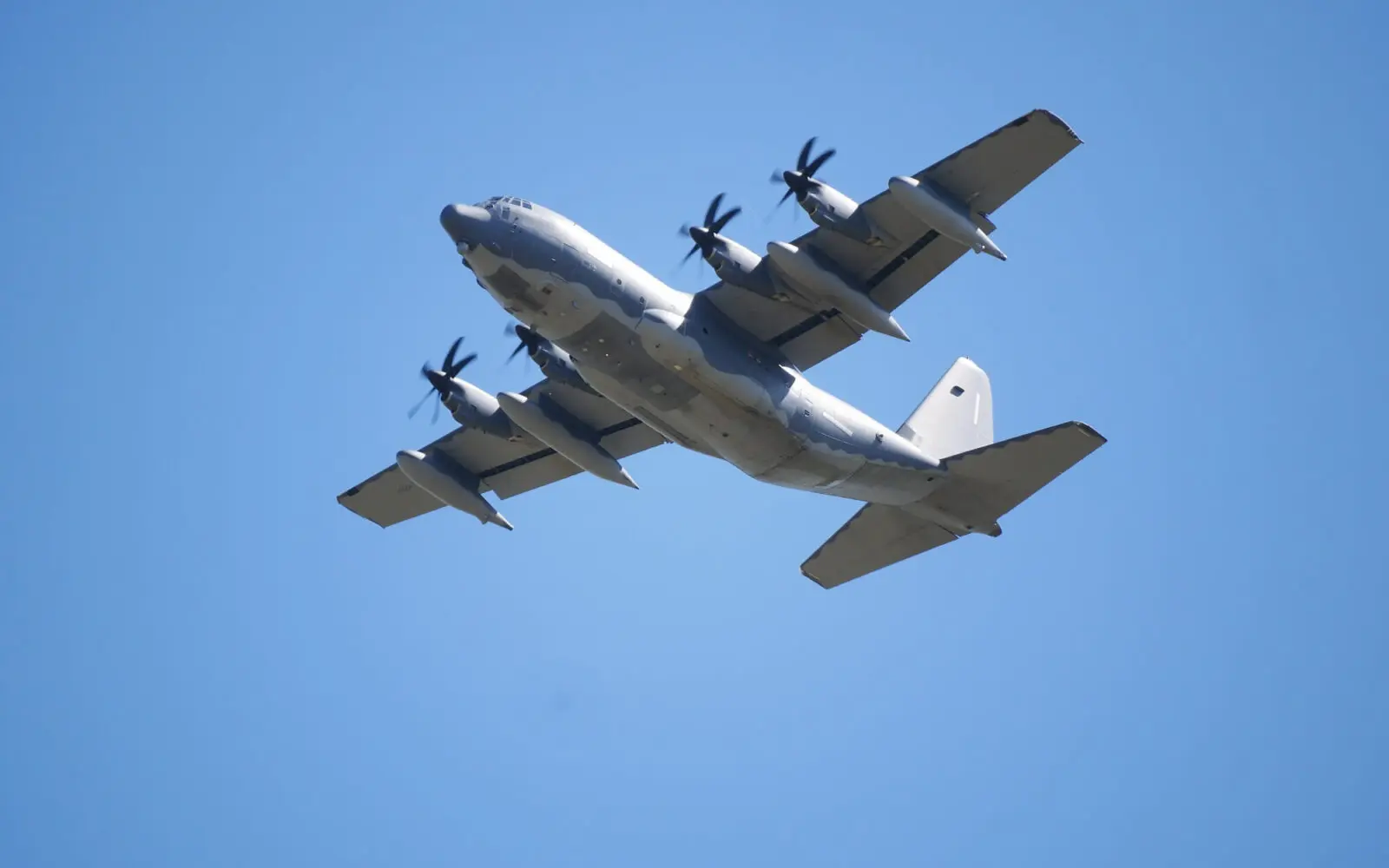
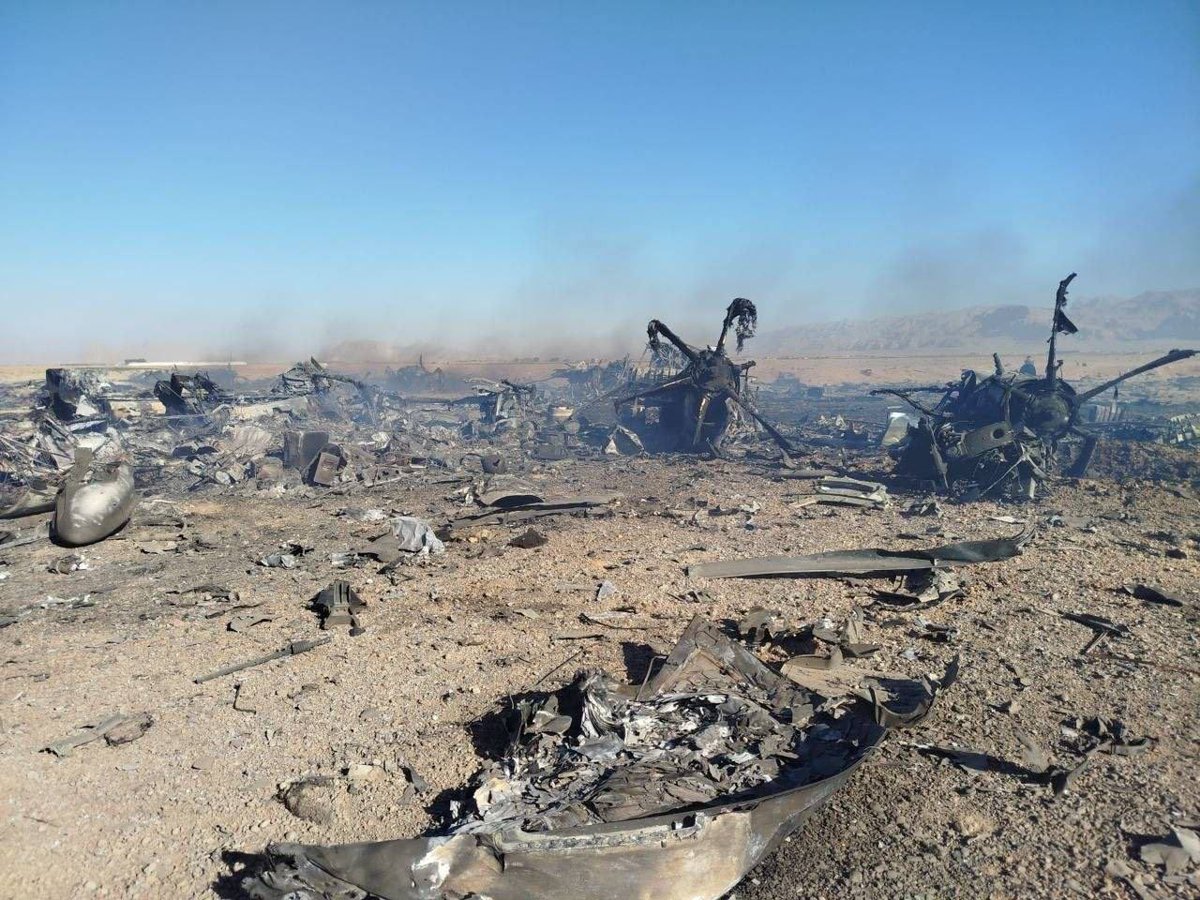
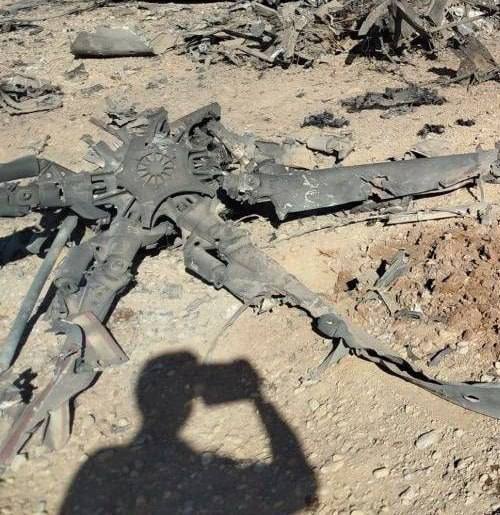
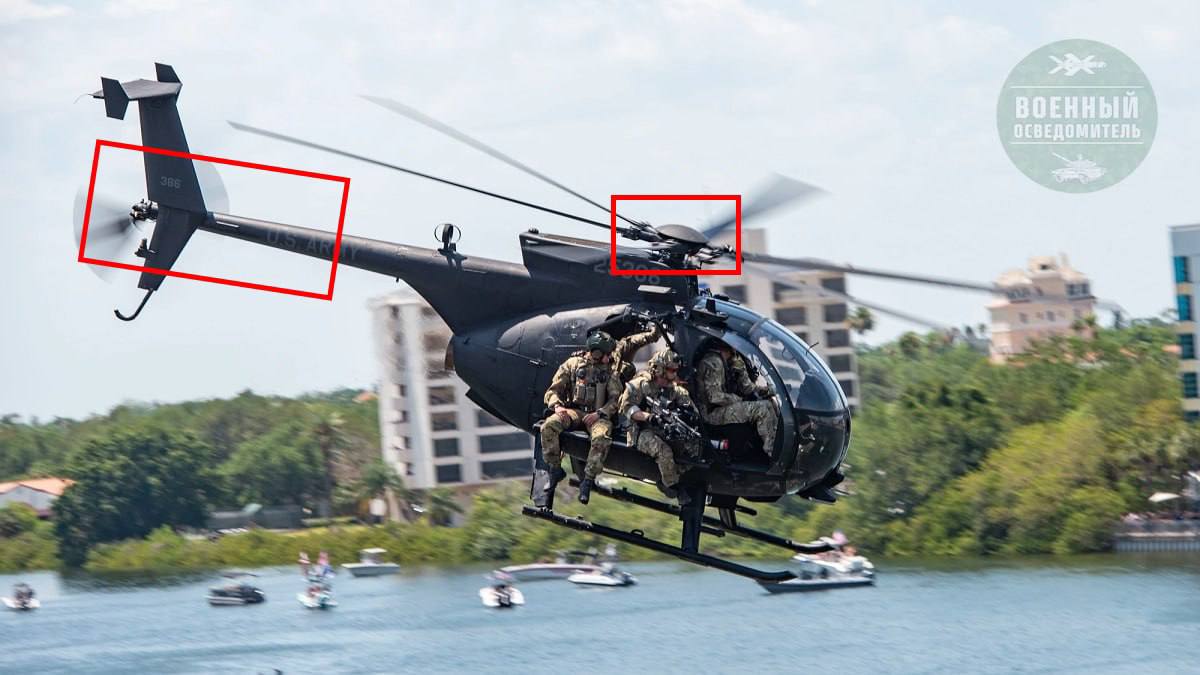
During the operation, two C-130 aircraft, presumably of the MC-130J special operations version, had to be destroyed by US forces after they got stuck on an unpaved field and were unable to take off. Two MH-6 Little Bird light helicopters may have also been destroyed in the same action.
Some reports appeared in the media suggest that three additional aircraft were then sent to extract the special forces contingent and the rescued pilot.
Interestingly, some elements of this mission deep inside Iranian territory are somewhat reminiscent of Operation Eagle Claw, which was launched by President Carter in 1979 as an attempt to liberate US hostage in Iran. The outcomes of the two operations couldn’t have been more different, though. On that occasion one C-130 aircraft and several helicopters had to be destroyed or abandoned on the ground at an improvised unpaved landing strip after the mission was cancelled.
Unlike on that occasion, though, and despite its high complexity, the latest operation to rescue the F-15E appears to have achieved all its goals with no US casualties having been reported.
US$2 Billion Burned in Iran: America Saves Two F-15E Airmen But Loses Aircraft in Its Costliest Rescue Mission Ever
After an F-15E Strike Eagle was shot down deep inside Iran, the United States launched a massive combat search-and-rescue operation that successfully recovered both airmen—but only after losing HC-130J rescue aircraft, helicopters, drones and an A-10 in what may be the costliest CSAR mission in modern history.
(DEFENCE SECURITY ASIA) — The rescue of two American airmen from inside Iran succeeded, but only after the United States suffered what may become the most expensive combat search-and-rescue mission in modern military history.
Analisis strategi ketenteraan
What began as an emergency effort to recover the pilot and weapons systems officer of a downed F-15E Strike Eagle rapidly evolved into a sprawling, multi-day operation involving elite special operations forces, tanker aircraft, combat rescue helicopters, drones, close-air-support aircraft and long-range strike assets.
By the end of the mission, the United States had lost an F-15E Strike Eagle, at least two HC-130J Combat King II rescue aircraft, an MH-6 Little Bird helicopter (possibly two), one A-10 Thunderbolt II and possibly multiple MQ-9 Reaper drones, while two HH-60 rescue helicopters were damaged and several other aircraft reportedly declared emergencies.
The overall financial cost of the operation remains disputed, but analysts and military observers now believe the total may ultimately exceed US$2 billion once the destroyed aircraft, emergency deployments, precision munitions, support assets and longer-term operational consequences are taken into account.
Even more damaging than the financial cost is the strategic message that emerged from the operation.
For weeks, Washington had insisted that American and Israeli forces had achieved near-total air superiority over Iran during Operation Epic Fury.
The loss of an F-15E deep inside Iranian territory, followed by the destruction of multiple American rescue aircraft stranded in Iran, has instead raised serious questions about the survivability of U.S. airpower in a highly contested environment.
READ: MANPADS Ambush Inside Iran: U.S. HH-60W Rescue Helicopter Hit During F-15E Recovery Mission, Exposing New Weakness in Operation Epic Fury
The F-15E Shootdown That Triggered the Crisis
The crisis began on April 3, when an American F-15E Strike Eagle conducting a deep-strike mission over southern Iran was hit by Iranian air defenses.
The aircraft was believed to belong to the 494th Fighter Squadron of the 48th Fighter Wing based at RAF Lakenheath in the United Kingdom.
The Strike Eagle had reportedly been participating in one of the most dangerous phases of Operation Epic Fury, a U.S.-led and Israeli-supported air campaign that by early April had been underway for more than five weeks.
American aircraft had been conducting repeated attacks against Iranian missile sites, air-defense systems, underground weapons depots and Revolutionary Guard facilities across the country.
The F-15E was apparently operating far inside Iranian airspace when it was struck.
The exact weapon that brought down the aircraft remains unclear.
Some military analysts believe the F-15E may have been hit by an Iranian surface-to-air missile fired by the Islamic Revolutionary Guard Corps Aerospace Force.
Analisis strategi ketenteraan
Others believe the aircraft may have been engaged by a mobile Iranian system that survived earlier American suppression campaigns.
Possibilities include the Iranian-made Khordad-15, the Russian-built S-300PMU-2 or even an improvised network of radar-guided and infrared-guided systems operating in combination.
Whatever system was responsible, the result was strategically devastating because it represented the first confirmed loss of a manned American combat aircraft to hostile fire over Iran during the entire campaign.
Both crew members successfully ejected.
The pilot landed in one area while the weapons systems officer landed several miles away.
That immediately complicated the rescue effort because American forces suddenly had to recover two isolated personnel in different locations inside hostile territory.
Iranian state media quickly announced that an American fighter had been shot down.
Initial Iranian claims incorrectly described the aircraft as an F-35.
However, later imagery of the wreckage confirmed that the aircraft was actually an F-15E Strike Eagle.
The Islamic Revolutionary Guard Corps then reportedly offered a cash reward for the capture of the two American airmen.
That reward, believed to be roughly US$60,000, transformed the rescue operation into a race against time.
American commanders feared that local militia forces, Revolutionary Guard units or armed civilians might reach the crew before U.S. special operations forces could extract them.
America Launches Its Largest Rescue Operation of the War
Within hours of the shootdown, the United States launched one of the largest combat search-and-rescue missions seen in decades.
The rescue package included HC-130J Combat King II aircraft, HH-60 rescue helicopters, MH-6 Little Bird helicopters operated by the 160th Special Operations Aviation Regiment, MQ-9 Reaper drones and A-10 Thunderbolt II aircraft providing close-air support.
The HC-130J Combat King II is one of the most specialized rescue aircraft in the American inventory.
Its role is not only to refuel rescue helicopters in flight, but also to act as a flying command post capable of coordinating multiple aircraft and ground teams during complex operations.
Each HC-130J costs approximately US$150 million.
The aircraft also carries highly sensitive communications, navigation and electronic warfare systems.
Losing even one would represent a major blow to the U.S. Air Force’s rescue capability.
The helicopters assigned to the mission included HH-60G Pave Hawk and HH-60W Jolly Green II rescue helicopters.
These aircraft are designed specifically for combat rescue missions and are capable of penetrating hostile territory at low altitude while carrying pararescue teams.
The mission also included MH-6 Little Bird helicopters flown by the 160th SOAR, the elite “Night Stalkers” aviation unit famous for missions in Somalia, Iraq, Afghanistan and the raid that killed Osama bin Laden.
The use of the MH-6 strongly suggests that American commanders intended to insert small special operations teams close to the isolated airmen.
MQ-9 Reaper drones orbited overhead to provide surveillance and to identify Iranian ground forces moving toward the crash sites.
Meanwhile, A-10 Thunderbolt II aircraft were positioned nearby to provide close-air support if American helicopters came under attack.
The overall rescue package may have involved dozens of aircraft operating across southern Iran, Iraq, Kuwait, the Persian Gulf and possibly Saudi Arabia.
The scale of the operation alone highlights how seriously Washington viewed the possibility that its first captured airmen of the war might be paraded by Iran on television.
The First Crew Member Is Recovered
The first phase of the rescue operation appeared to proceed relatively smoothly.
American special operations forces located the pilot of the downed F-15E and successfully evacuated him.
The recovery was believed to have taken place during the night of April 3.
That success initially encouraged American commanders because it suggested that at least part of the rescue package could still operate inside Iran despite the increasingly dense air-defense environment.
The second crew member proved far more difficult to recover.
The weapons systems officer had landed in rough terrain and was reportedly moving on foot to avoid Iranian search teams.
American aircraft and drones spent many hours attempting to track his location.
At several points, reports suggested that Iranian forces were closing in.
That created enormous pressure on the rescue force.
Additional aircraft were brought into the operation.
Three more HC-130J aircraft were reportedly dispatched to continue the mission after the situation deteriorated.
By the time the second crew member was finally located and extracted, the rescue mission had expanded far beyond what American planners originally expected.
Why the United States Destroyed Its Own Aircraft
The most extraordinary moment of the operation came only after the second crew member had been rescued.
Several American aircraft involved in the mission reportedly landed at an improvised refueling site inside Iran.
At that location, two HC-130J Combat King II aircraft and at least two helicopters became stranded.
The exact reason remains unclear.
Some analysts believe the aircraft may have suffered damage from Iranian fire.
Others suspect that the improvised landing zone may have been too soft, too rough or too dangerous for the aircraft to depart.
Another possibility is that the aircraft simply ran out of fuel during the extended rescue effort.
There is also speculation that one or more aircraft may have experienced mechanical problems after operating for hours at extremely low altitude in harsh desert conditions.
Whatever the cause, American commanders were confronted with an unacceptable risk.
The stranded aircraft contained highly sensitive technology.
The HC-130J in particular carries advanced communications systems, navigation equipment, encrypted datalinks and specialized rescue technology.
If even one of those aircraft had fallen intact into the hands of the Revolutionary Guard, Iran could have exploited its equipment, examined its electronic systems or even transferred some of the technology to Russia or China.
The risk was considered too great.
American commanders therefore made the decision to destroy the aircraft on the ground.
U.S. aircraft subsequently struck the site.
The strikes destroyed two HC-130J aircraft and at least one MH-6 Little Bird helicopter.
Later imagery showed the burned remains of the transports lying next to the wreckage of the helicopter.
The decision immediately triggered comparisons with the failed 1980 Operation Eagle Claw.
During that mission, American forces were also forced to abandon and destroy helicopters in the Iranian desert.
The visual similarity between burning American aircraft in Iran in 1980 and burning American aircraft in Iran in 2026 was impossible to ignore.
The Full Extent of the Losses
By April 5, the confirmed American aircraft losses included:
- 1× F-15E Strike Eagle destroyed
- 2× HC-130J Combat King II destroyed
- 1× MH-6 Little Bird destroyed
- 1× A-10 Thunderbolt II destroyed
- 1–2× MQ-9 Reaper drones destroyed
- 2× HH-60 rescue helicopters damaged
Additional reports also suggested that an F-16 Fighting Falcon and a KC-135 Stratotanker declared emergency squawks during the same period.
Another A-10 may also have made an emergency landing.
These reports remain unconfirmed.
The A-10 loss is especially important because the aircraft had reportedly been providing close-air support for the rescue force.
According to some reports, the A-10 was damaged by Iranian fire and the pilot later ejected safely over Kuwaiti territory.
If confirmed, that would indicate that Iranian air defenses and ground fire were able to threaten not only high-flying aircraft, but also low-altitude support platforms operating far from the main strike packages.
The destruction of MQ-9 Reaper drones also reveals how difficult the Iranian environment had become.
The MQ-9 is normally used in relatively permissive airspace where it can loiter for hours.
Over Iran, however, even those drones appear to have been vulnerable.
That suggests that Tehran still retained enough radar coverage, missiles and electronic warfare capability to contest parts of its airspace despite weeks of American bombardment.
Why Some Analysts Believe the Real Cost Exceeds US$2 Billion
The direct replacement cost of the destroyed aircraft probably falls somewhere between US$500 million and US$700 million.
{ “slotId”: “”, “unitType”: “responsive”, “pubId”: “”, “resize”: “auto” }
The F-15E alone costs approximately US$95 million.
Two HC-130Js represent another US$300 million.
The MQ-9s, A-10, MH-6 and damaged HH-60 helicopters add tens of millions more.
Yet many analysts believe the true cost is much higher.
The rescue operation likely required dozens of supporting aircraft.
Those aircraft would have included aerial refueling tankers, intelligence aircraft, airborne warning-and-control aircraft, electronic warfare platforms and additional fighters providing escort.
Each hour flown by those aircraft costs enormous amounts of money.
An E-3 Sentry airborne warning aircraft can cost tens of thousands of dollars per hour to operate.
A KC-135 Stratotanker or KC-46 Pegasus also requires significant fuel and maintenance costs.
The United States may also have fired expensive precision weapons during the rescue mission.
Cruise missiles, stand-off weapons and guided bombs may have been used to suppress Iranian air defenses around the rescue area.
Each missile can cost hundreds of thousands or even millions of dollars.
The mission also forced the United States to rapidly deploy additional rescue aircraft and special operations teams into the region.
That emergency movement of forces likely imposed further costs.
There is also a longer-term cost that is difficult to measure.
The loss of two HC-130Js reduces the available fleet of specialized rescue aircraft.
The HC-130J fleet is relatively small.
Replacing those aircraft could take years.
That means the United States has lost not only expensive hardware, but also a portion of its ability to conduct similar rescue missions elsewhere in the world.
When those factors are combined, estimates exceeding US$2 billion no longer appear unrealistic.
Iran’s Strategic Victory
Although the United States successfully rescued both airmen, Iran emerged with a significant propaganda victory.
Iranian media immediately circulated footage of burning American aircraft and wreckage from the downed F-15E.
State television presented the images as proof that Iran had successfully challenged the United States in the air.
The distinction between aircraft destroyed by Iranian fire and aircraft destroyed by the Americans themselves mattered little from Tehran’s perspective.
In either case, the result was the same.
Multiple American aircraft had been lost inside Iran.
That outcome undermines Washington’s narrative that Iranian air defenses had been largely neutralized.
Instead, the rescue operation suggests that Iran still retains enough capability to impose serious costs on even the world’s most powerful air force.
That lesson will not be lost on Russia, China or other American adversaries.
All of them are likely studying the operation carefully.
They will note that even a technologically superior military can still suffer major losses when operating deep inside heavily defended territory.
Analisis strategi ketenteraan
For the United States, the rescue of the two F-15E crew members will ultimately be remembered as both a success and a warning.
The mission demonstrated extraordinary bravery by American aircrews, pararescue teams and special operations forces.
At the same time, it revealed that Operation Epic Fury has become far more dangerous than Washington originally expected.
The United States saved two men.
But it may have paid for that success with aircraft worth hundreds of millions of dollars, a damaged image of American air superiority and perhaps the most expensive rescue mission since the beginning of the modern era of air warfare.